The South Road Dirt Runners: Hall of Fame History Makers.
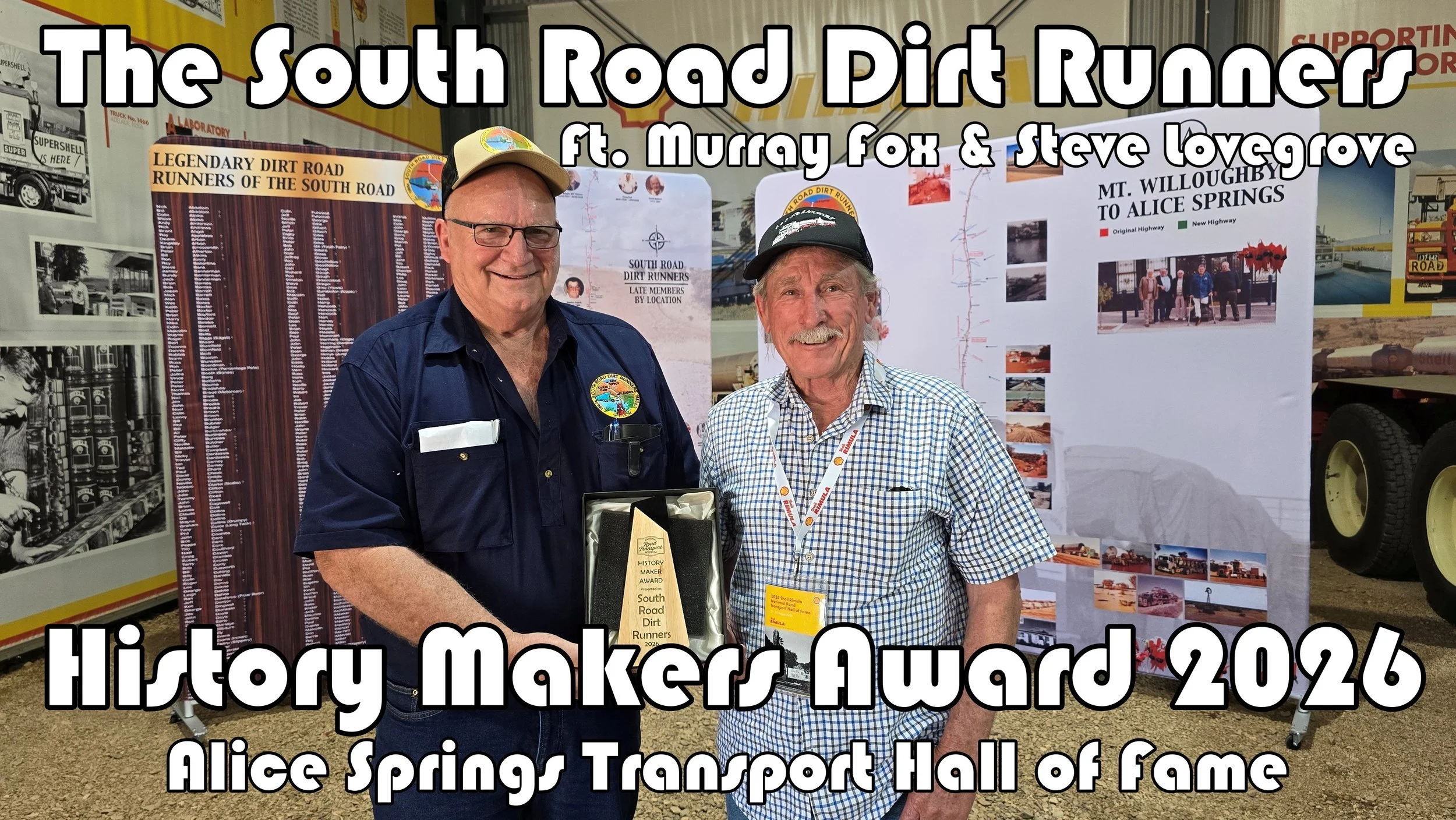
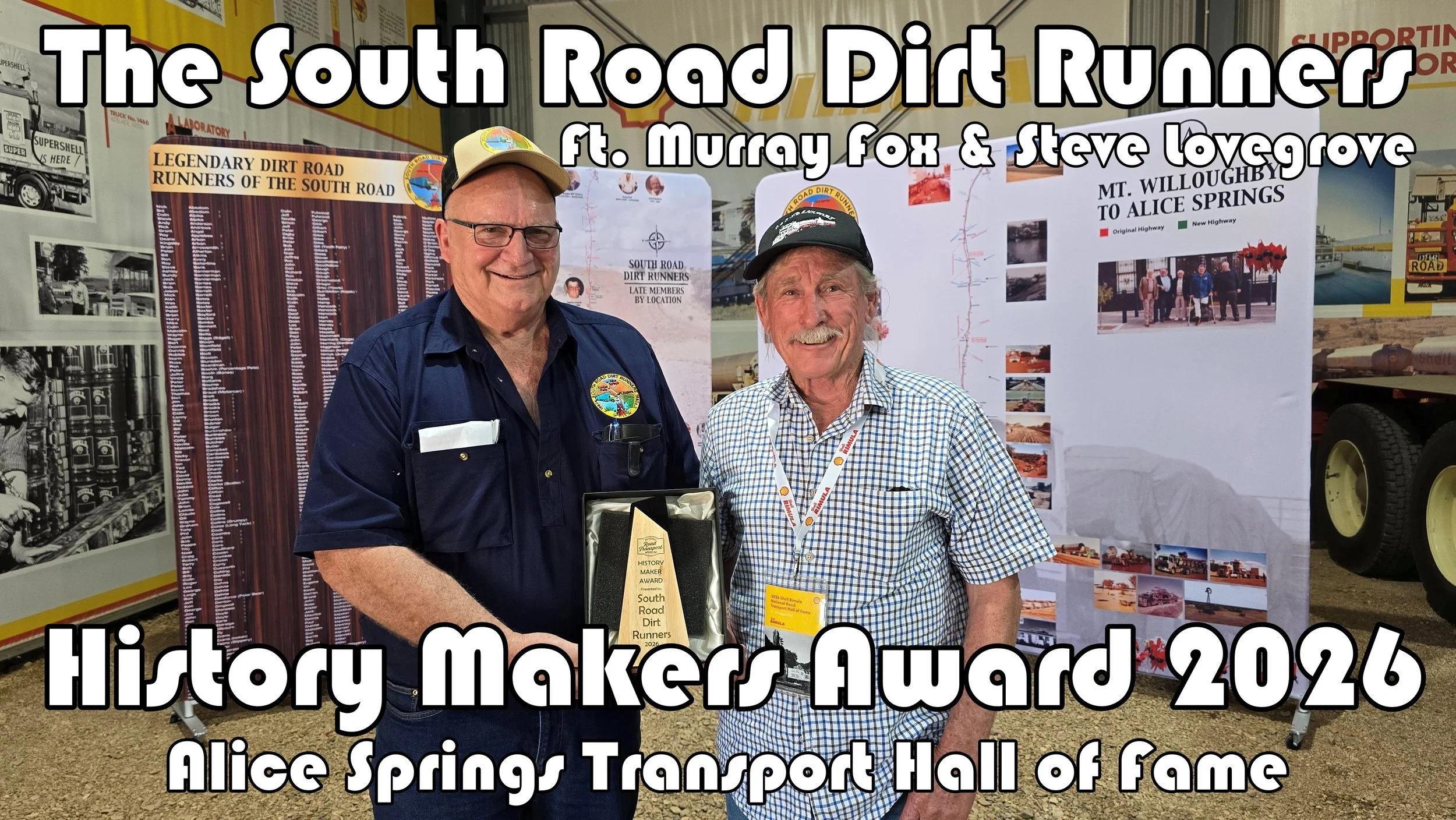
The National Road Transport Museum’s History Makers Award recognises those individuals, groups or moments that have changed the course of our industry through courage, innovation, determination or simply by having the vision to do things differently.
Their stories have shaped the way we operate, opened doors for those who followed and become part of the history that this Museum exists to preserve.
This year’s History Makers are a group whose contribution deserves to be remembered for generations to come. The South Road Dirt Runners.
Before the Stuart Highway became the sealed road linking Adelaide with Darwin, it was known simply as the South Road.
For hundreds of kilometres north of Port Augusta, corrugations stretched to the horizon, creek crossings changed with the weather, and dust found its way into every crack of the truck. Every journey north tested not only the machinery, but the men behind the wheel.
From the late 1950s through to the early 1980s, a remarkable generation of drivers carried almost everything the north depended upon. Polar Expressways, Cold Storage, Bulls, Brambles, Buntines, Ansett and dozens of smaller family operators hauled machinery, fuel, livestock, food and building materials along the route including the supplies and equipment needed to rebuild Darwin after Cyclone Tracy.
There was little romance in driving the South Road. It was hard, dirty work.
In summer, drivers battled relentless heat without air conditioning. In winter, particularly around Kulgera, they faced freezing mornings and reluctant engines. Dust wore away brakes, corrugations shook trucks apart and tyres were constantly failing.
Rain could transform the road overnight. Dry creek crossings became flooded, firm ground became deep clay and trucks could sit bogged for days. One delay at the Finke River lasted a week, with drivers sharing supplies and waiting for the road to dry enough to move.
The road also taught its drivers to become mechanics and engineers. Repairs were often made with whatever was available.
But perhaps the greatest thing about the South Road wasn't the trucks or even the challenges.
It was the people.
Places like Kingoonya became meeting points where drivers shared meals, drinks and stories. Friendships could form within hours. Jeff Gilbert once met an interstate driver at Kingoonya who, after a few beers, asked Jeff to become godfather to his daughter. The next morning, Jeff travelled to Coober Pedy for the christening — and, as the story goes, never saw the man again.
There were characters too. Spud Murphy became famous for putting up fake "Road Closed" signs, sending unsuspecting drivers into Pimba for an unexpected night of beers and company.
And then there was Albert "Nobby" Clarke, the transport inspector, whose presence could send a convoy of drivers looking for alternative routes through station tracks. It became a good-natured game of cat and mouse.
By the early 1980s, the bitumen was steadily replacing the dirt. Trucks became more reliable and communications improved. The hardships began to disappear but so did some of the camaraderie.
Looking back, the Dirt Runners are modest. To them, they were simply doing a job.
But what they did was extraordinary.
They opened and maintained a vital link to the north, endured conditions few would willingly face today, and built friendships and a sense of community that have lasted a lifetime.
They truly were a special breed.
And while the dust has long since settled beneath the bitumen, their stories remain an important part of Australian road transport history.
Truckin With Kermie is proudly supported by
AUSTRALIAN COMMERCIAL & TRANSPORT INSURANCE BROKERS
PH: Brenton White 0408 828 144
More Blog Posts You Will Love