Scania Caught Laundering!
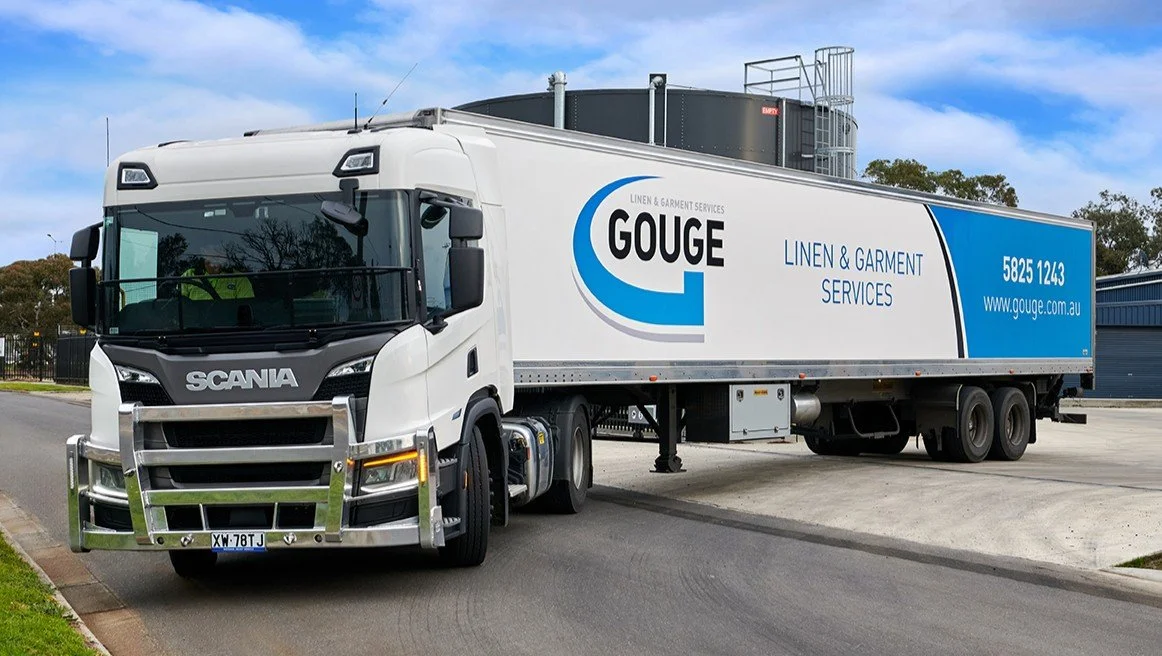
A burgeoning regional Victorian business is driving its growth with the aid of 10 Scania trucks, some of which are racking up 1300 km per day and returning significant fuel efficiency gains along the way.
Gouge Linen and Garment Services started life in the 1940s as a dry-cleaning business in Shepparton, northern Victoria. Owned by the Priestly family since the 1980s, the business has two distinct elements, a dry-cleaning business and a commercial laundry.
The laundry focuses on collecting and delivering linen for accommodation and healthcare customers, as well as cleaning industrial workwear for a wide range of clients.
The company’s fleet of vehicles is constantly on the move, travelling the equivalent of fifteen laps of Australia each month.
The main laundry in Mooroopna, near Shepparton, is now being augmented by a new, purpose-built laundry in Geelong which is twice the size of Mooroopna and underscores the business’ plans for growth over the medium term. A dry-cleaning and uniform cleaning operation based in Niddrie, in the northern suburbs of Melbourne is also part of the business.

John Calleja
“We cover all of Victoria and southern New South Wales,” said John Calleja, Chief Executive Officer of Gouge Linen and Garment Services.
“We pretty much go to every town in Victoria, so we have an extensive range and footprint. We service around 1,300 customers, ranging from a 20-bed hotel up to 1100-room premium hotels in central Melbourne.
“We’re also active with small aged-care homes up to major hospitals in Melbourne and regionally, and our uniform business launders around 55,000 garments per week,” he says. “These uniforms range from mechanics to pharmaceutical, food manufacturing and abattoirs, through to front-of-house uniforms for hospitality.
“We have been in a growth phase over a long period, and in Mooroopna, we've been close to capacity. That drove the need to create more space in a purpose built, highly automated laundry plant.
“We've got an unwavering focus on three key areas; the quality of the linen and uniforms we provide, our customers receive what they order every time, complimented with great customer service” John continued.
“The new facility in Geelong can produce the equivalent volume of Mooroopna, but eventually it will be almost double that capacity. Across the company we have 500 employees and 52 trucks, of which 10 are Scanias in the form of two prime movers and eight rigids.”
The trucks comprise 420 P and 460 G prime movers, and a mix of 280, 320 and 360 hp rigids in 4x2 or 6x2 configurations.
In addition to the three sites in Mooroopna, Niddrie and Geelong, there are satellite distribution sites in Bendigo, Ballarat and metro Melbourne, which receive bulk linen from the cleaning facilities.
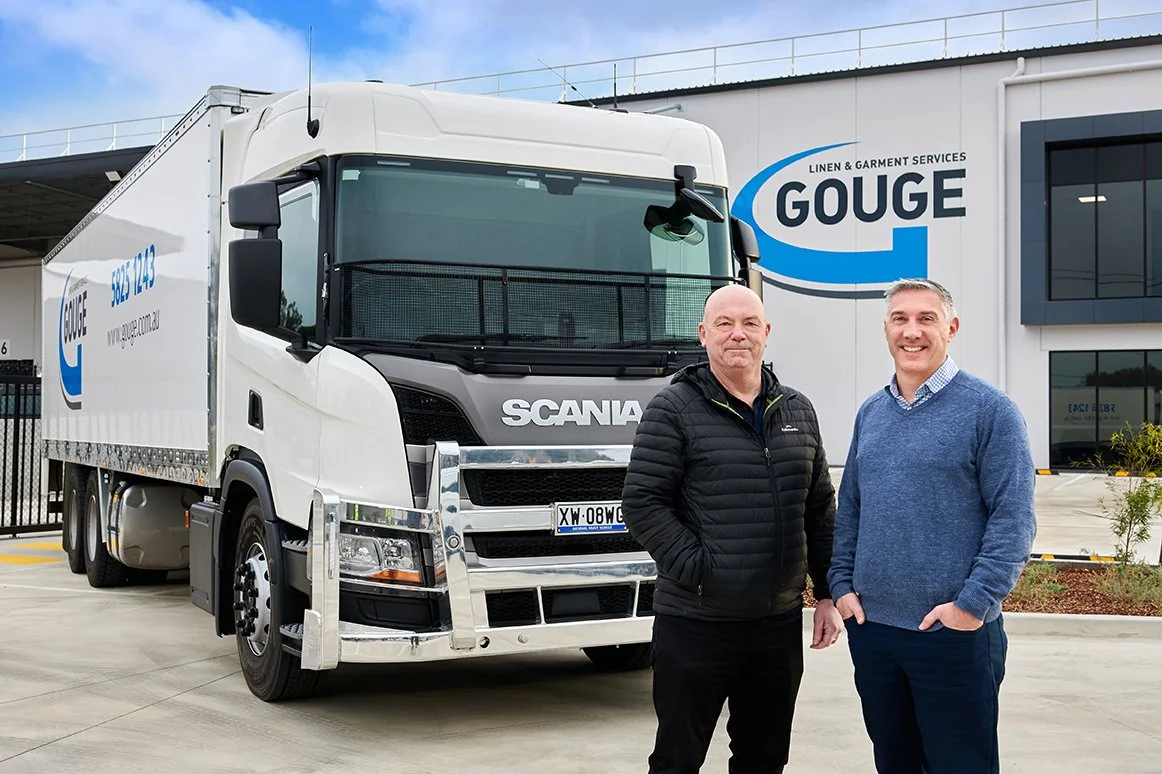
Damian Marston (L) & John Calleja
“The Scania trucks have been on the fleet only a short while,” said Damian Marston, General Manager of Logistics, who has been in the company for two years.
“I have a strong warehousing background, but fleet was new to me. It has the same KPIs and cost level triggers. I looked at our trucks and our maintenance program and focused in on that. We went to tender and met Roger Lake, Scania’s Account Manager, and he has been sensational from the start, very transparent and accommodating with us.
“When we had agreed on pricing, there was a wait on supply, but Roger found us some trucks that had become available, so we went ahead. The relationship between Scania and the bodybuilders made it pretty easy, too.”
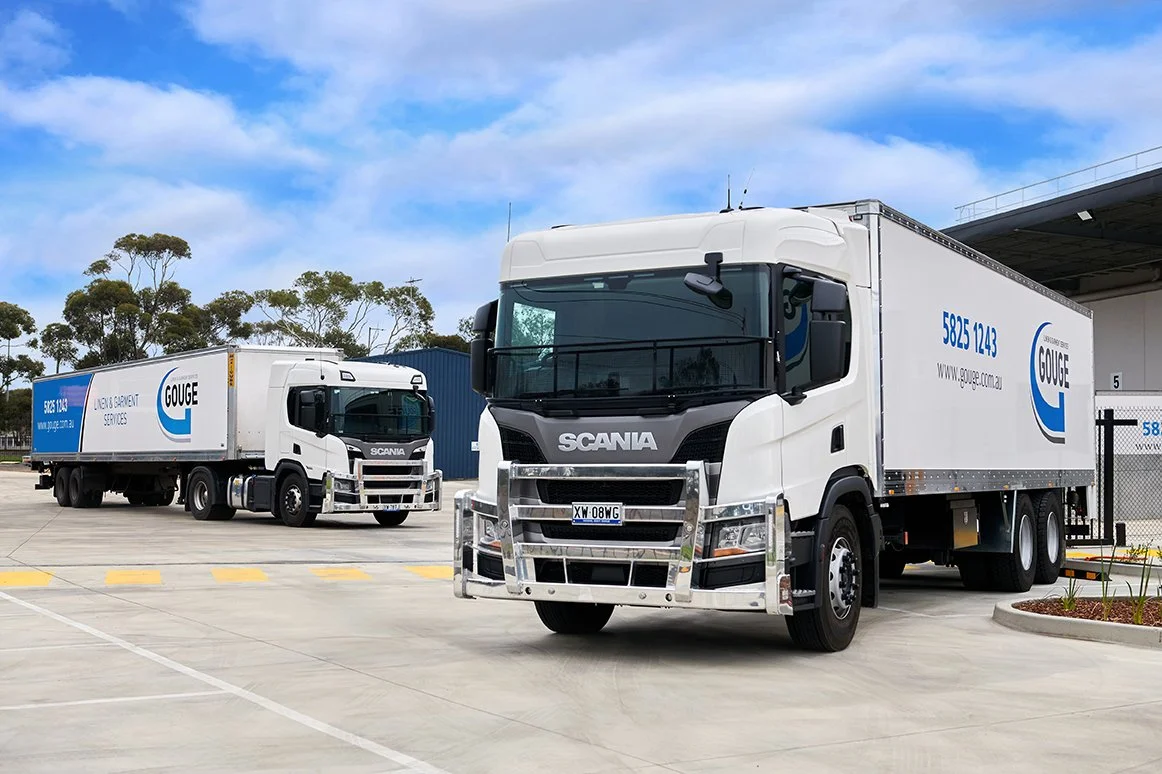
“It’s important for us for our drivers to be in good quality, safe trucks,” John continued. “We want them to be comfortable. They do a hard job; they're moving trolleys around for us. So, we want to provide them a good tool of trade. Plus, as an organisation we're really keen to drive efficiencies through the business.
“I still remember when Damian told me the fuel efficiency the Scanias would be getting, and I said that would be awesome but prove it. Scania loaned us a truck for a demonstration, and they delivered what they promised. So Scanias have proven to be efficient, safe and comfortable,” John said.

Drivers, Brendan Everest and Tony Carter love the Scanias
Damian continues: “The cost saving on fuel, traveling as far as we do, is a contributing factor. Some of the Scanias are doing around 1300 km a day, with two shifts. Both the outward and return journeys see the trucks fully loaded, so the fuel savings really add up.”
John: “In concert with the fuel efficiency, there’s also the environmental benefits. This is important to us as a business. The distances we cover being a regional business makes electric trucks a challenge. That technology's not right for us, yet. So, having Scanias that are really fuel efficient is an important thing for us.
“Safety is a daily conversation in our business. We've got to focus on it all through the day. It’s fair to say we've improved our fleet with the acquisition of the Scanias. On the safety side, driving a Scania provides superior safety features, visibility in the trucks, along with the side and turning cameras.”
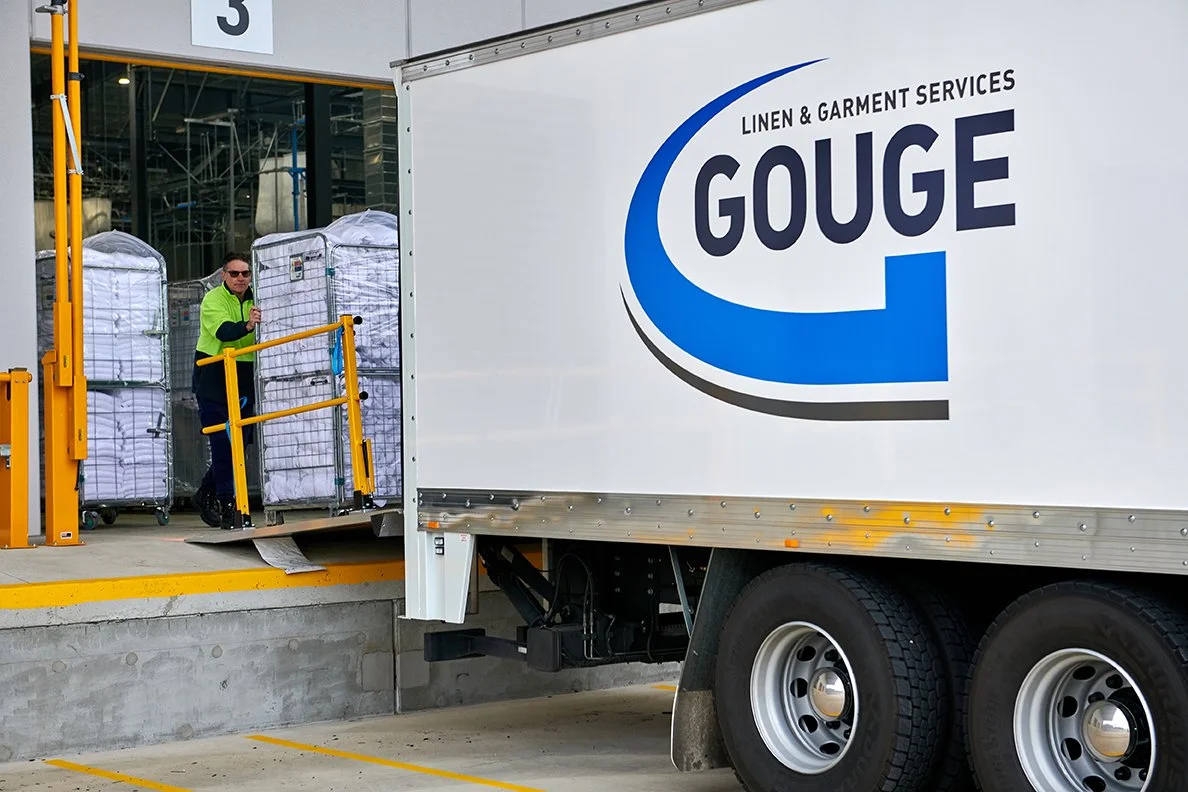
Safety was part of the company's consideration.
“When we went out to tender,” said Damian, “the Scanias had a higher level of safety spec, which also helps attract drivers. They're living in the truck most of the day. They like the Scania in-dash driver support system that scores their driving style. They’ll even bring it up in their toolbox meetings, they’re so proud of their scores. They’ve taken photos on their phones of the dash with their performance. It drives a healthy level of competition, and they are optimising their performance and driving with a positive attitude.”
“Scania supports our drivers through this and with Scania Driver Training. It separates Scania from the rivals that we also work with that the Scania training is available. It just rounds out the package; the drivers have a comfortable truck, a safe truck, and they get real live feedback on how they're driving the truck,” Damian said.
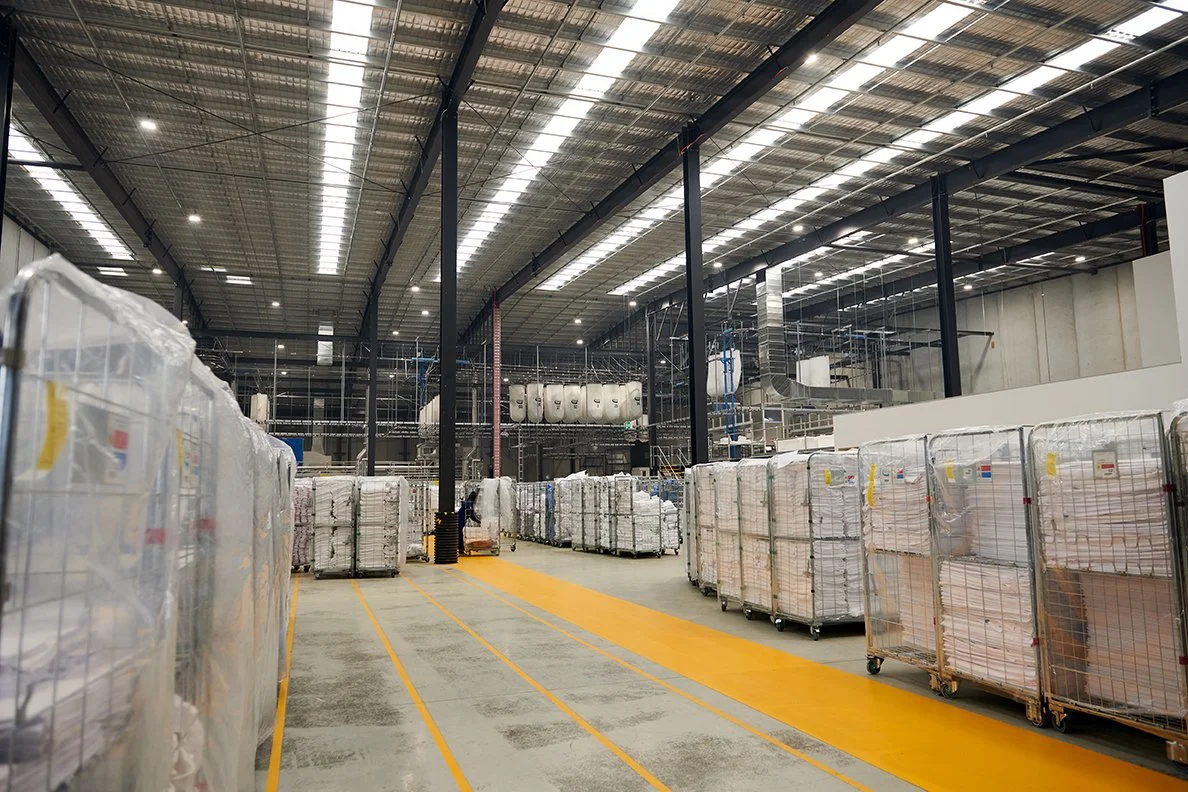
The company’s goal is that that fleet will continue to grow, and Scania will be part of that growth - allowing for the ongoing need for smaller trucks that Scania doesn’t offer - to deliver to some of their smaller customers with restricted access.
“Some of the hospitals allow for a bigger delivery vehicle, but we do need a mixed fleet because the accessibility constraints, but we’re keen to maximise the fuel efficiency benefits of the Scanias. That's where our biggest bang for bucks is going to be over the term,” said Damian.
“The Scania warranty and parts availability is also critical for us. There are some trucks in the market that don't keep enough stock locally. The reality is you can’t afford a truck to be off the road for waiting for parts. The Scania dealer network is good and there’s a dealer down in Geelong, so that came into play as well.”
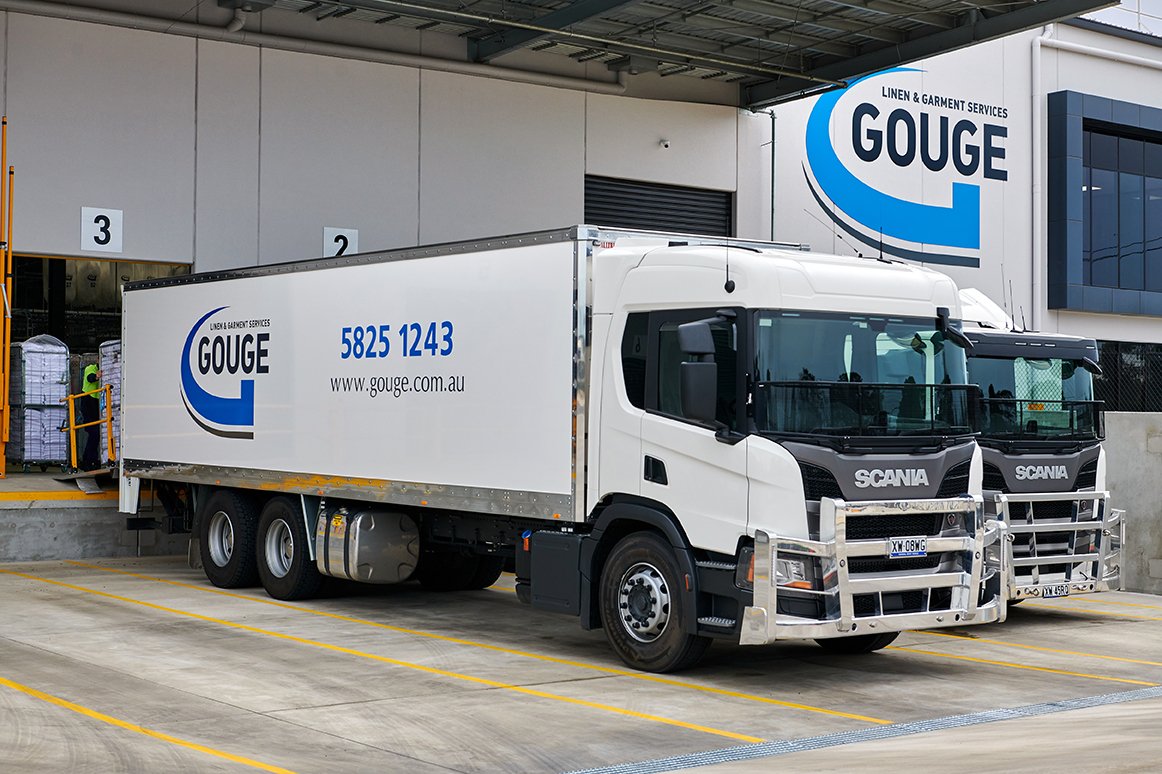
“We do like the Scania Fleet Monitoring tools,” said John. “We're looking at the maintenance costs we're incurring and comparing against the kilometres and the age of the vehicle and the fuel efficiency. And that's really what's driven our investment in the Scania fleet. I'm an accountant, so it's really simple for me. If the numbers stack up and I've got a truck that's better for our drivers, safer for our drivers, then that's a great outcome.”
More Blog Posts You Will Love
More From In-depth
Got something to say? Say it here!
truckinwithkermie.com is for YOU and about YOU. We’d love to hear your stories. There are a number of ways to get in touch with us:
kermie@truckinwithkermie.com
(+61) 0418 139 415
More From The Blog