2026 Shell Rimula Hall of Fame Inductee Photos & Biographies + Industry ICON & History Maker
This year 58 deserving men and women – all legends of the transport industry in their own way – were inducted into the Shell Rimula Hall of Fame at Alice Springs, the spiritual home of trucking history.
As well, the Industry Icon and History Maker Awards were presented to more than deserving recipients.
Below are those inducted in alphabetical order together with a short biography of each, followed by the Icon and History Maker Award details.
Should anyone wish a copy of any of the photographs, please email kermie@truckinwithkermie.com noting the number and name of the photograph you desire and I will email back a high resolution copy. DON’T FORGET TO SUPPLY YOUR EMAIL ADDRESS.
Please take the time to read these stories. You will learn much about Australian trucking and the men and women who have carved out a special place for themselves in this country’s transport history.
1. JOHN ADAMS
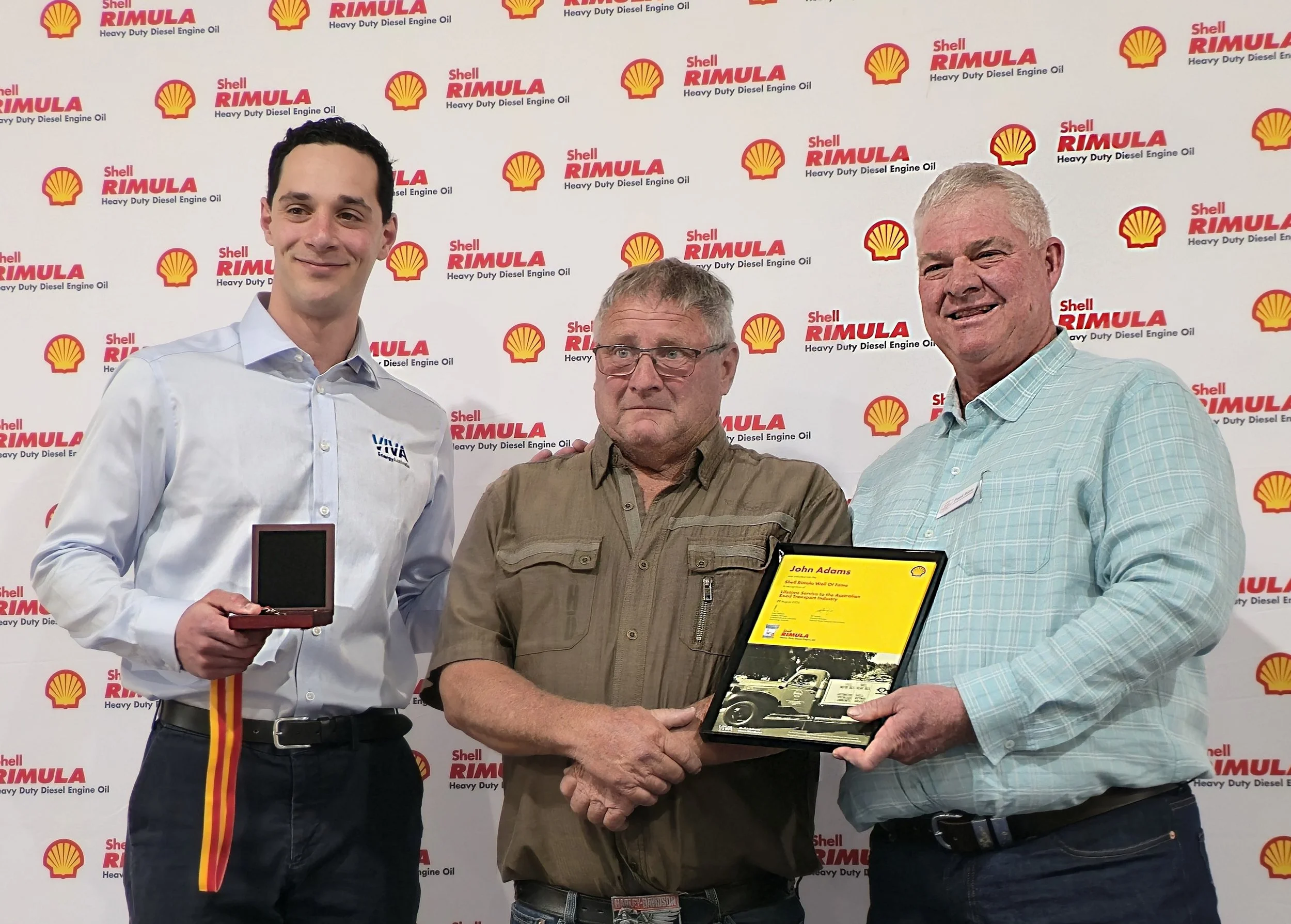
John’s driving career started a little earlier than the law preferred. He left school at 13 and took his first job at Wangaby, working for John and Bill Payne. During wheat harvest, he would meet Bill at the Meandarra crossroads, swap seats and drive the empty truck back to keep under the radar. On his 17th birthday, John obtained his licence, hauled a load of cattle to Dalby and finished the day with a new job at Gateway Stockfeeds.
A move to Jandowae changed John’s life when he met his wife, Trish. John hauled sand, gravel, timber and grain before becoming an owner-driver, purchasing a Ford LNT 9000 powered by a 903 Cummins. He later bought a Mack, moved back to Miles and began hauling logs, welcoming daughters Brooke and Danielle along the way.
It was during his log-hauling days that John earned one of his most memorable battle scars. While unloading logs at dusk in Surat, a stubborn stanchion refused to release. As John shook the chain, the stanchion gave way and a massive log came crashing down on top of him. A legally blind mill worker loaded John into the back of a ute and drove him to hospital. John survived with a stitched-up head and a permanent four-inch scar.
Throughout his career, John worked for various companies and completed countless runs, but the call of the Territory always drew him back. Today, driving for Reinke’s Transport, he continues to conquer the Brisbane-to-Darwin route, hauling general freight and lick blocks to remote stations.
2. CLIVE ANDERSON
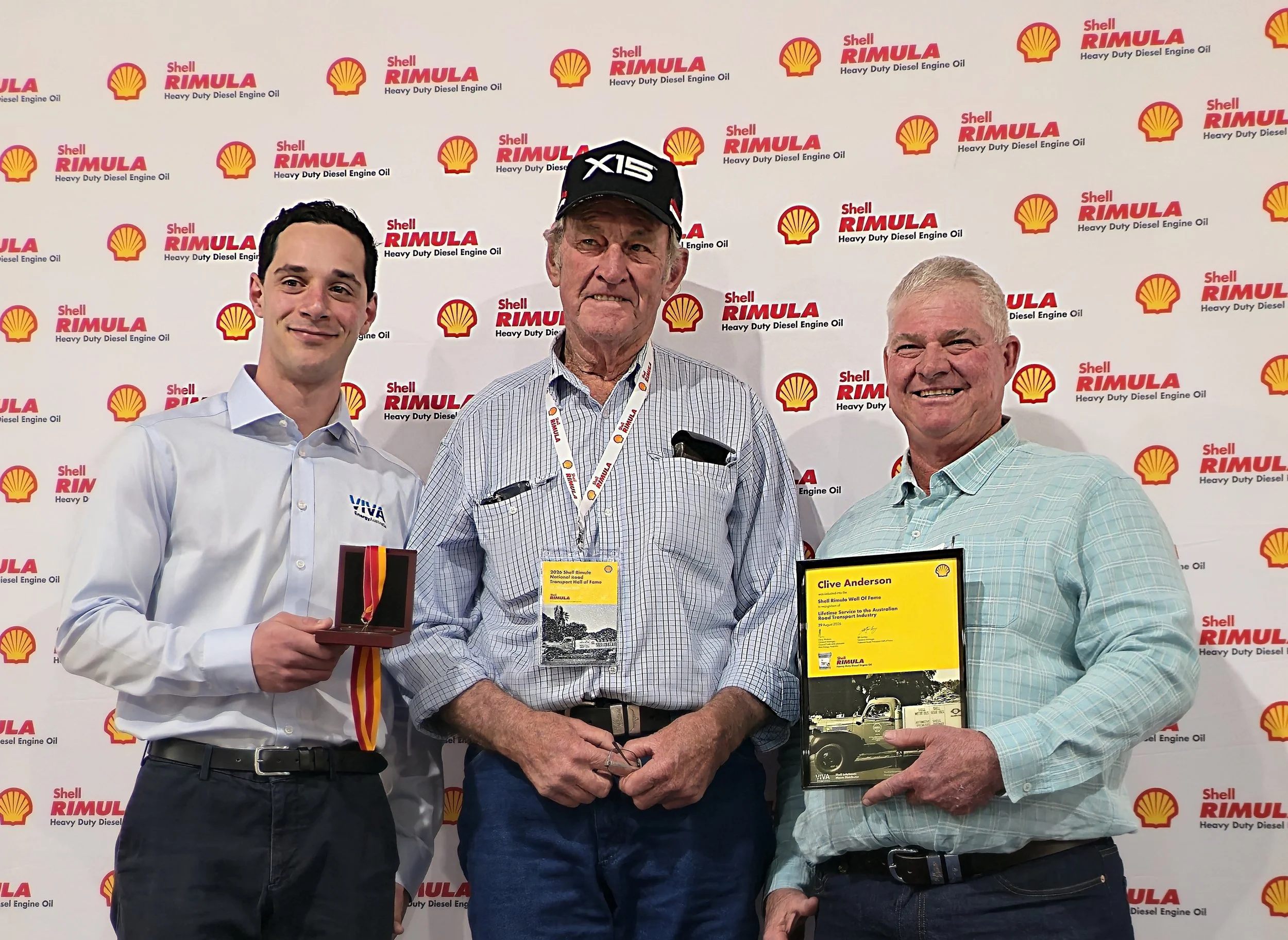
Born in 1948, Clive comes from a family with a long-standing connection to transport and regional Victoria. After completing a Diploma of Agriculture in Melbourne and three years as a stock and station agent with Australian Mercantile Limited, he returned to the family business, Andersons Transport Service and Garage in Benambra.
Clive began driving an International 184 carrying general freight before progressing through trucks supporting the business’s livestock and logging operations. In 1972, Andersons purchased two ex-Ansett slimline Kenworths, beginning a 25-year association with the iconic brand. Clive drove numerous Kenworth cabovers and W-models, including the truck fitted with Australia’s first 350-horsepower Cummins engine, now preserved at The Hall of Fame.
Clive finished with Andersons as Transport Manager and driver. Although the business closed in 1998, he remains involved in transport today, operating a 2010 Freightliner Columbia to move cattle and support the family farm.
3. DEANE ARBON
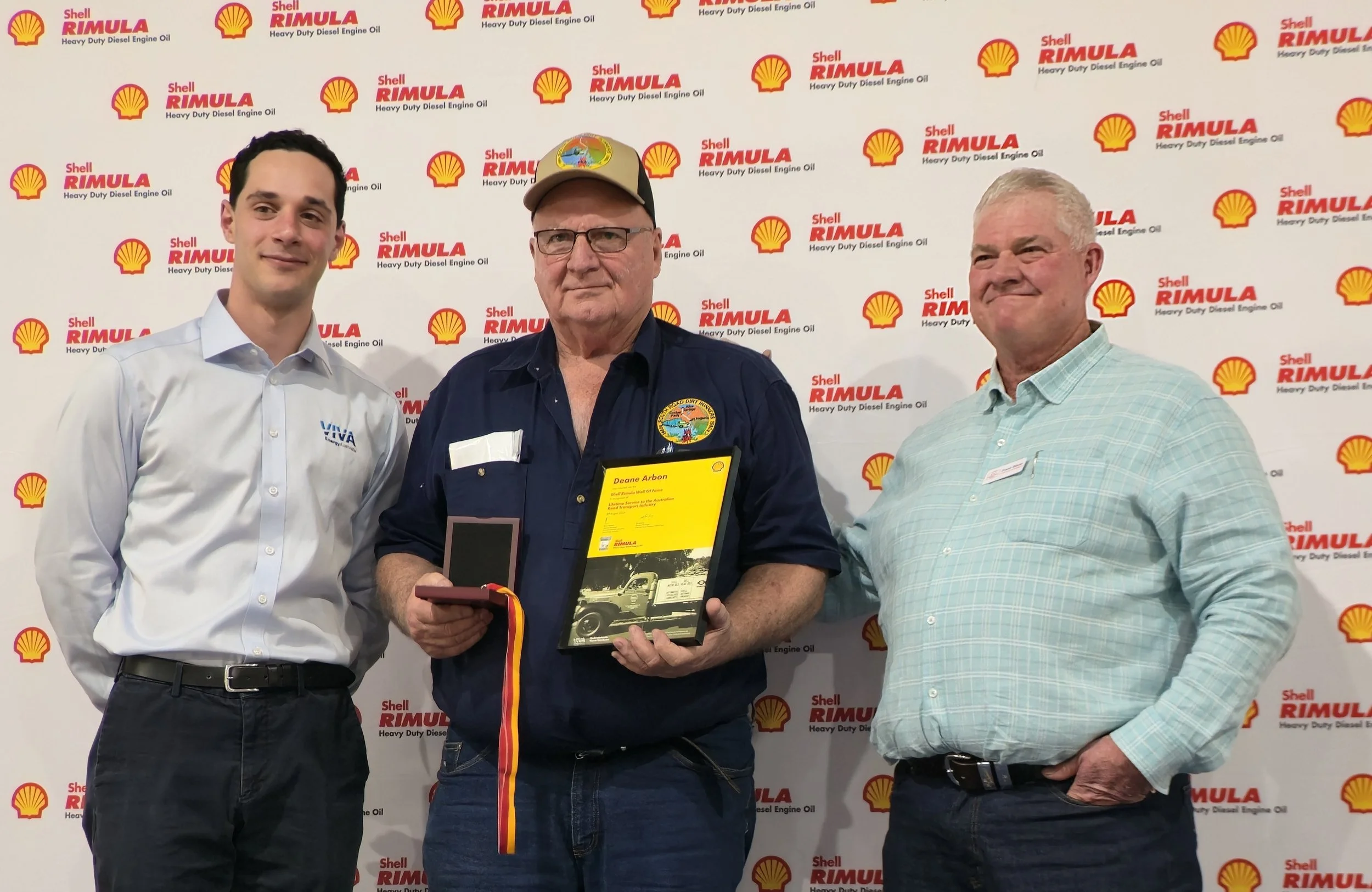
Born in 1955 in Minlaton, South Australia, Deane was riding with local stock carrier Peter Secker from age 11. At 16, Deane obtained his Class A licence and began a mechanical apprenticeship with Padthaway Transport, quickly becoming a regular spare driver.
In 1974, Deane became an owner-driver, purchasing a White 9000 before upgrading to a Road Commander with an 8V71 Detroit Diesel. He carted livestock for Crisp Livestock Transport before teaming up with his brother Kingsley to run freight to Darwin for TNT Darwin Express. He later worked with Ken Denton and Neil Mansell Transport.
In 1984, Deane purchased a Mack V8 375 Thermodyne and hauled culverts from Adelaide to the NT border for the Old South Road sealing project. Following roles with Toll, HPS and the Northern Connector project, he joined Integral Freight Services in Port Lincoln, where he continues to work today.
4. EDWARD ‘BEAU’ BENNETT
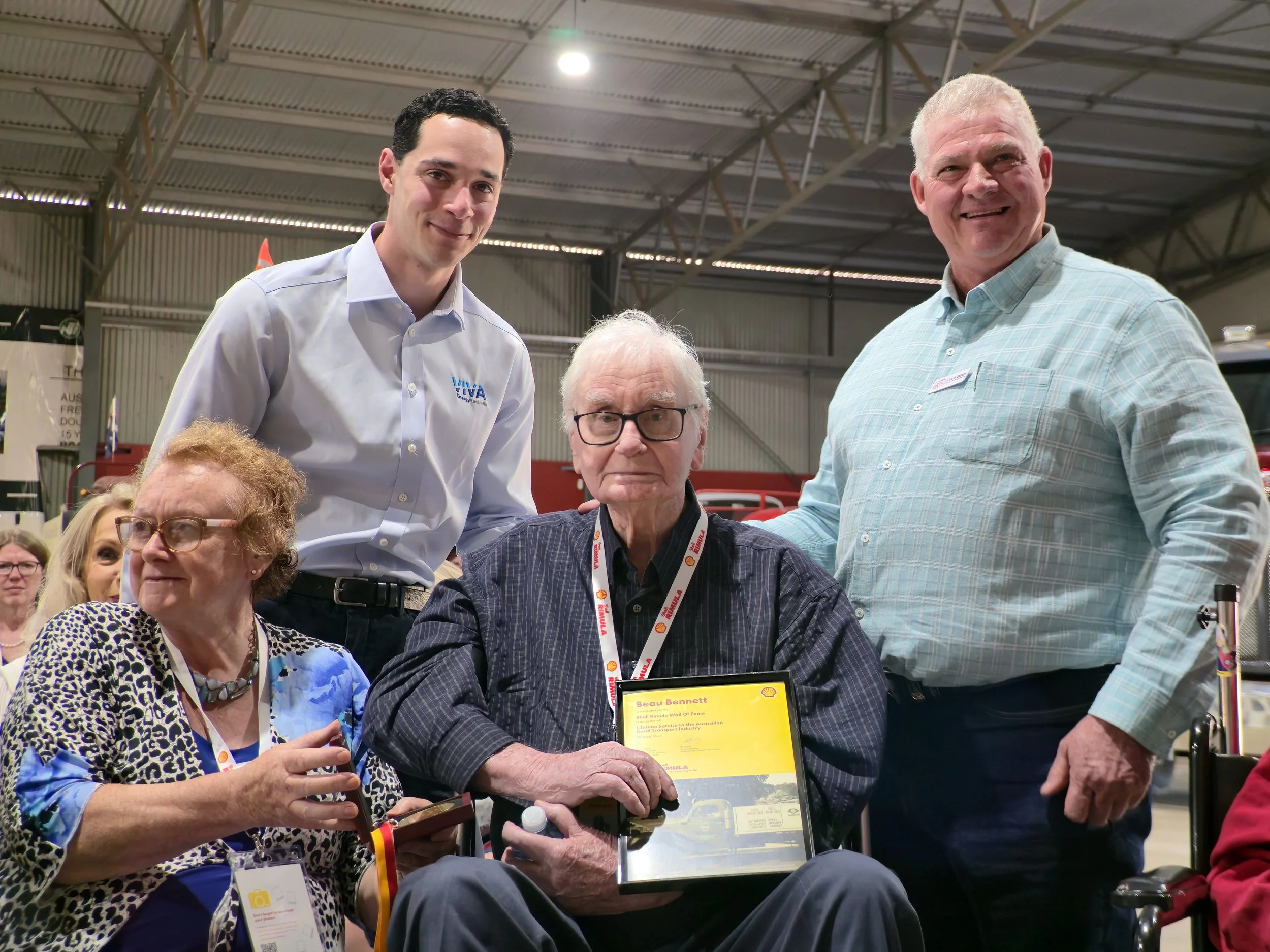
On his 17th birthday, Beau visited the local police station for his licence. The Sergeant told him, “I’ve seen you bush bashing in your parents’ paddock. If you dry my dishes, I’ll give you your licence!” After helping with the washing up, Beau proudly left with his licence.
Beau's first job was as the sole driver for Hammill's Quarries. He sought greater opportunities and soon found them when he was appointed as Leading Hand on the embankment and core wall concrete pour for the Eildon Dam project, supervising 16 trucks and a team of 20 men at just 22.
He then joined the Snowy Mountains Authority, operating two Thornycroft Mighty Antars as a push-pull road train configuration with fellow driver, Ned Walters. The pair synchronised gear changes using Tannoy radios, with Ned calling “ONE” and Beau responding “TWO”.
Returning to Gippsland, Beau became an owner-driver in 1958 with a 1956 Ford 600. His first major project was the construction of Tamboritha Road, later securing a three-year contract to build logging access roads throughout Gippsland's softwood forests.
Following a challenging period in 1980, Beau was able to rebuild his business, returning to owner-driving in a Ford Louisville, subcontracting to Pioneer and working on major infrastructure projects until retiring in 1996.
5. ALFRED BURKINSHAW
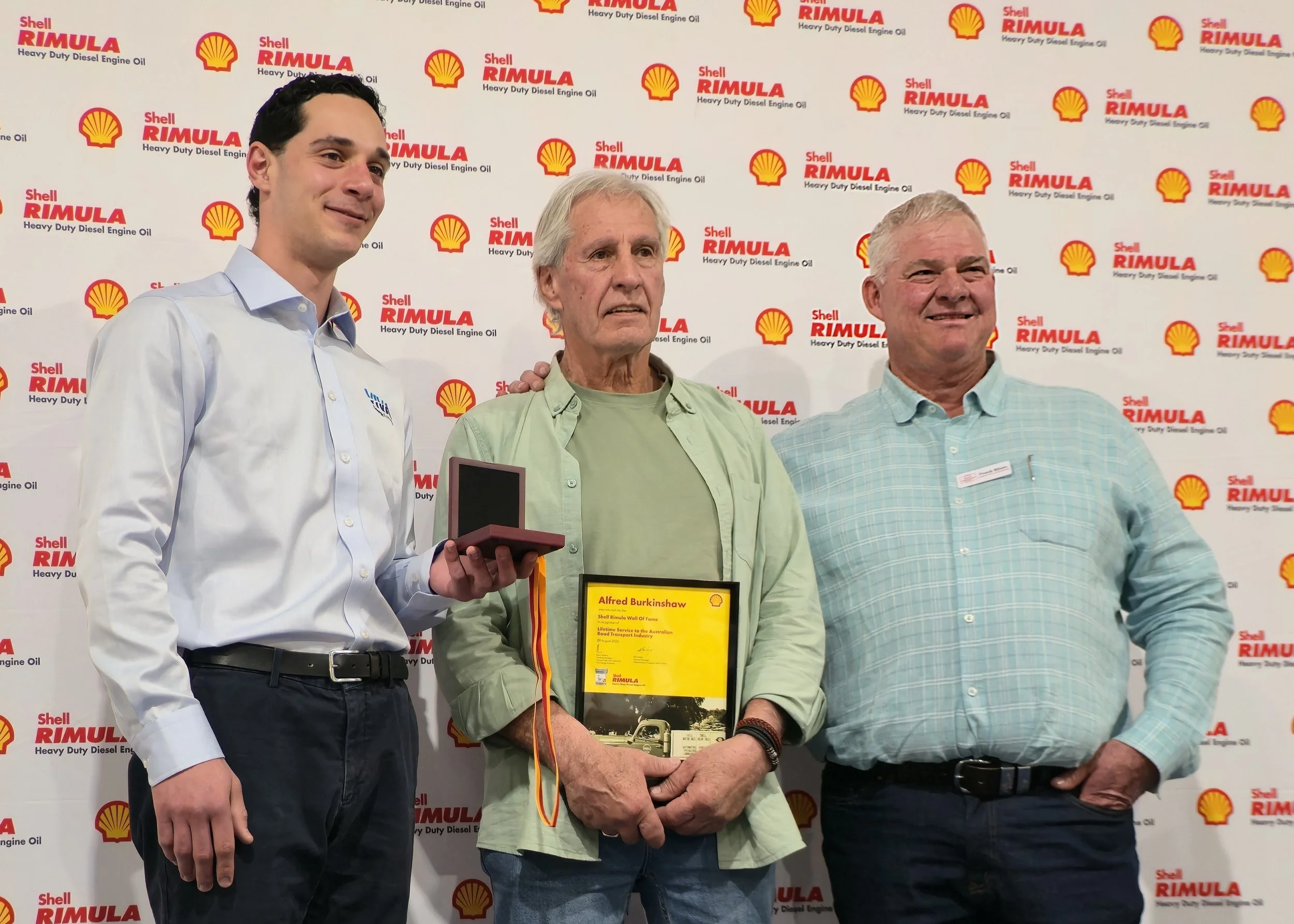
Born in London in 1925, Alfred was an apprentice motor mechanic before enlisting in the Royal Navy at 18. As a fleet mechanic aboard HMS Glory, maintaining fighter aircraft, Alfred decided he would one day return to its home port of Sydney.
In 1961, Alfred would fulfil this dream, settling in Sydney before relocating to Adelaide, where he joined Kennelly's Transport, first as a motor mechanic and soon back behind the wheel, driving across the Nullarbor. Alfred would purchase his own MAN prime mover and begin running north.
Alfred teamed up with his son Ray, hauling steel, building supplies and ATCO huts along the Stuart Highway to Darwin, then through Jim Jim, Jabiru and across Cahills Crossing into Arnhem Land to supply remote mining operations. The corrugations between Kingoonya and Darwin were so severe they frequently collapsed the roofs of the huts.
Alfred continued driving the Adelaide-to-Darwin run until his retirement in 1990.
6. DON CALLISS (Dec.)
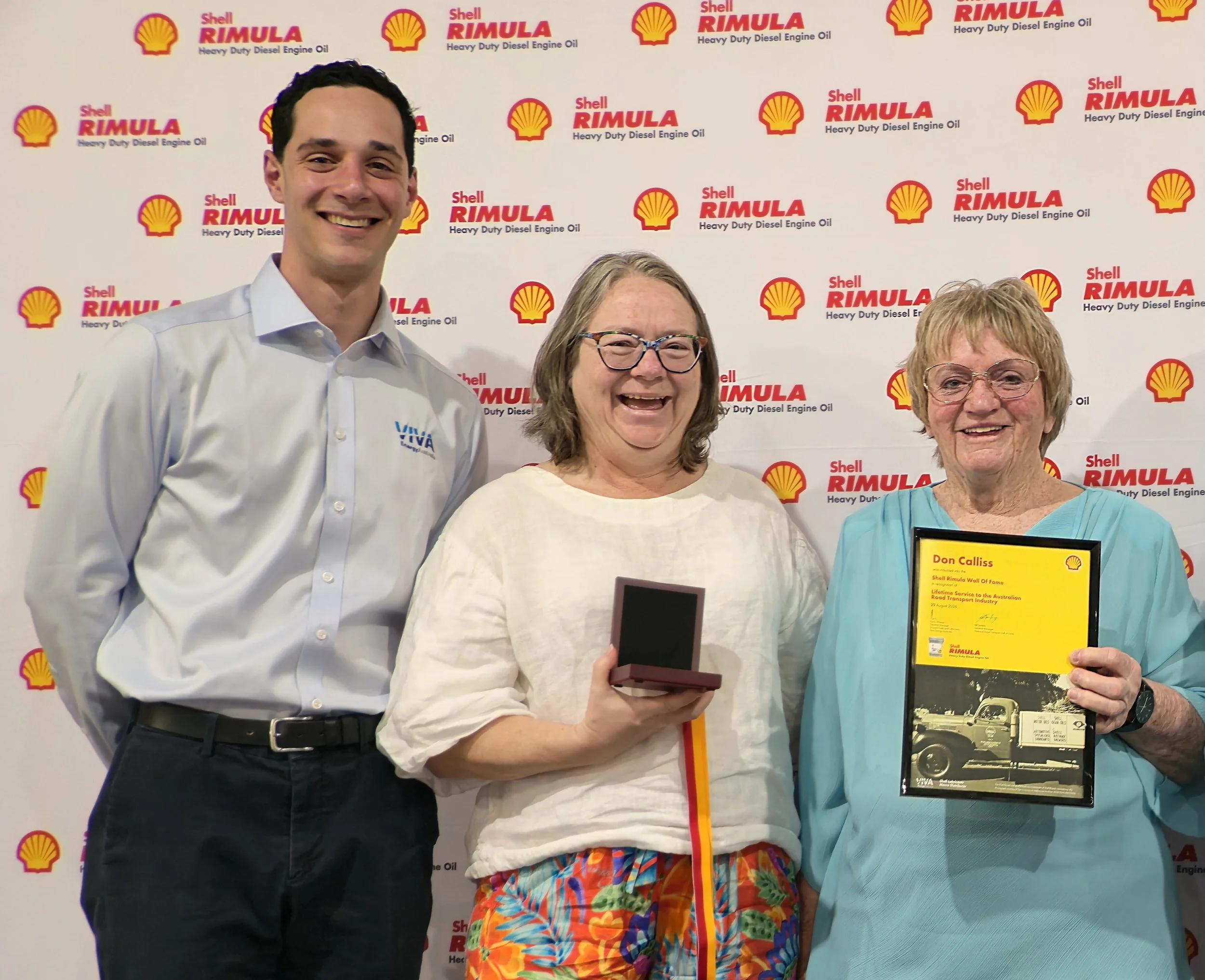
Born in 1932, Don bought the Hawker Wood Yard with his father at just 16. In 1949, he purchased his first new truck, a Bedford OD, hauling wool and operating the weekly mail service to Oraparinna and Blinman.
In the early 1950s, Don expanded into mining and construction, transporting supplies for bridges and culverts during the standard gauge railway extension to Marree.
After relocating to Lyndhurst, Don secured a contract with Mount Fitton Talc Mine that continued for more than 20 years. Joined by his brother Trevor, they established Calliss Bros. Transport. When petroleum exploration commenced in the Cooper Basin, Don delivered fuel and supplies to remote survey parties and was among the first drivers through Walkers Crossing, establishing a key route between the Birdsville Track, Moomba and Innamincka.
Don returned to long-distance transport in 1990 when widespread flooding along Cooper Creek created an opportunity to establish a direct freight service to Birdsville, eliminating the need to barge both freight and trucks across the river. He operated the service until retiring in 1995.
Donald Calliss passed away in 2023 at the age of 90. His old leather hat can be found at the Mungerannie Hotel and bears the tag: “Don Calliss – Old Time Truckie.”
7. CLEM CATALANO
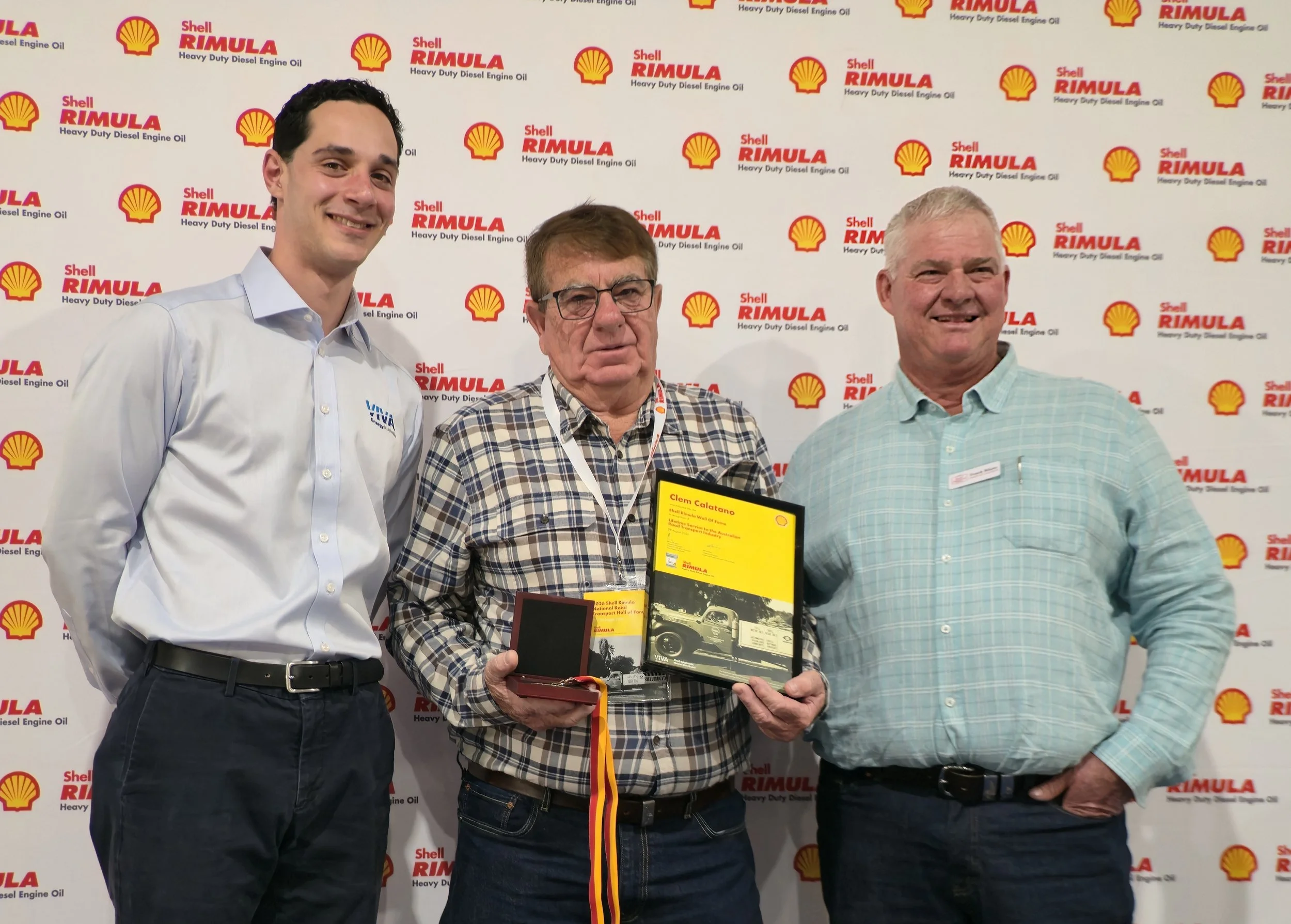
Born in Bunbury, Western Australia, Clem grew up in a family deeply connected to transport and earthmoving. His father, Joe and Uncle Bill established what became B & J Catalano Pty Ltd in 1962.
When the business was short-staffed, his father would take him from the classroom and put him to work. Under Joe’s guidance, Clem learned to drive heavy haulage floats and load and unload a wide range of machinery before even finishing school.
Following Joe’s passing in 1995, Clem assumed a leading role in the family business alongside Bill, and cousin, Stephen. Although his responsibilities today are largely centred on managing the business, Clem still enjoys climbing behind the wheel, taking a truck out on the road and spending time away from the office.
Clem is also a founding member of the WA Mack Muster and Truck Show, which has raised significant funds for the Harry Perkins Institute of Medical Research. He continues to support cancer charities and community events across Western Australia.
8. DOM CERTOMA
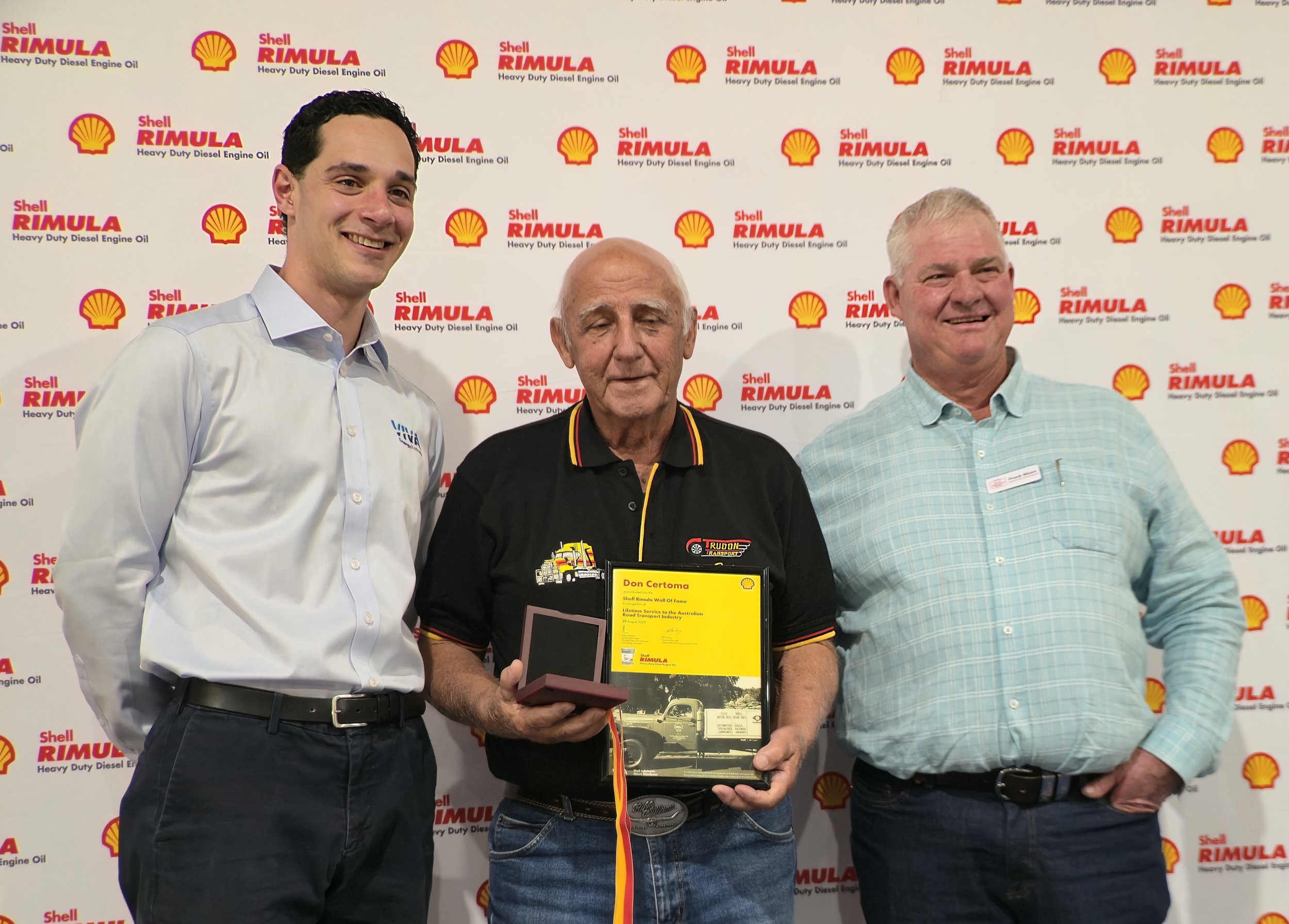
At 16, Don obtained his driver’s licence at Liverpool Police Station after testing in the family Bedford truck. Despite being told not to drive the truck home as he only held a car licence, he did exactly that.
When his father suffered a back injury, Don stepped up, travelling to Sydney’s Haymarket to collect produce for the family fruit shop.
Don later established a fish transport operation, collecting seafood from the Central Coast and Newcastle and delivering overnight to the Sydney Fish Market, often working through the night to meet the morning markets.
With his wife Trudy, Don established Trudon Transport, building a business carrying fuel, coal, grain, bricks, concrete and general freight. His trucks included a 1981 Mack Super-Liner, which remained in service for 28 years and travelled more than 3.5 million kilometres.
A career highlight was securing Shell’s regional pallet freight contract after initially subcontracting through Brambles.
Don’s final 20 years were spent with McCulloch Bulk Haulage, transporting fertiliser, grain, cottonseed and other bulk commodities throughout NSW and Queensland.
Today, Don enjoys retirement in Queensland with Trudy and their children and grandchildren.
9. STEVE CORCORAN
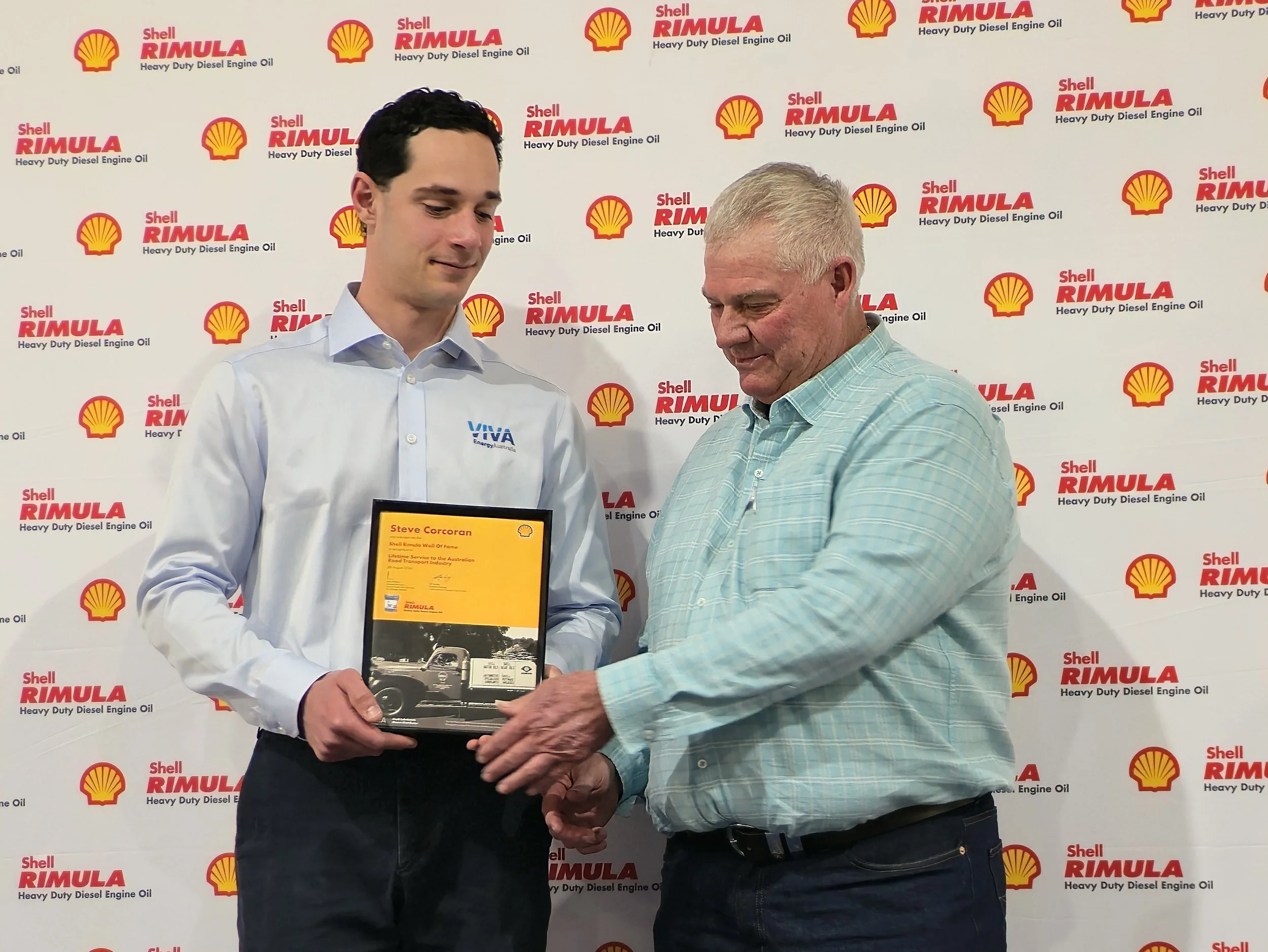
During a family holiday to the Northern Territory when watching a triple road train thunder past, Steven knew exactly what he wanted to do with his life.
His career has taken him across Australia, hauling produce, grain, cotton, fertiliser, timber, wool and general freight. He has also transported Franna cranes, drilling mud, refrigerated freight, earthmoving equipment and sandstone, gaining experience across almost every aspect of interstate transport.
Following the tragic death of his friend David Barrett on the Bruce Highway in 2012, Steven advocated for safer conditions across the industry. Between 2013 and 2016, he personally funded his attendance at Road Safety Remuneration Tribunal hearings and meetings, advocating for safer workplaces, realistic scheduling and fairer rates for drivers. His efforts contributed to orders introducing drug and alcohol testing, safe driving plans and minimum safe rates for long-distance freight.
Today, Steven continues doing what he loves, driving interstate for BHT Logistics behind the wheel of his favourite truck, a Kenworth SAR Legend No. 163.
10. GREG CRAIG
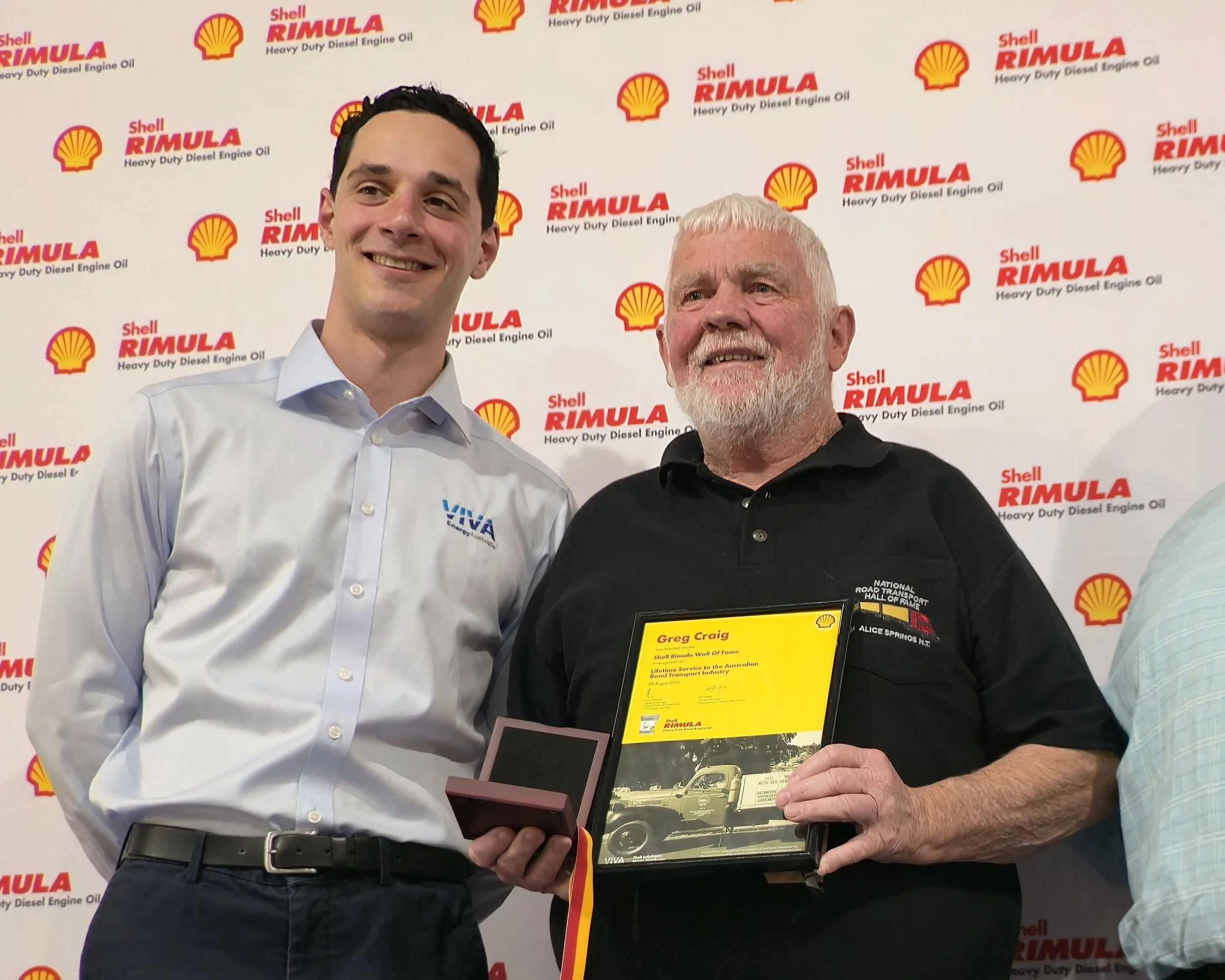
Born in Warragul, Greg left school at 17 to help his father at the family petrol depot, delivering fuel to farms, sawmills and local businesses in an Austin tray truck.
He later joined the Country Roads Board, operating earthmoving machinery before becoming a Leading Hand Grader Operator. While working on the Drouin Bypass, watching quarry trucks sparked his return to transport, driving a Volvo G88 at night hauling woodchips from Marysville to Morwell.
Greg became an owner-driver with an International S-Line 2670 and two-axle dog trailer, subcontracting to Jindivick Quarry. By 1990, he had grown the fleet to seven trucks.
Following the quarry’s closure in 2001, Greg returned to local tipper work. He purchased an International Eagle 9900 with a Caterpillar C15. A devoted Caterpillar enthusiast, Greg added a Kenworth SAR 404, also fitted with a 550-horsepower C15, in 2009.
Although retired, Greg enjoys helping local operators when needed and regularly catches up with the many mates he made throughout the industry.
11. JOHN DAY
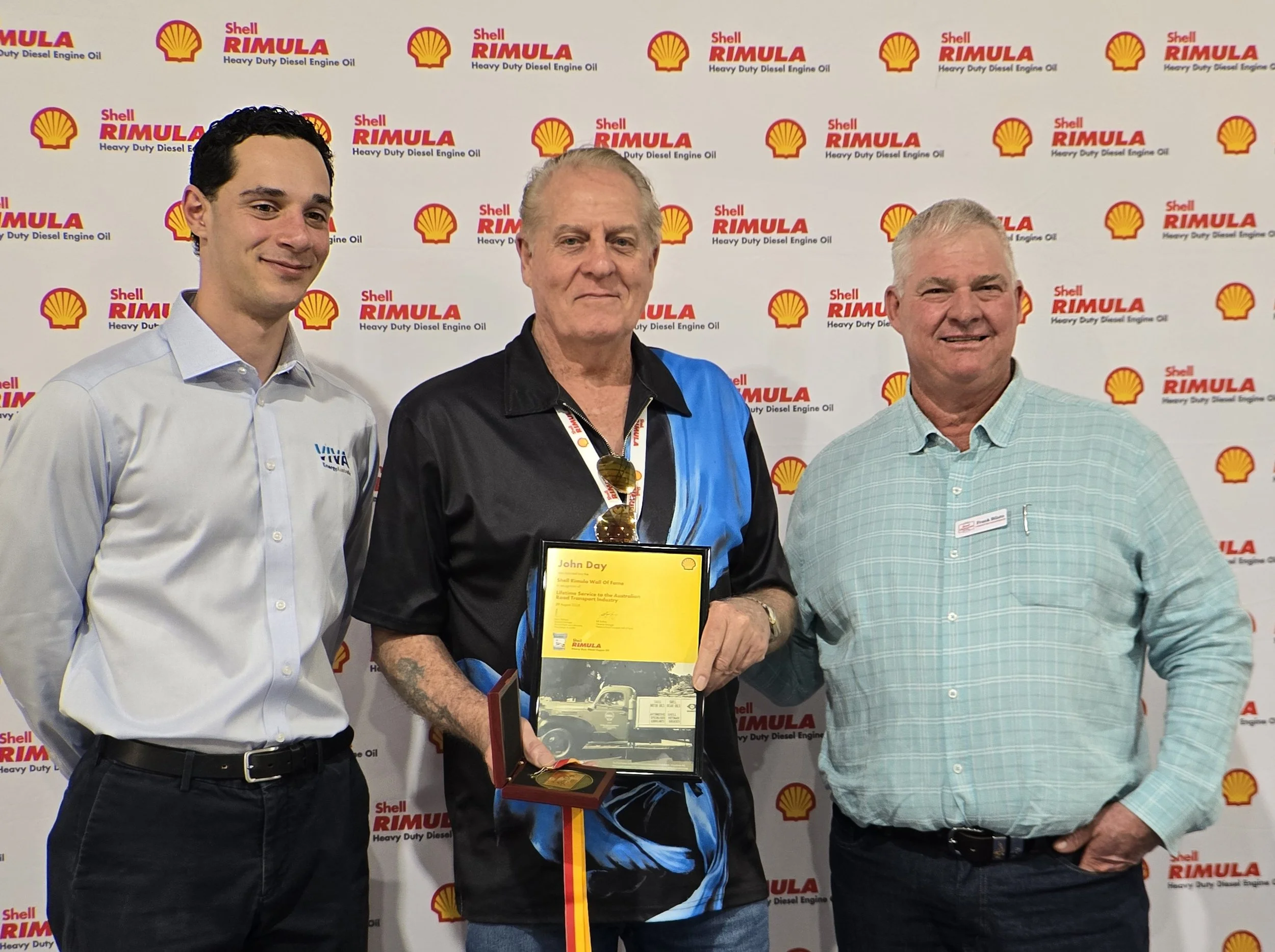
John’s fascination with trucks began as a boy in Kent, England, with an old Thornycroft in the family backyard. After immigrating to Australia in 1964, he worked on the Fremantle wharves before joining Midland Railway Workshops as a shunter and yard truck driver.
He later joined Gascoyne Traders and Sadleirs Transport, progressing from local work to the Kalgoorlie run in a Bedford TK and Commer Knocker. He then transported Solarhart equipment to Darwin, returning south through Adelaide and Melbourne across the old dirt Nullarbor.
John purchased his first Kenworth in 1979, but a serious 1982 accident destroyed it. After a seven-year legal battle, he secured compensation when Main Roads was found responsible. A 1985 rollover involving a failed Fruehauf trailer led to another lengthy legal battle, but John persevered.
John later became one of the first B-double drivers between Perth and Melbourne with Bowhaul Express. He moved into management with McFee Transport and K&S Freighters before returning to the road with Wally Campbell Heavy Haulage in 1998. He spent 16 years operating low-loaders across Australia before retiring from Link Low Loaders.
12. WILLIAM FRITCHLEY
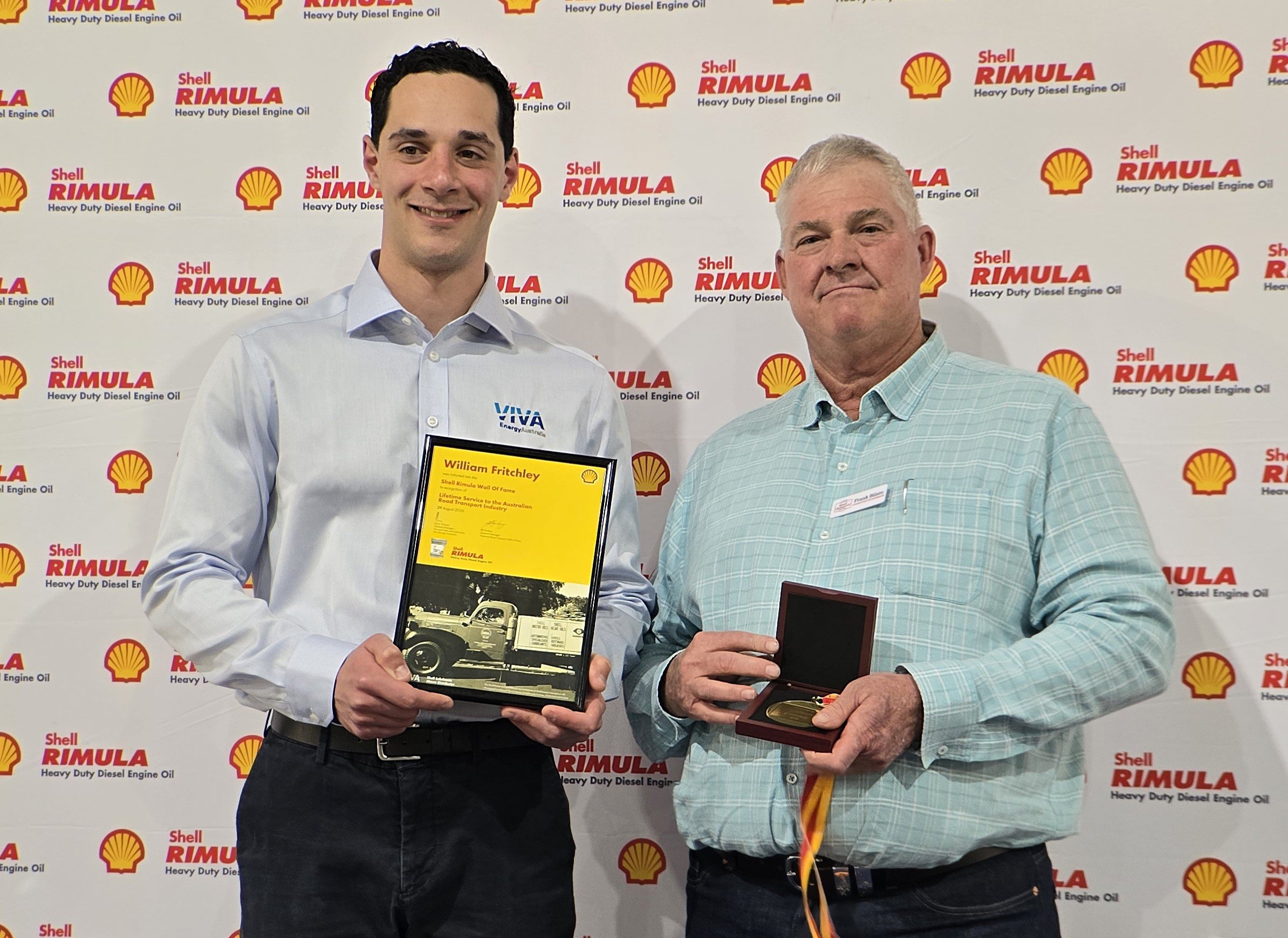
Bill was born in Burma in 1938, immigrating to Perth in 1969, with his wife and three children and a fourth child on the way. Determined to build a better life through hard work and opportunity, Bill entered the transport industry with The Shell Company at North Fremantle, initially working as a forklift operator handling fuel, gas and lubricant products.
In 1970, he progressed to driving fuel tankers, which he continued to do for 28 years with Shell. In 1998, Bill joined Mitchell's, working on BP operations in Kewdale for the next seven years before taking the next step in 2005 by becoming an owner-driver.
Despite being diagnosed with bladder cancer in 2015 and bowel cancer in 2020, he continued working whenever his health allowed, maintaining his connection to the transport industry, his customers and the profession he loved.
In 2023, at 85, age-related licensing requirements threatened to end Bill’s driving career. He successfully advocated for an alternative assessment based on annual medical and practical driving assessments, allowing him to continue driving and establishing a precedent for other experienced older drivers.
Today, Bill continues to earn the respect of customers and younger drivers alike. He remains committed to professional development through dangerous goods accreditation and annual refresher training.
13. DIGBY GILES
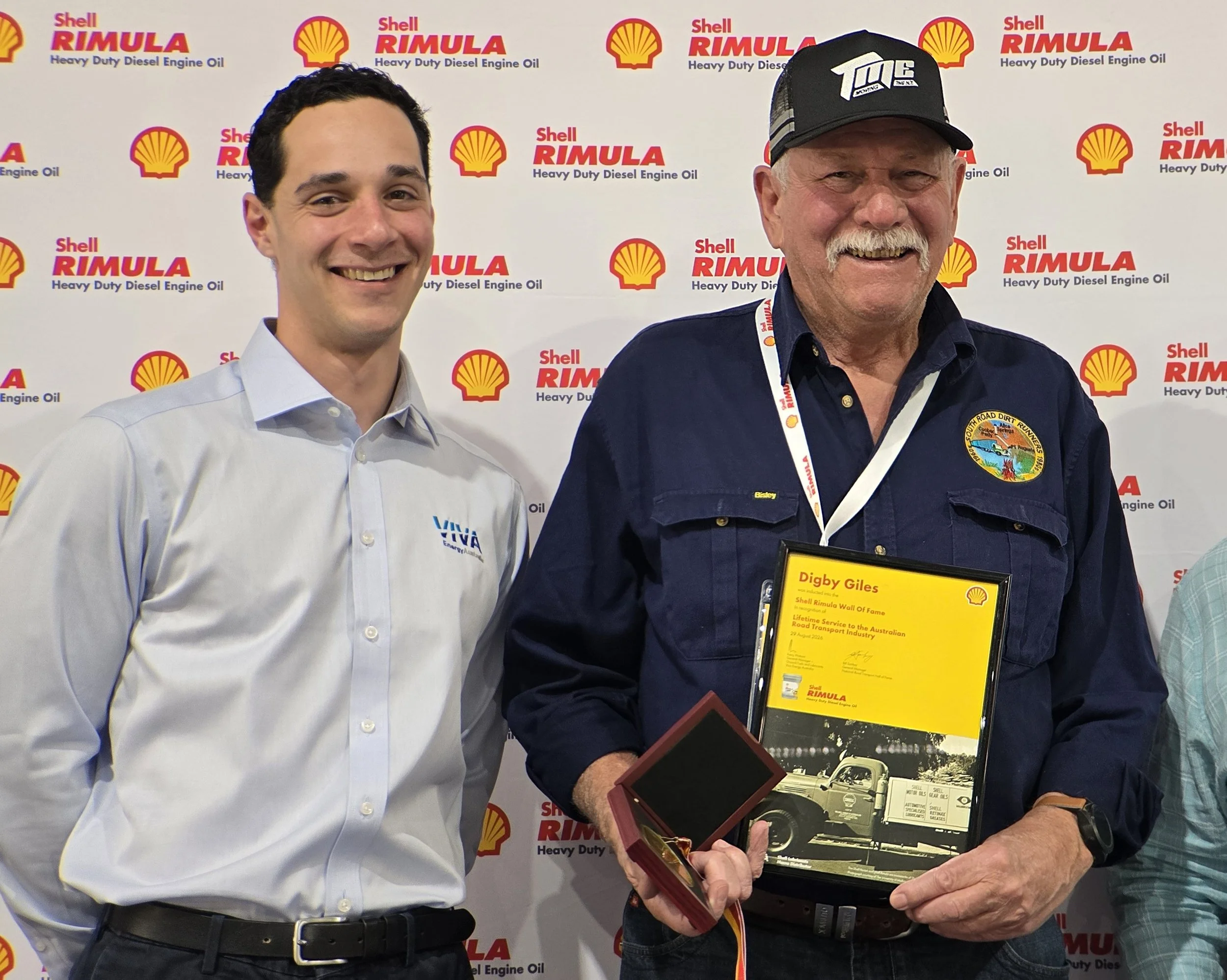
Digby was born into one of South Australia’s pioneering pastoral families. Growing up at Wintinna Station, he watched his father Peter drive an old red Thames to Oodnadatta for supplies.
During school holidays, Digby gained practical experience operating a grader while working with road contractor Winston Greenwood maintaining sections of the old Stuart Highway.
After completing a mechanical apprenticeship at Roseworthy Agricultural College in 1980, Digby returned to Wintinna to work alongside his father. A Mercedes-Benz 1418 was used to transport cattle around the station, move stock to Cadney Park rail siding and occasionally haul livestock to Adelaide, returning with hay, fuel and supplies.
In 1988, the family added a Mack, which became the backbone of station transport for almost three decades, hauling livestock to Adelaide until 2015 when Wintinna Station was sold.
14. ALEC GORDON
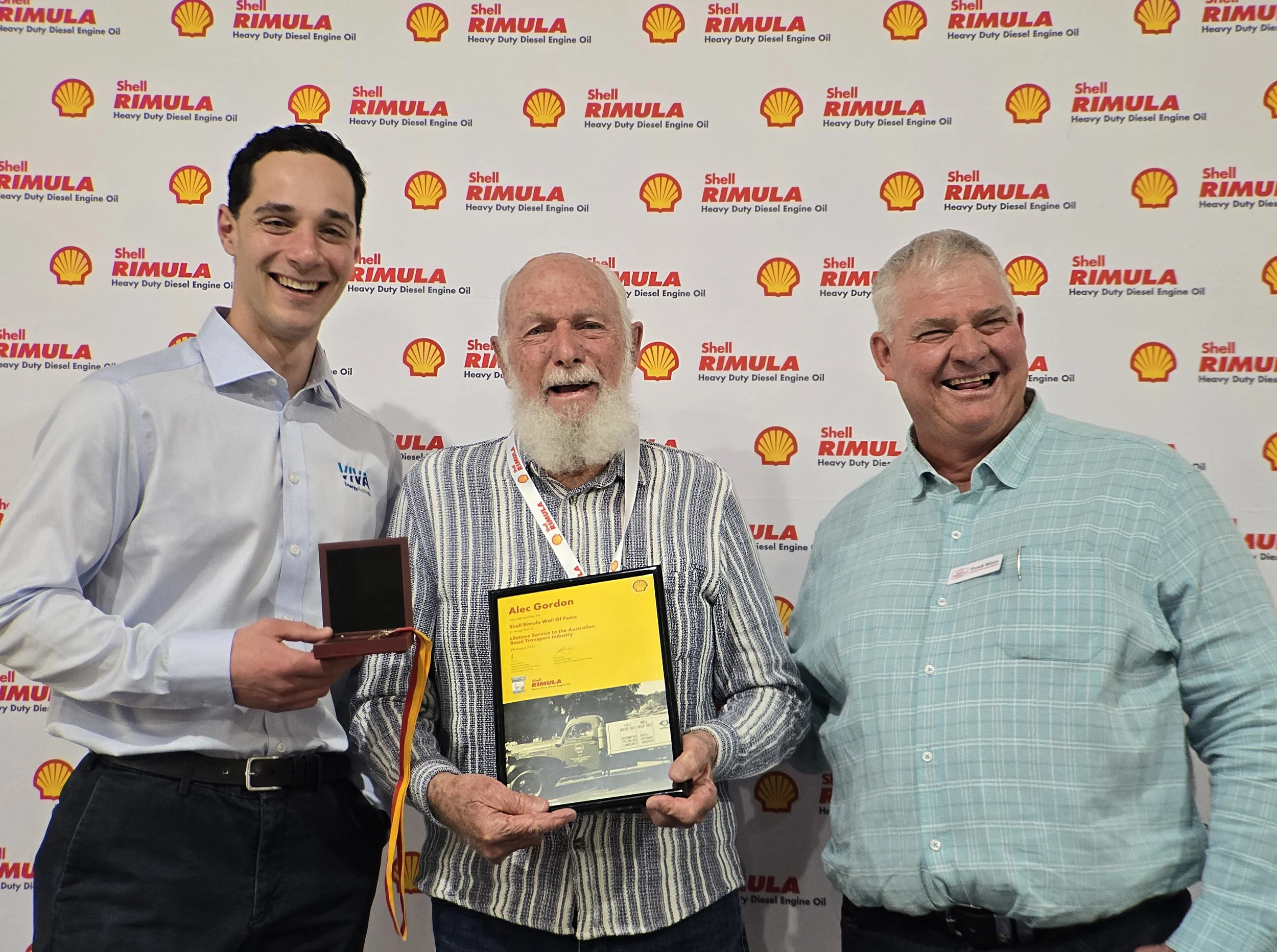
Alec began driving professionally in the late 1960s with T & P Broz, delivering bricks throughout Perth and regional WA. He later joined Bell Brothers and relocated to Karratha with his wife Pauline, hauling earth for the first house pads as the town was being established.
In 1970, Alec joined Mayne Nickless. He drove a Mack R700 with a German-built Scheuerle modular trailer, transporting transformers, generators, industrial equipment and large vessels. Alec became heavily involved in moving oversized mining equipment throughout the Pilbara, with Pauline often accompanying him as rear pilot driver in the family’s XB Falcon.
Among Alec's most memorable assignments was the transport of an A.P. & H. Model 2100 electric shovel from Tom Price to Paraburdoo for Hamersley Iron. On the final climb into the mine, three bulldozers pushed from behind while two Mack R700s pulled from the front to conquer the steep grade.
In 1984, Alec and Pauline established A & P Transport, hauling general freight, house frames and building materials between Perth and the Pilbara.
In 2023, Alec sold A & P Transport and officially retired, bringing to a close an outstanding 55-year career on the road.
15. SPENCER GRAMMER
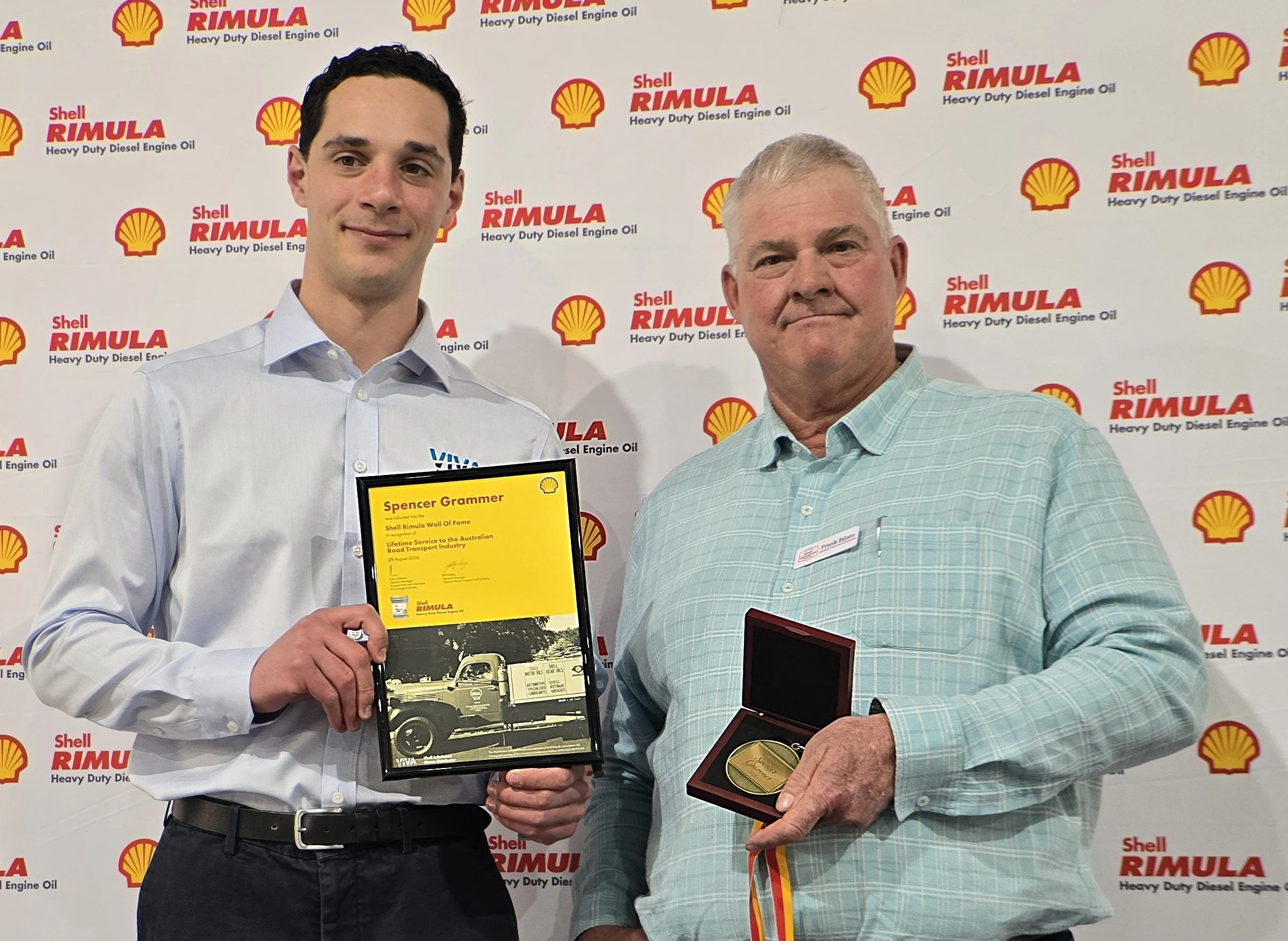
In 1963, Spencer established Truck & Trailer Repairs in Salisbury, Brisbane, with the business becoming Haulmark Trailers in 1964. What began as a small Queensland operation grew into one of Australia’s leading trailer manufacturers, supplying livestock, mining, construction, freight, defence and road train equipment nationwide.
As founder, director, managing director and engineer, Spencer worked closely with transport operators to develop trailers suited to Australia’s harshest conditions. Haulmark became particularly known for cattle trailers, road train equipment, side tippers and specialised freight combinations.
Spencer served as Managing Director from the late 1980s until 2025, as a board member from the company’s founding and as Chair from 2023 to 2024. After more than six decades in the industry, he retired in 2025 at the age of 91.
In 2026, Spencer was appointed a Member of the Order of Australia (AM) for significant service to trailer manufacturing and Defence capability. His legacy lives on in the thousands of Haulmark trailers travelling Australia’s highways and outback roads.
16. DAVE GREY
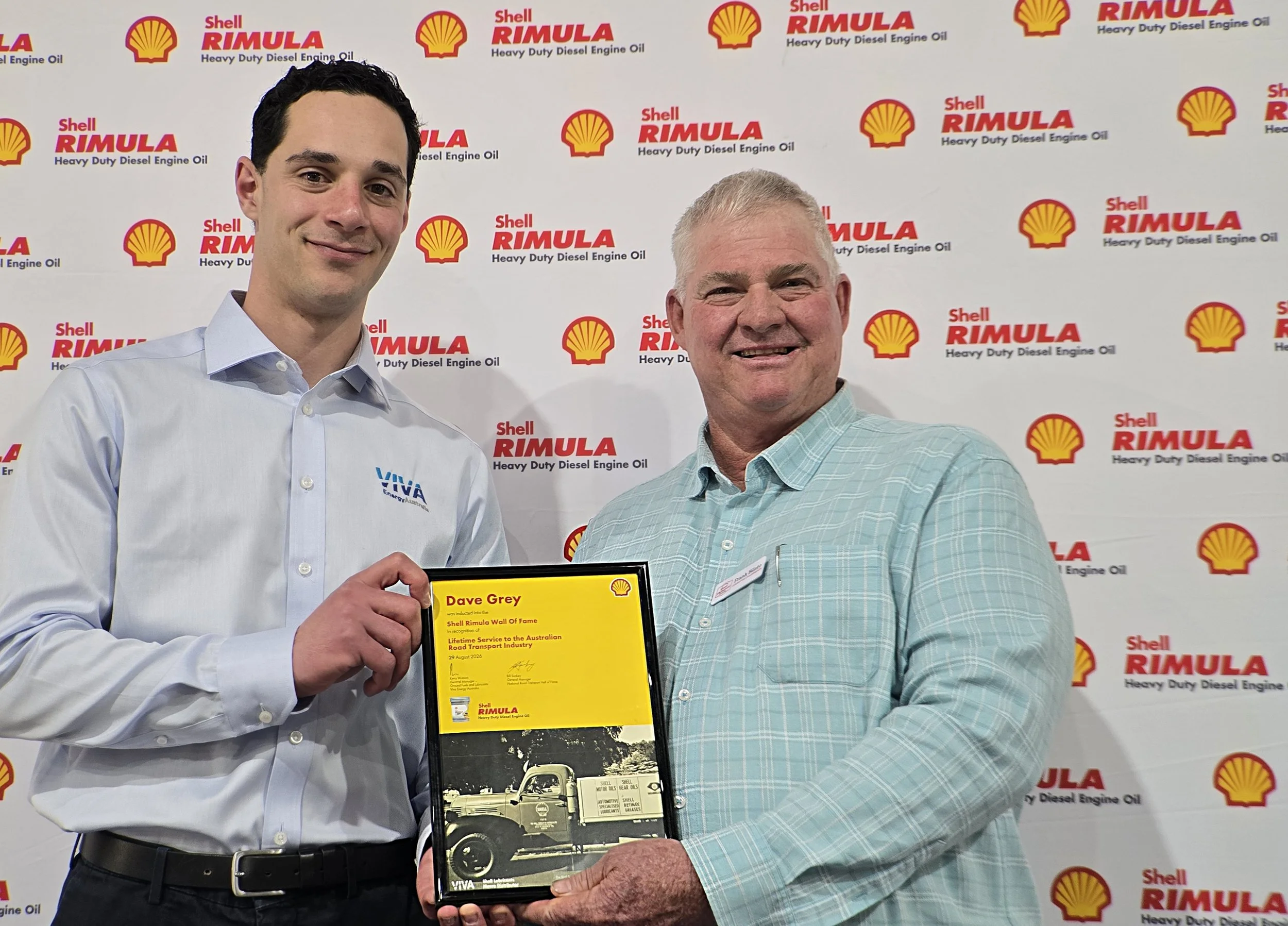
In the early 80s, Dave was working with MacMahon’s in Alice Springs building roads when a stop at De Rose Hill led to an unexpected 12-year chapter with Noel Coultard. Driving Noel’s Mack Cool Power 320 R600, Dave delivered fuel and oil from Kulgera to some of Central Australia’s most remote communities, stations and roadworks.
Runs often took six to eight days, longer in wet conditions. Dave carried a well-stocked tucker box, spare parts, tools and a long-handled shovel that doubled as a barbecue plate.
After Noel sold the business in 1989, Dave continued the work, later driving a Mack Econodyne and one of the last Mack Superliner 500s.
His career then took him from Alice Springs to Adelaide and across Australia, hauling stockfeed, produce, Visy Board, milk, wine and general freight. Later with K&S Transport, he ran between Perth and Darwin and serviced WA mines with oversized machinery before he retired from driving in 2018.
17. RON HARTRIDGE
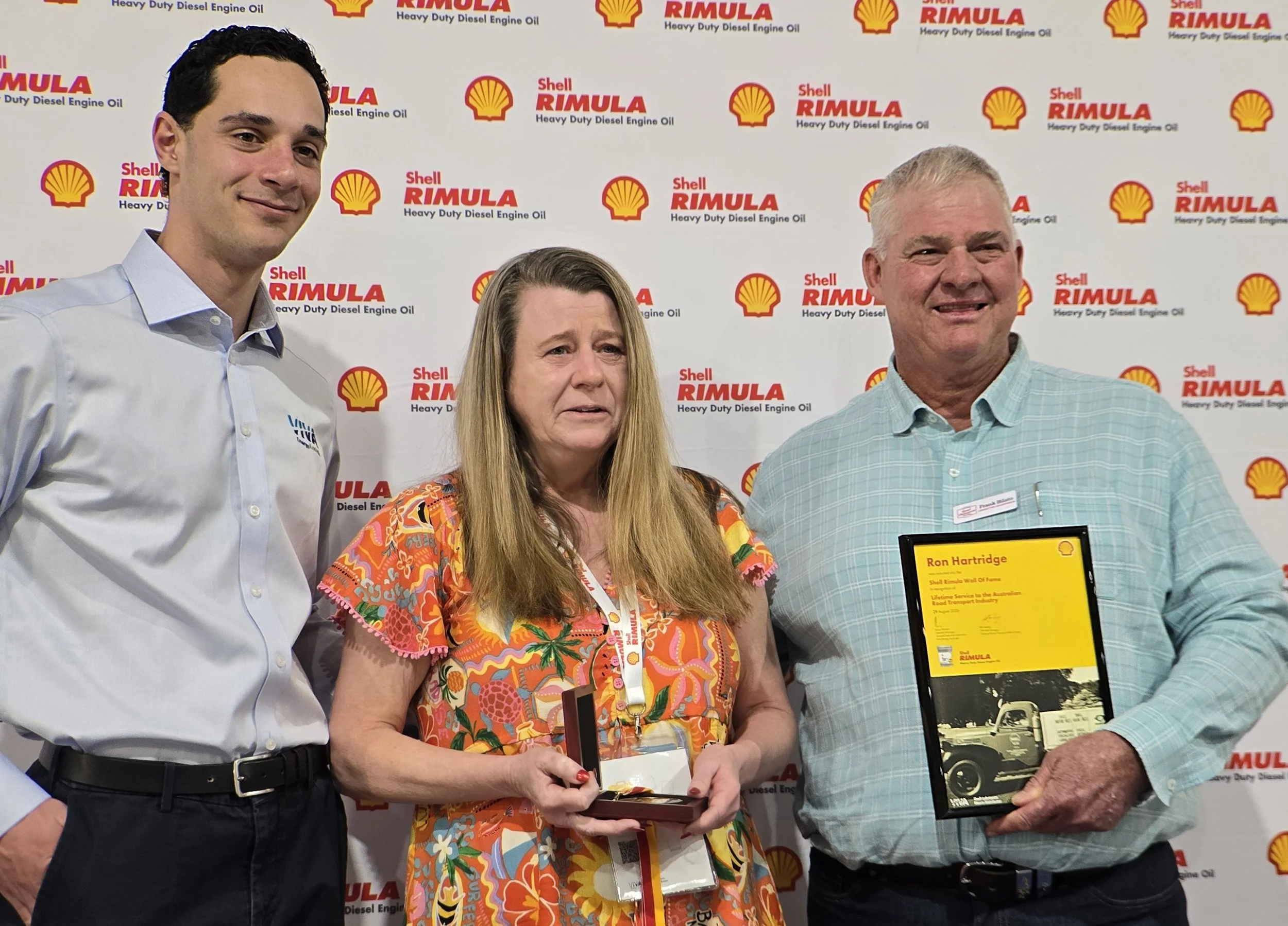
Ron Hartridge was a pioneering figure in Australia’s interstate road freight industry, building Hartridge Transport into a highly regarded operation during the formative years of long-distance road transport.
During the 1950s and 1960s, Ron developed Hartridge Transport, earning a reputation for professionalism, reliability and operational excellence. His greatest contribution, however, was the people he brought through the industry. Ron mentored and developed countless drivers, mechanics and transport professionals, many of whom went on to become respected industry leaders.
His influence is reflected in the careers of National Road Transport Hall of Fame inductees including Tony Langridge, Graeme Doyle and Ronald Brown, all of whom worked for Hartridge Transport and have acknowledged Ron’s influence on their careers.
Although much of Hartridge Transport’s history has been lost to time, Ron’s legacy lives on through the people he mentored and the lasting respect of those who worked alongside him.
18. MARTIN HICKEY
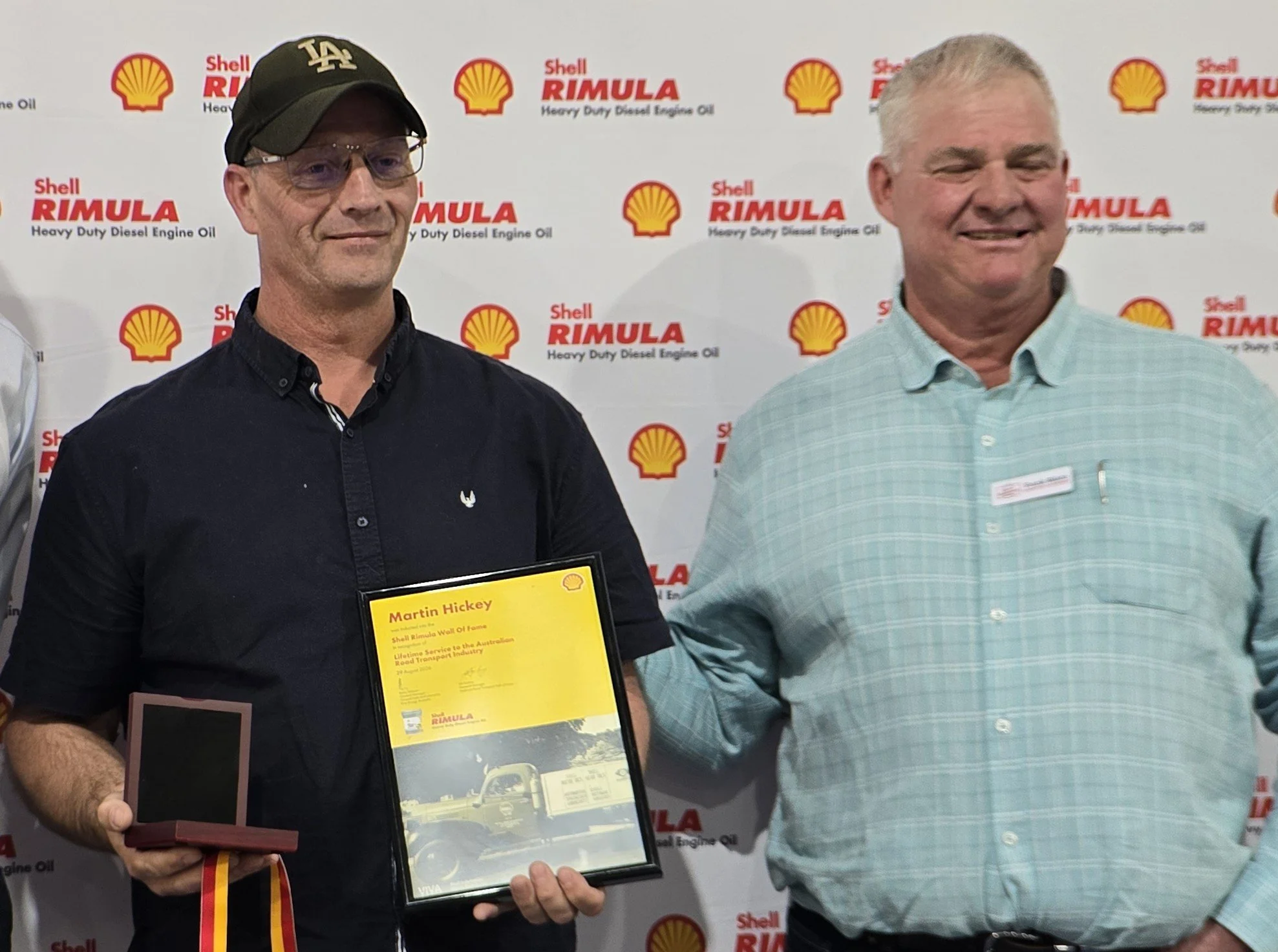
From an early age, Martin developed a passion for trucks, rarely missing an opportunity to head out on the road with his father, Jim. More than once, that meant skipping school when the chance arose, whether his mum knew about it or not!
Martin began his transport career in 1994 with Cahill Transport in Melbourne, driving a Mack CH Fleetliner on express freight between Sydney and Melbourne.
In 1997, he joined Seymour Freight, driving a JCR 500 Isuzu before moving to Barkly Transport in 2000. Hauling Corinthian Doors throughout the eastern states, Martin progressed from a Kenworth T600 to his favourite truck, a Kenworth T908, running between Melbourne, Sydney and Brisbane.
He later joined Maloney’s Transport of Jindera as a tow operator for Fruithaul at Dalmore. Martin continues in the role today, driving a Kenworth K200 on regular market runs between Melbourne, Sydney and Brisbane.
A firm believer in getting the job done, Martin’s favourite saying is: “You don’t park it, till you make Market!”
19. JASON HINDS
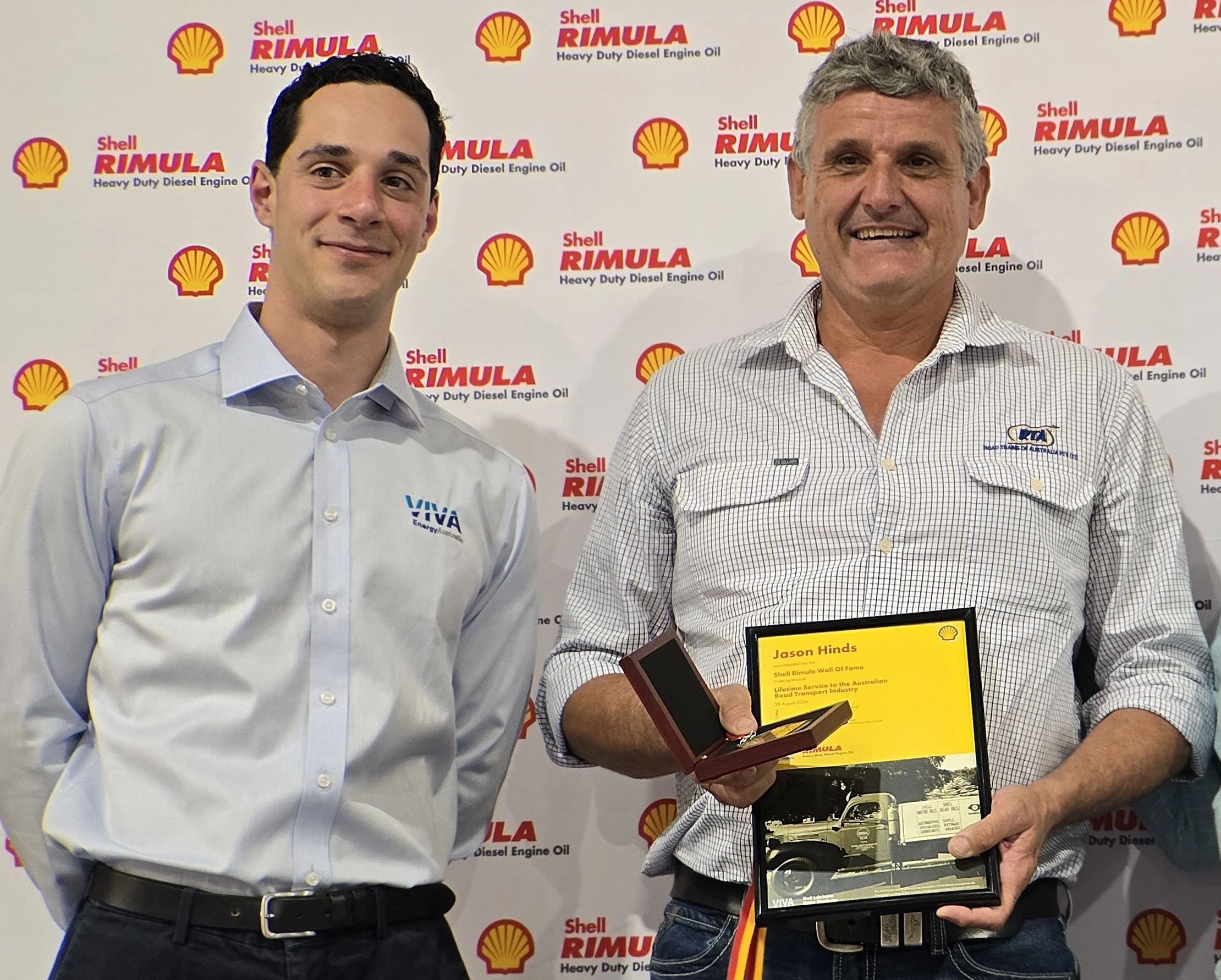
Jason’s career began with work experience at Northern Cement, followed by a four-year diesel mechanic apprenticeship with Cesco in Darwin in 1987. After three years with Mack Trucks, Jason joined Hamptons Transport Services in 1994, when the company was still establishing itself in the Northern Territory.
With just six cattle trucks based in Darwin, Jason soon found himself in Warrego, hauling concentrate to Mount Isa. That job marked the beginning of a 30-year journey with Hamptons. After several years in Warrego, he moved to Borroloola, servicing and maintaining the company’s equipment.
When Hamptons purchased RTA around 2006, Jason was heavily involved as the livestock fleet expanded to around 30 trucks operating across the NT, Queensland and WA. Over the years, he has managed countless trucks, trained and mentored more than 20 apprentices and tackled everything from roadside breakdowns to outback repairs and maintenance.
In 2010, Jason purchased his first truck, a Kenworth 2650, and established Hinds Haulage, which has since grown to three trucks.
After decades of hard work, Jason remains passionate about the industry and is especially grateful to Dave, Bart and Paul for their support, friendship and the opportunities.
20. BROCK HOLROYD
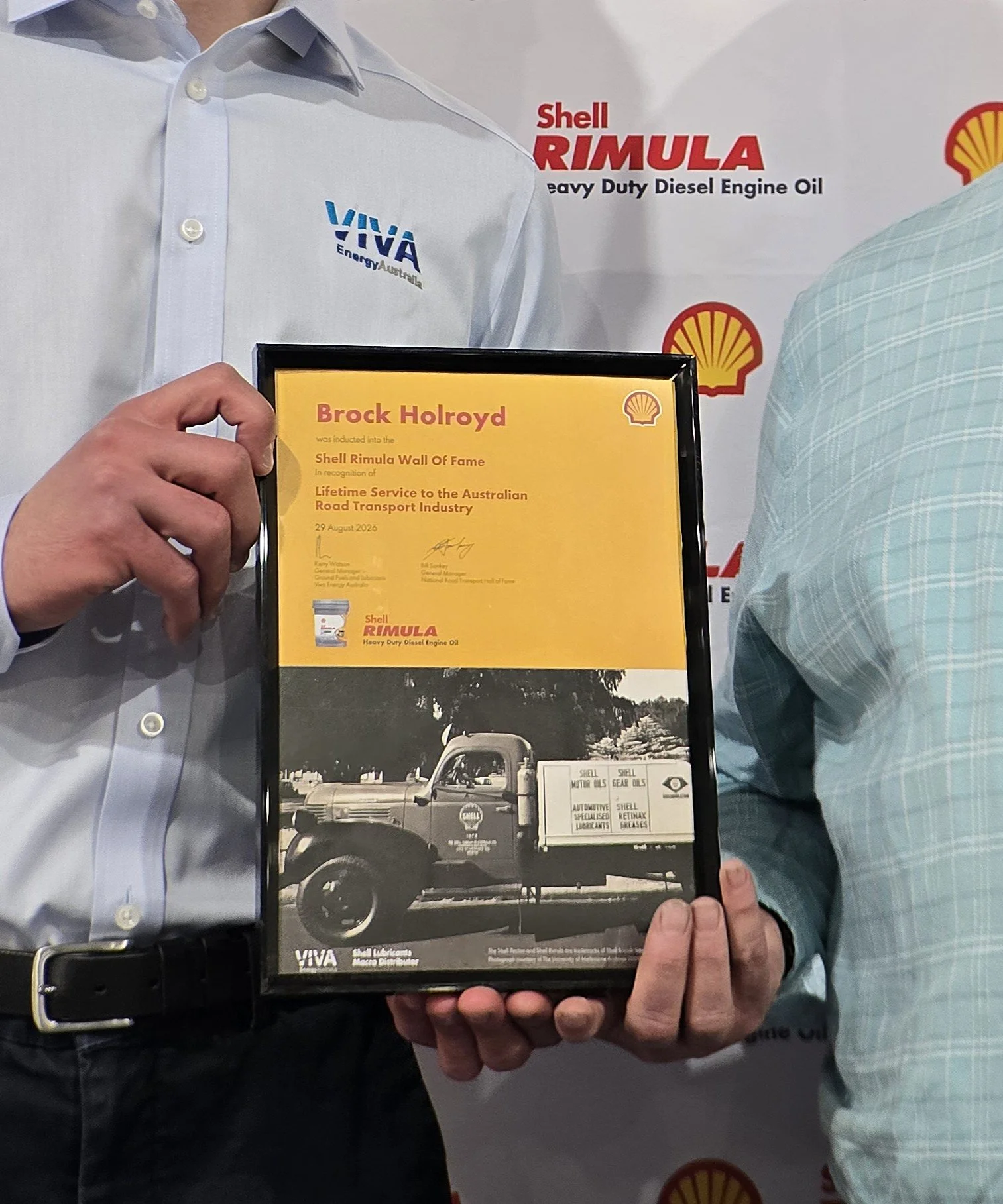
Brock was born in Taree, in 1988. Transport was in his blood, following in the footsteps of his father and grandfather, both truck owners and drivers.
At 15, he began a Heavy Diesel Mechanic apprenticeship with Brian Smith in Walcha, gaining driving experience in an International S-Line tipper. Qualified by 19, he soon moved into log truck driving and spent the next decade working in logging before becoming an owner-driver.
Drawn to life on the open road, Brock moved into interstate freight around age 25, driving for O'Neils of Kempsey and Justin Booth. He later established his own logging operation, but after the 2019 bushfires reduced available work, he refitted several trucks with sleeper cabs and returned to interstate transport, operating his Kenworth T909, a truck he still proudly owns today.
Brock has hauled everything from timber and fresh produce to oversized machinery, custom-built boats and Australian Army tanks. In 2023, he joined BHT before moving to B&K Bulk Haulage. After temporarily stepping away from driving in 2026 due to health, Brock remains a respected part of the trucking community, with a lifetime of experience and stories from the road.
21. TERRY HOSSACK
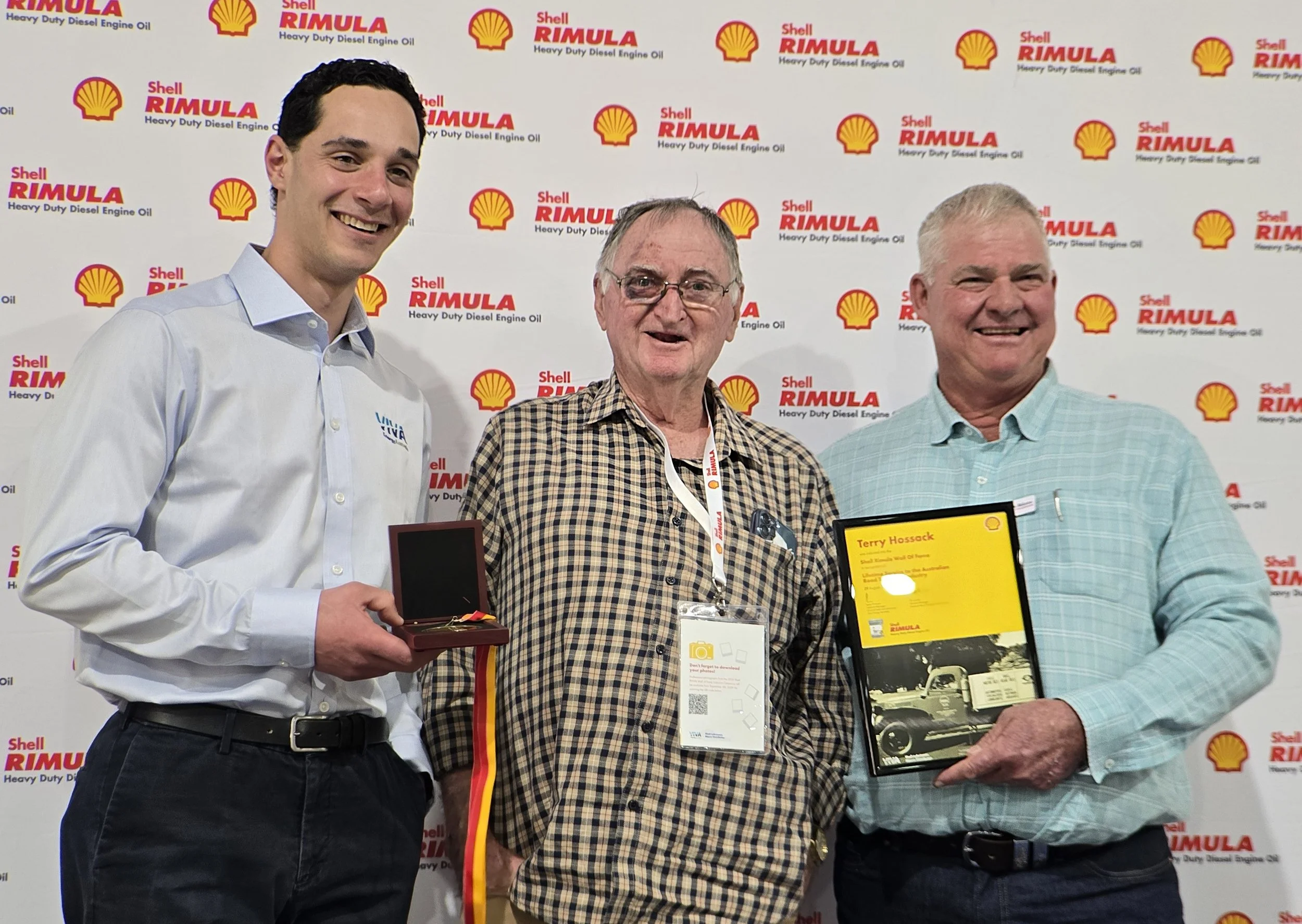
Terry was born and raised in Baddaginnie, Victoria, on the doorstep of the Hume Highway. Growing up around trucks and machinery, Terry was introduced to transport riding beside his father in the family tipper.
By 14, Terry was already driving paper trucks between Benalla and Melbourne in an AEC. He became such a familiar sight on the highway that when he went for his licence at 19, the police officer remarked that he was sure Terry already had one.
After completing a panel beating apprenticeship, Terry returned to trucking in 1969 with ESSO, driving a Mercedes-Benz 1418 fuel tanker.
Terry later joined the City of Wagga Wagga. It provided the perfect balance of challenging work, pride in presentation and, most importantly, the opportunity to return home to his family each night. Every year brought a brand-new Kenworth but the Kenworth W-model remained his favourite.
A devoted husband and father of five, Terry always took pride in his family and in building a career that allowed him to enjoy both life on the road and at home.
22. GARRY JONES
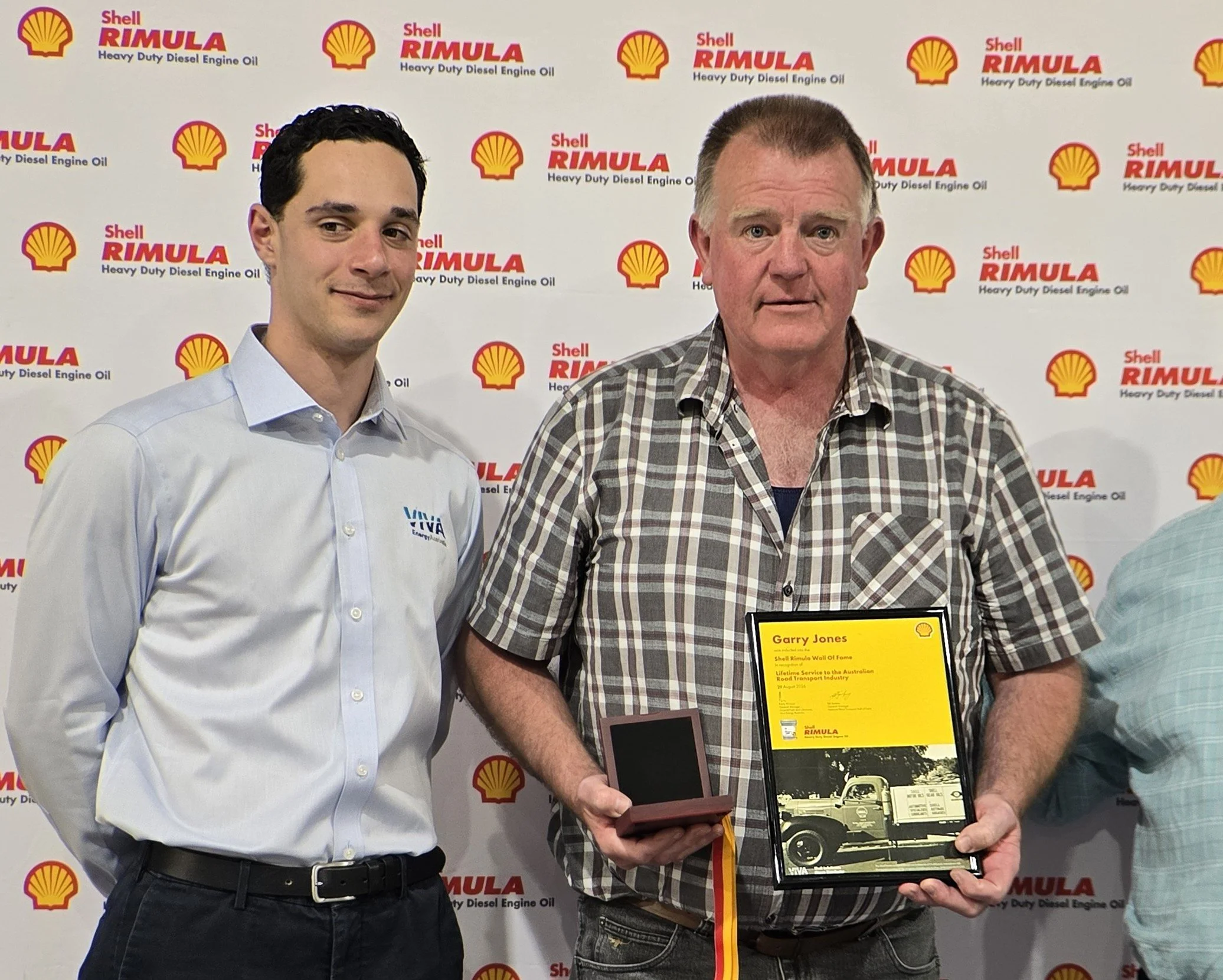
Under the guidance of his father, John Jones, Garry learned to drive in an International R195 fitted with a five-speed gearbox and three-speed "Joey" auxiliary transmission.
While completing a Fitter and Turner apprenticeship at Yallourn Power Station, Garry spent nights hauling logs between Moe and Longwarry. After qualifying, he drove a Volvo G89 for Henry Wosley before moving into timber haulage for Australian Paper Manufacturers at Maryvale. He later gained interstate experience with TNT and Inner-Motel contracts in an International S-Line.
At 23, Garry became an owner-driver, purchasing an International S-Line and establishing his own transport business. Although he hauled bricks, milk powder, steel pipe and general freight, logging remained his passion, hauling pine and native hardwood throughout Victoria and interstate.
As Jones Logging grew, Garry added a Kenworth W-model for logs, machinery and general freight. Today, the restored W-model remains a source of pride, alongside a Kenworth T950 and growing earthmoving fleet.
23. MAX KEOUGH
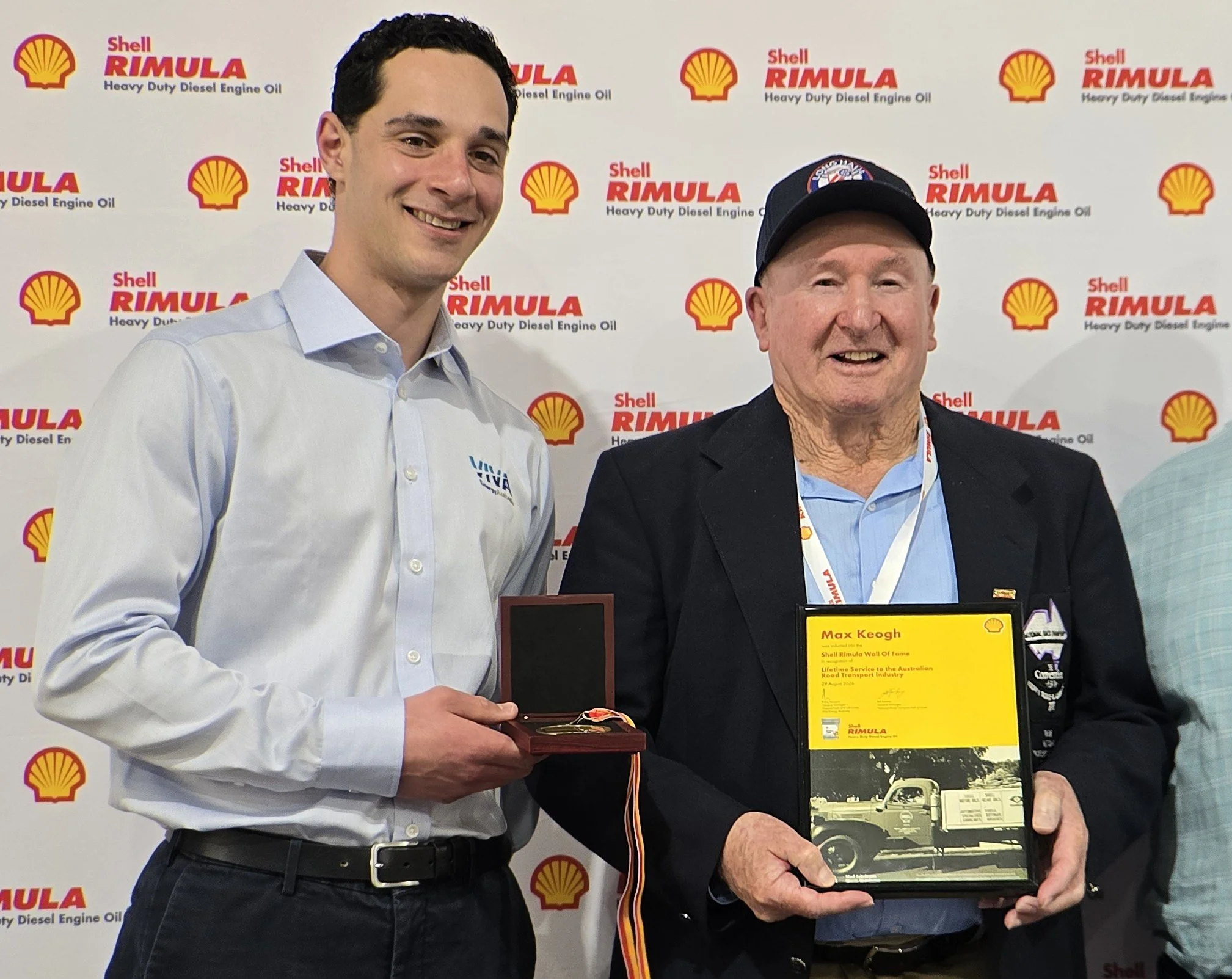
Max began working on trucks delivering food supplies to retailers and wholesalers throughout Sydney. During National Service, he served in the Australian Army before joining the Citizen Military Forces, where he spent 25 years instructing recruits in military vehicle operation.
In 1962, Max purchased his first truck, an International R180, running Sydney–Melbourne when a return trip took six days at little more than 35 miles per hour. That same year, Max joined the Long Distance Road Transport Association.
Over the following decades, Max operated a range of trucks and spent 14 years hauling Kellogg's cereals to Brisbane, hand-loading every carton. He later expanded into Western Australia with his nephew Gavin, hauling steel pipe across the Nullarbor.
In 1996, Max was named National Professional Driver of the Year. In 2001, at 65, he moved to the United States to drive trucks under a temporary work visa. Max joined a privately owned transport company based in Logan, Utah, operating 53-foot refrigerated trailers. In 2012, Max was named Utah Driver of the Year. He became a US citizen in 2021 and remained an active driver until eventually returning to Australia in 2024 at 89.
24. RUSSELL LEE
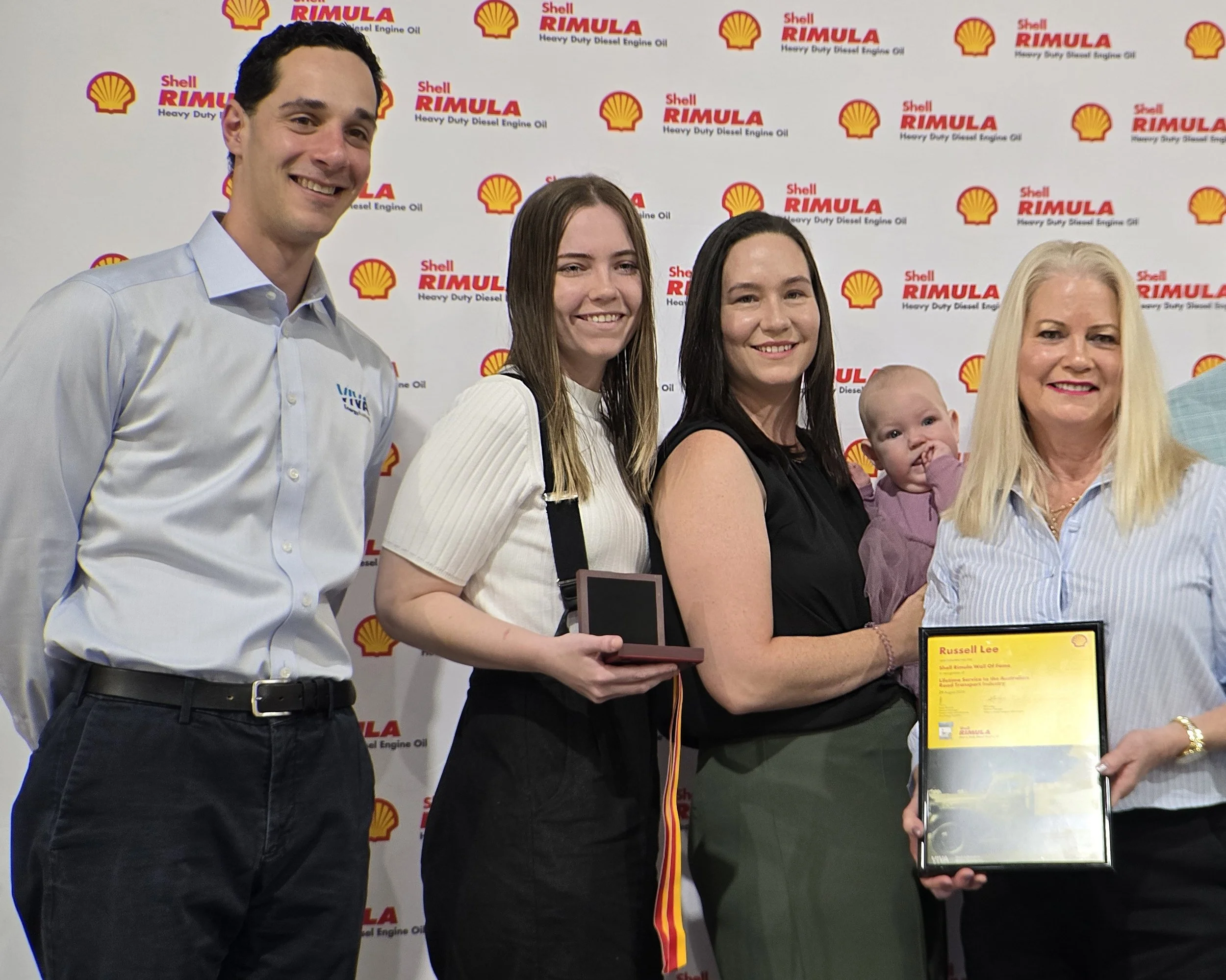
Born and raised in New Zealand, Russell and his wife, Leeanne, immigrated to Darwin in 1984 to build a new life in Australia. Russell began his Australian transport career in 1988 when he joined Australian Fuel Distributors, a small BP distributor based in Darwin, where he was initially employed to drive a 10,000-litre rigid tanker delivering fuel throughout the Darwin region. He would gain experience across every aspect of fuel distribution, delivering to remote cattle stations, fishing vessels, farms, airports and regional fuel depots throughout the NT.
When BP transferred all of its NT road freight operations to Australian Fuel Distributors in 1994, Russell played an integral role in the company's transition from a small regional operator to a major fuel transport business.
For the past 25 years, Russell specialised in operating quad road trains between Darwin and Alice Springs, transporting more than 140,000 litres of fuel on every journey. He was one of only five Northern Territory drivers selected to operate the Territory's first quad road trains following their successful introduction from Western Australia.
Russell's experience made him one of Directhaul's most valued senior drivers. Management regularly sought his advice when introducing new contracts, relying on his practical knowledge to assist with route planning, unloading procedures and the safe implementation of new operations.
25. DALE LINDREA
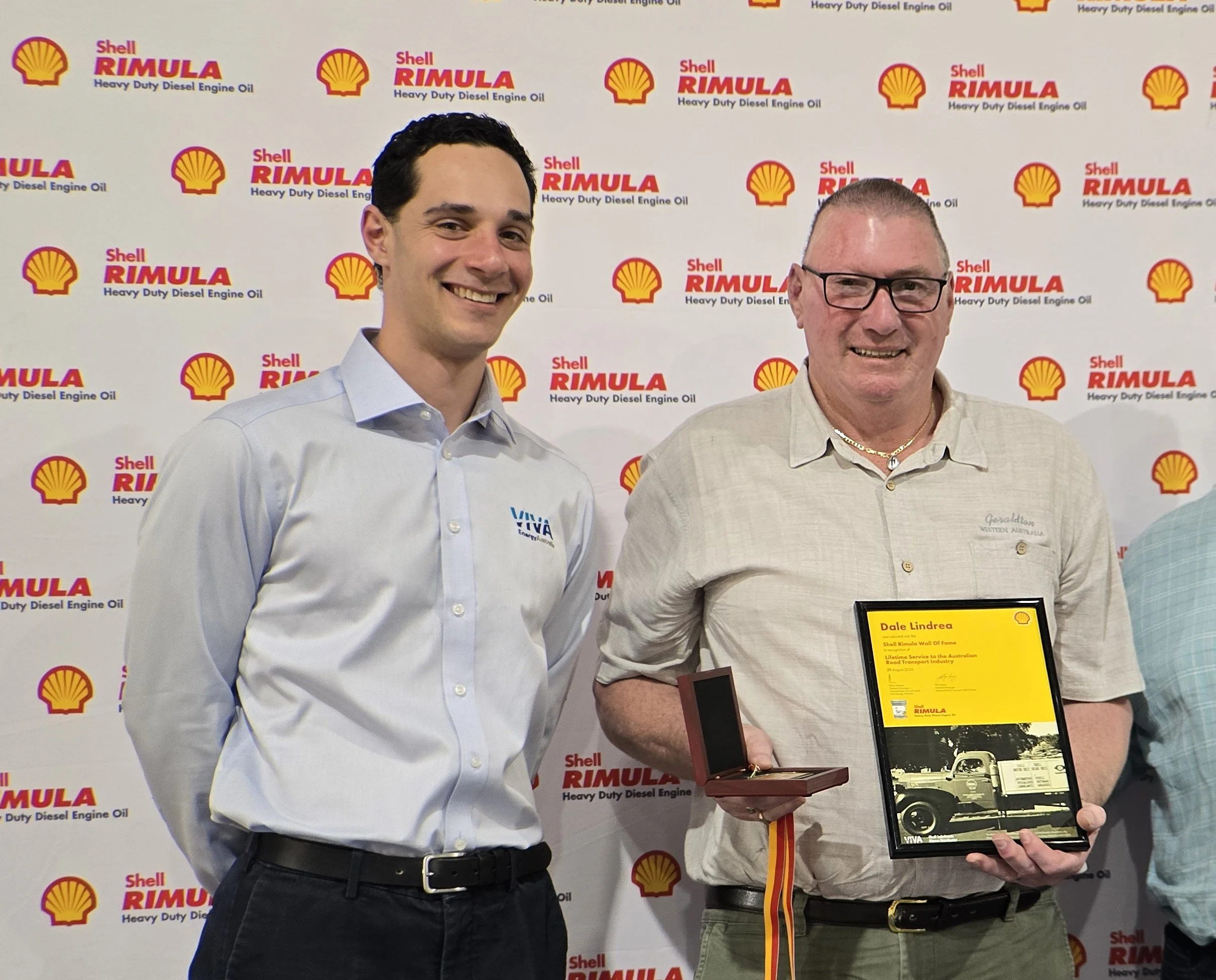
With his father Max and grandfather Les in the industry, Dale grew up around trucks and learned the trade by watching, helping and, from a surprisingly young age, getting behind the wheel. By 14, his dad trusted him to take the truck to the pub to pick up his beer!
At 18, Dale obtained his heavy articulated licence after writing to the Police Commissioner for permission to sit the test. His father was unwell at the time, and Dale was determined to do his part to keep the family operation moving.
Over more than five decades, Dale has driven countless trucks and travelled throughout Victoria and interstate. One of his proudest achievements was his 1988 Ford Louisville LTL 9000, which he purchased as a repossession in 1990 and rebuilt from the ground up, even fitting the bunk himself. He still considers it the best truck he ever owned.
Today, Dale primarily hauls containers and fertiliser. He still enjoys the trucks and travelling, but above all, the people he has met along the way.
26. TRACEY LINDSAY
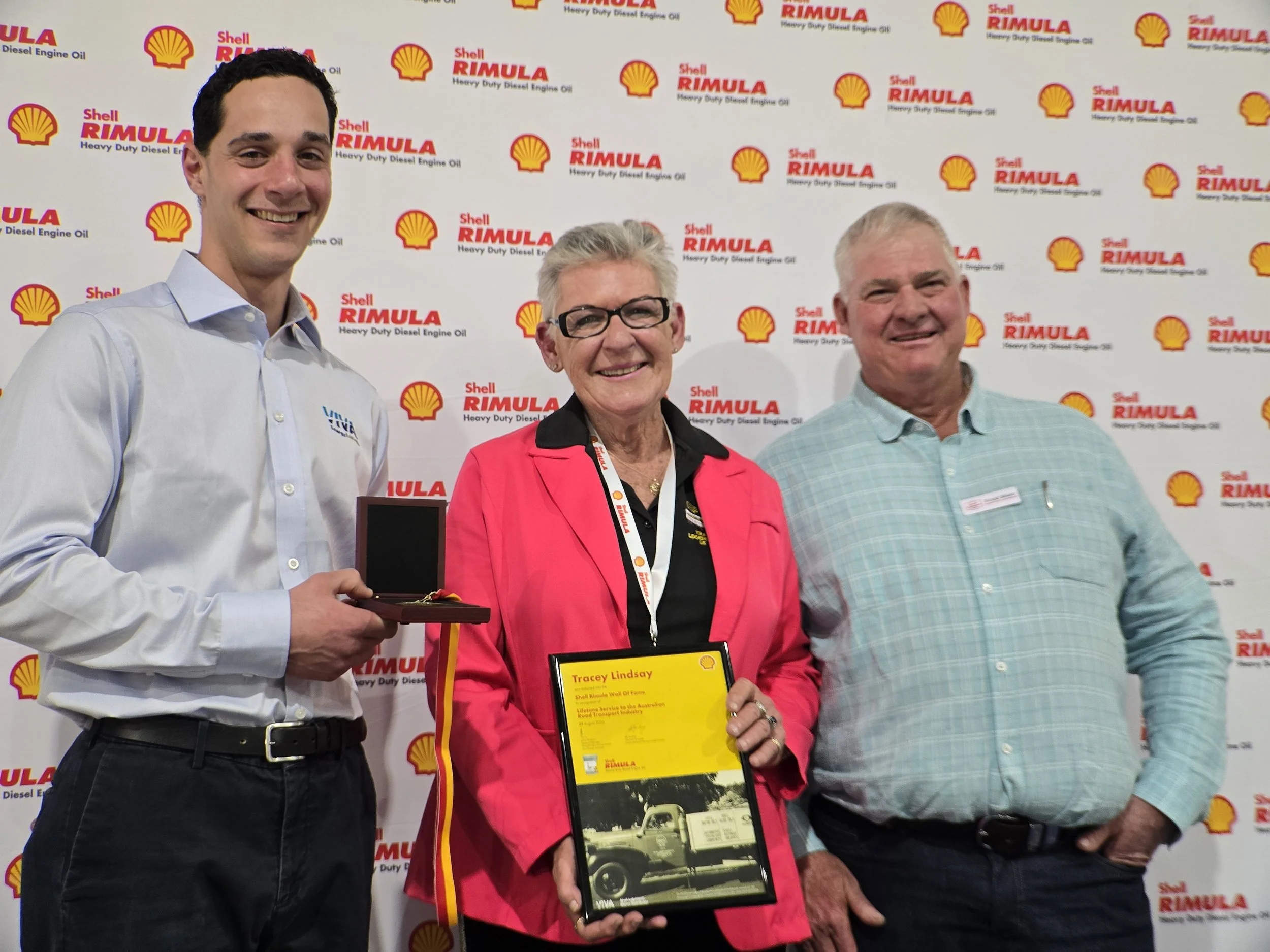
Tracey grew up surrounded by the rich transport legacy of Lindsay Bros Transport, spending her childhood at the Boambee depot where trucking was part of everyday life. From the age of eight, Trace could be found helping around the office, making coffee, stuffing envelopes, franking mail and lending a hand wherever she was needed.
After leaving school at 18, Trace joined the business full-time and worked across virtually every area of administration. Beginning on the switchboard and in accounts, she moved into the transport office, managing the North Coast Cranes division.
In the mid-1980s, Trace became Sydney Depot Manager at Homebush Bay, where she played an important role in securing approval for Lindsay Bros’ first fully coupled B-double combination to operate between Flemington Markets and Homebush Bay.
After stepping away to raise her sons, Trace retired from the company in 2001. However, her passion for the people and history of the industry only grew. Today, Trace travels throughout New South Wales and Queensland reconnecting former drivers, staff and family through Legends Luncheons and Dinners and keeping the Lindsay Bros legacy alive. She intends to keep doing it “until the last man is standing.”
27 & 28. STEVE LOVEGROVE Jnr. & Snr.
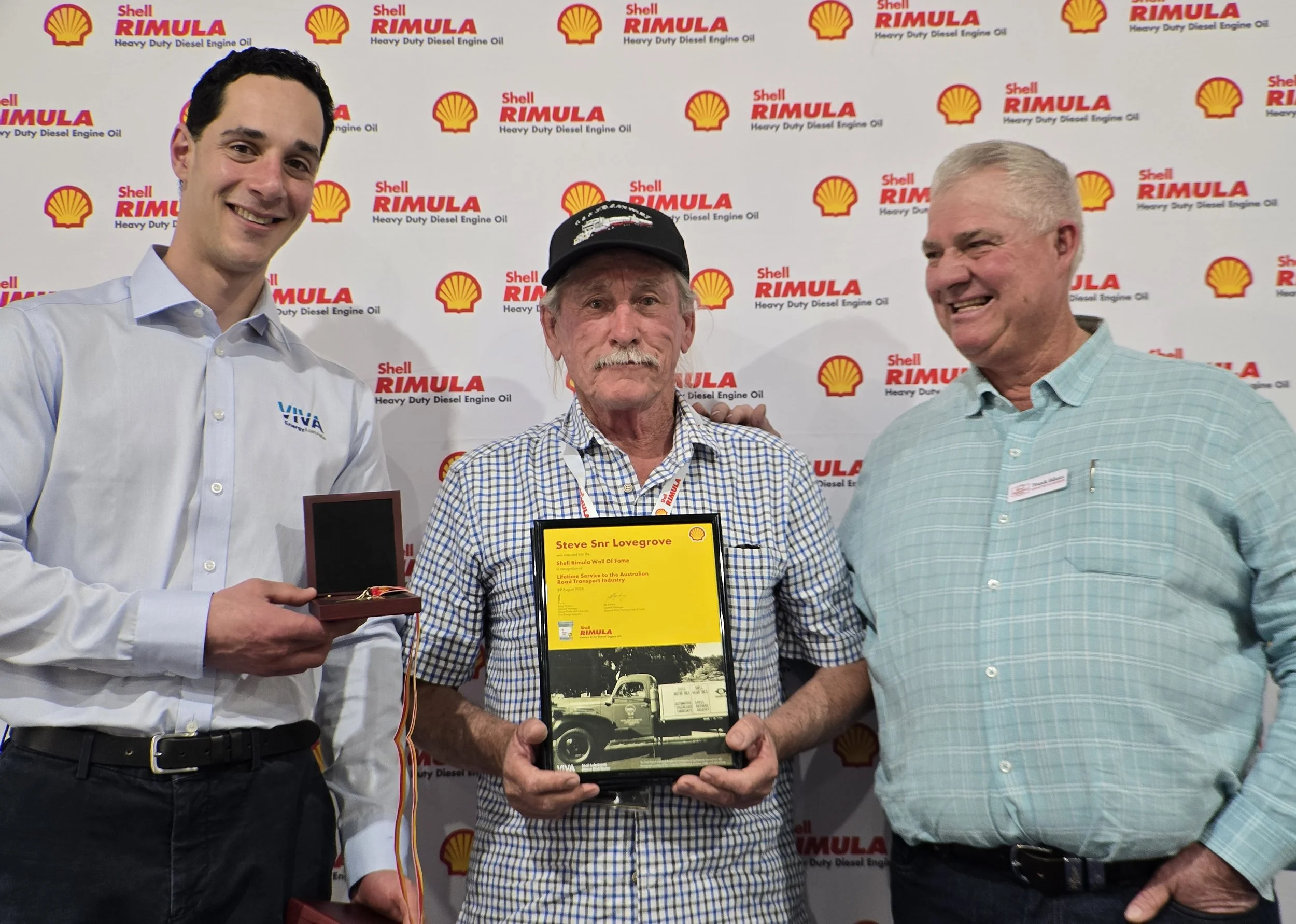
STEVE Jnr.
At just 14 years of age, Steve experienced his first trip to Darwin as a passenger alongside his father in a brand-new "Flintstone" Mack, hauling two loads of cars for Kennelly's Transport.
A few years later, while working as an apprentice in Kennelly’s workshop, the Transport Manager asked whether anyone could take a truck to Paraburdoo and Tom Price. 17-year-old Steve, still under a truck in the workshop, poked his head out and said, “I’ll go.” That night, he headed west in a Mack B71 “biscuit box” with a Quadruplex gearbox.
A few months later, after turning 18, Steve approached Kennelly's Managing Director, Bob Netherwood, asking to borrow a truck to sit his heavy vehicle licence. His previous interstate adventures suddenly looked rather different and Steve was promptly returned to workshop duties.
When Kennelly's ceased operations, Steve purchased Maxidyne No. 311and began running Adelaide to the Northern Territory along the Old South Road.
As the Stuart Highway was sealed and transport became faster, Steve moved onto east-west operations, purchasing a Mack 320 Coolpower in 1982. In 1987, he bought one of Adelaide’s first Mack Valueliners, operating for NQX on the Townsville run.
Today, Steve remains behind the wheel, operating a Mack CH tipper and dog alongside his sons, Stephen and Michael.
STEVE Snr.
Steve Lovegrove Senior was born in London in 1927 and enlisted in the Royal Navy at just 17, serving as the main gunner aboard HMS Sussex. After marrying Florence and starting a family, Steve immigrated to Australia in 1960.
Soon after arriving, he bought an Albion tipper and began building a life in transport. After several years as an owner-driver, he joined REX Transport, later IPEC.
In 1967, Steve joined Kennelly’s Transport in Adelaide, where he was entrusted with one of its newest trucks, a Flintstone twin-stick Mack No. 101, running the demanding North West and Darwin routes. He was soon selected to establish and manage Kennelly’s operations in Bougainville, Papua New Guinea, overseeing the transport of machinery, equipment and supplies for the construction of the Panguna copper mine.
Back in Adelaide, Steve drove Kennelly’s flagship Mack No. 126 before becoming an owner-driver, purchasing two Ford D1000s to haul steel pipe to Darwin. When Kennelly’s wound down in 1973, he purchased the Mack and continued the Adelaide-Darwin run. Steve would tackle all manner of heavy transport, from drill rigs and steel pipe to prefabricated buildings. Trips could take weeks, with no refrigeration, CB radios or nearby help.
Steve retired from full-time driving in the late 1980s but continued helping his son, Steve Jnr, on interstate trips for several years.
29. ALLAN MacCLURE
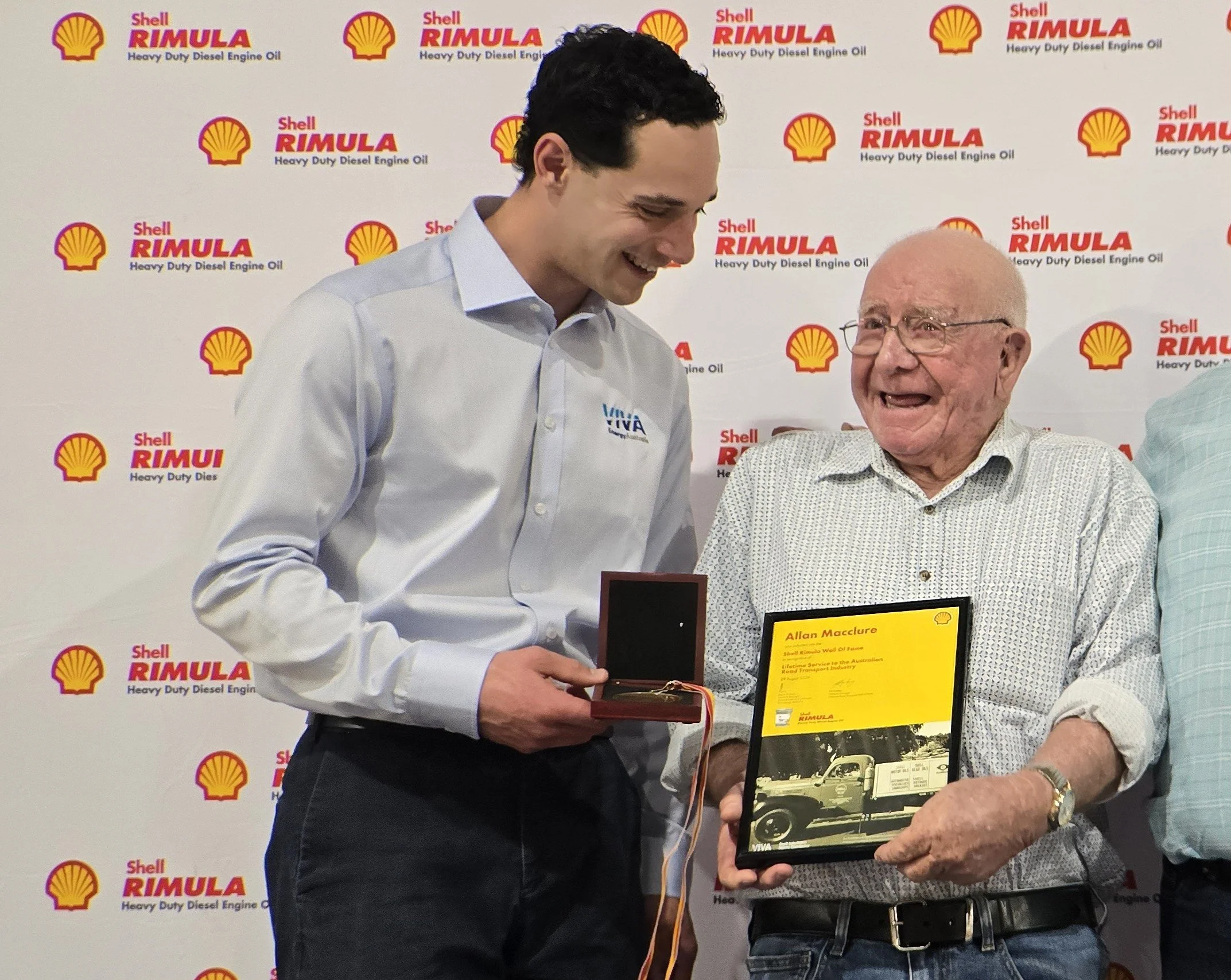
Allan grew up on the family dairy farm but at 16, he left the farm after overstating his age to work on the construction of Glenbawn Dam, where he first operated Euclid heavy dump trucks.
After his National Service, he bought the truck and began contract work for Scone Shire Council. In 1963, Allan, his wife Gwen and their son Rick moved to Gloucester and established Central Coast Fertilizers Pty Ltd, transporting bulk fertiliser from Newcastle to local farms.
As seasonal work slowed, Allan diversified into civil construction, grain harvesting and general transport. In 1968, he purchased a Mack R611RST “Flintstone”, securing a timber contract from Nowendoc to Sydney that lasted more than 20 years.
In the early 1980s, Allan secured a contract transporting timber pallets to Darwin for the Northern Territory’s first brickworks. Working with Rick, the operation formed a complete logistics cycle: timber from Nowendoc to Taree, finished pallets to Darwin, and copper concentrate from Tennant Creek to Mount Morgan on the return journey.
Allan retired from full-time driving in the 1990s but continued helping Rick until 2012. Now in his nineties, his heavy vehicle licence may be gone, but his passion for the industry remains as strong as ever.
30. COL 'TARGET' MACKEY
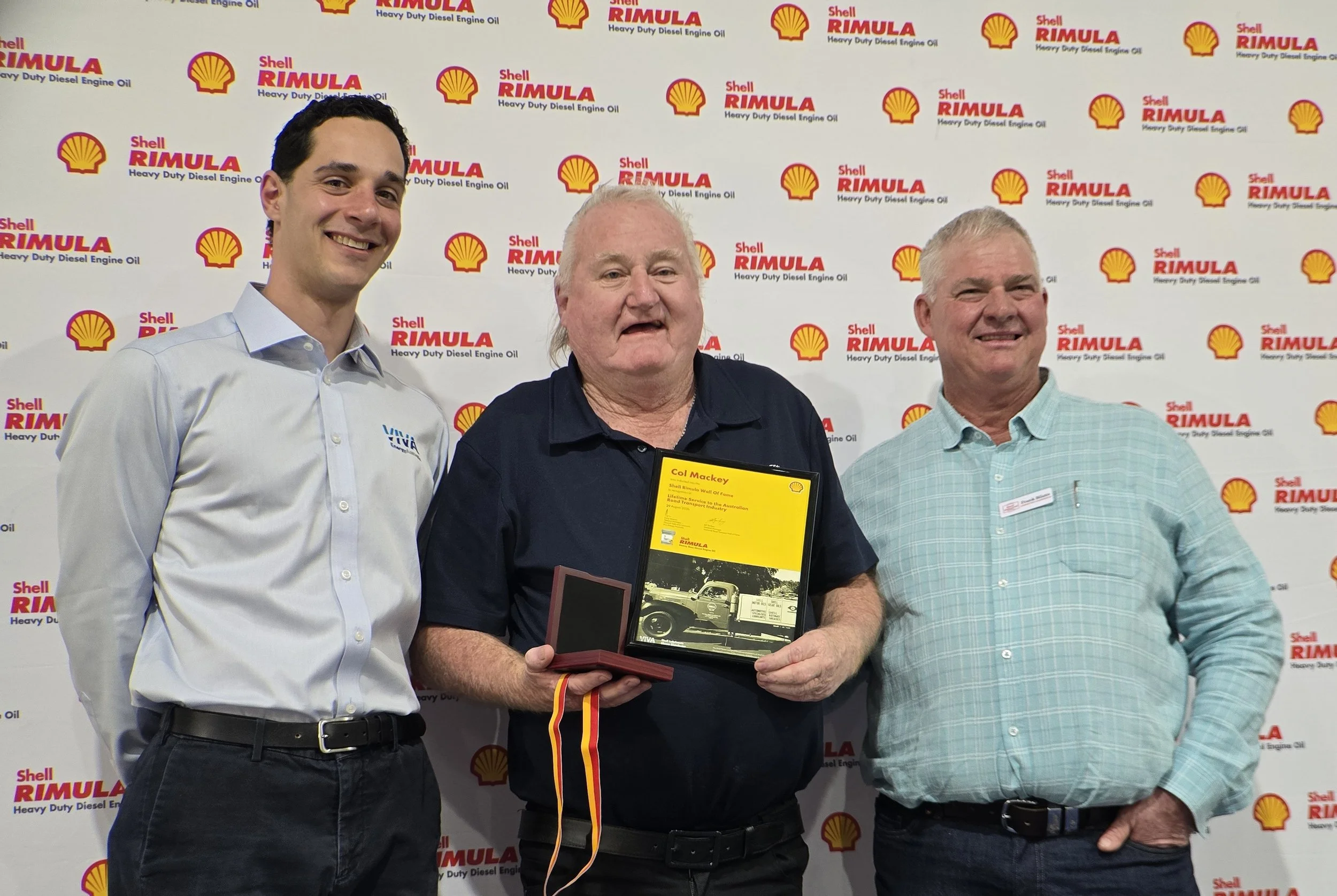
By the age of eight, Col was already steering trucks around the family yard, learning the feel of gears, gravel and machinery. After obtaining his heavy vehicle licence at the age of 19 in 1968, he began his transport career working alongside his father. His first interstate truck was a 1967 International prime mover fitted with a 10-speed Roadranger gearbox, pulling a single-axle trailer.
Over 38 years of interstate driving, Col hauled everything from graders and excavators to agricultural machinery, oversized kit homes and specialised equipment, including transporting the historic Zig Zag Railway locomotive and tender from Yeppoon, Queensland, to Lithgow, New South Wales.
The only interruption to Col’s life behind the wheel came with his military service in Vietnam in 1970. Seriously wounded after being shot in the chest, the bullet lodged millimetres from his spine and remains there today. The incident earned him the nickname “Target”, which has stuck ever since.
Today, Col continues driving locally for South Western Logistics where I’m told Col remains one of the yard’s great characters, quick with a joke that would make a modern Human Resources department quite nervous.
31. COLIN McARDLE
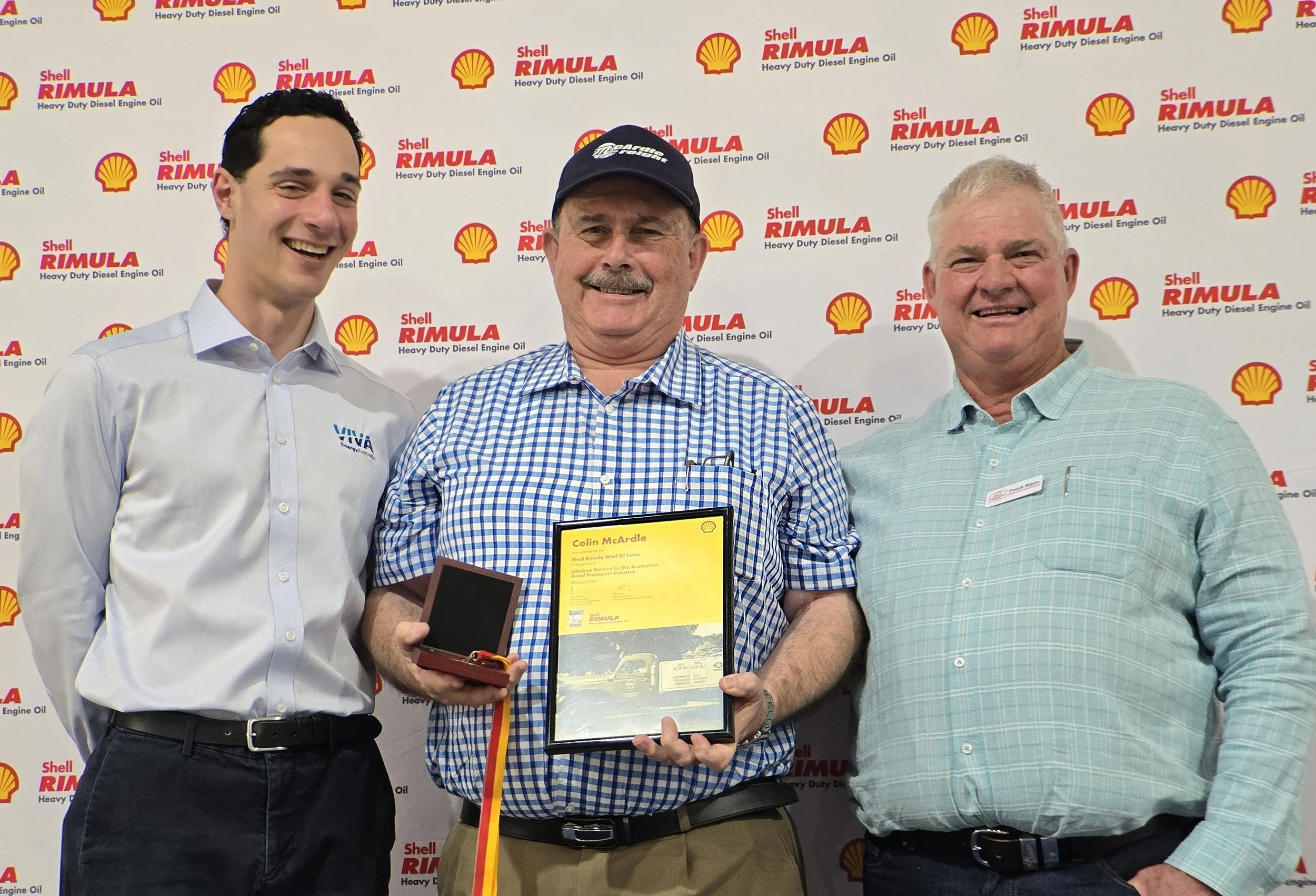
Colin grew up around his family’s fuel delivery and transport businesses. As he jokes, he was almost destined for trucks, arriving in the world after his mother travelled twelve miles to hospital along a rough dirt road in a K-Series International.
At 15, Colin left school and joined his family’s operations in Coober Pedy, delivering freight and potable water in a petrol-powered Thames Trader. Keen to learn, he also worked alongside other transport operators, including Denton French of Alice Springs Transport.
At 17, he secured an interstate run with Dave Napper, carrying bottled gas, explosives, cement and building materials between Adelaide and Coober Pedy. He later joined Jack O’Day’s Adelaide to Alice Springs operation, hauling refrigerated and frozen freight in a Mercedes-Benz 2624.
In 1984, after more than a decade in long-distance transport, Colin moved into waste management with Cleanaway, progressing from front-lift operator to supervisor and then landfill manager, responsible for complex operations including installing composite lining systems, waste management and the capping and rehab of landfill cells.
After retiring from management in 2014, Colin returned to his roots, spending the next decade as a relief driver for McArdle Freight, once again enjoying the work that had first inspired him as a young boy riding beside his father.
32. NOEL McGRATH
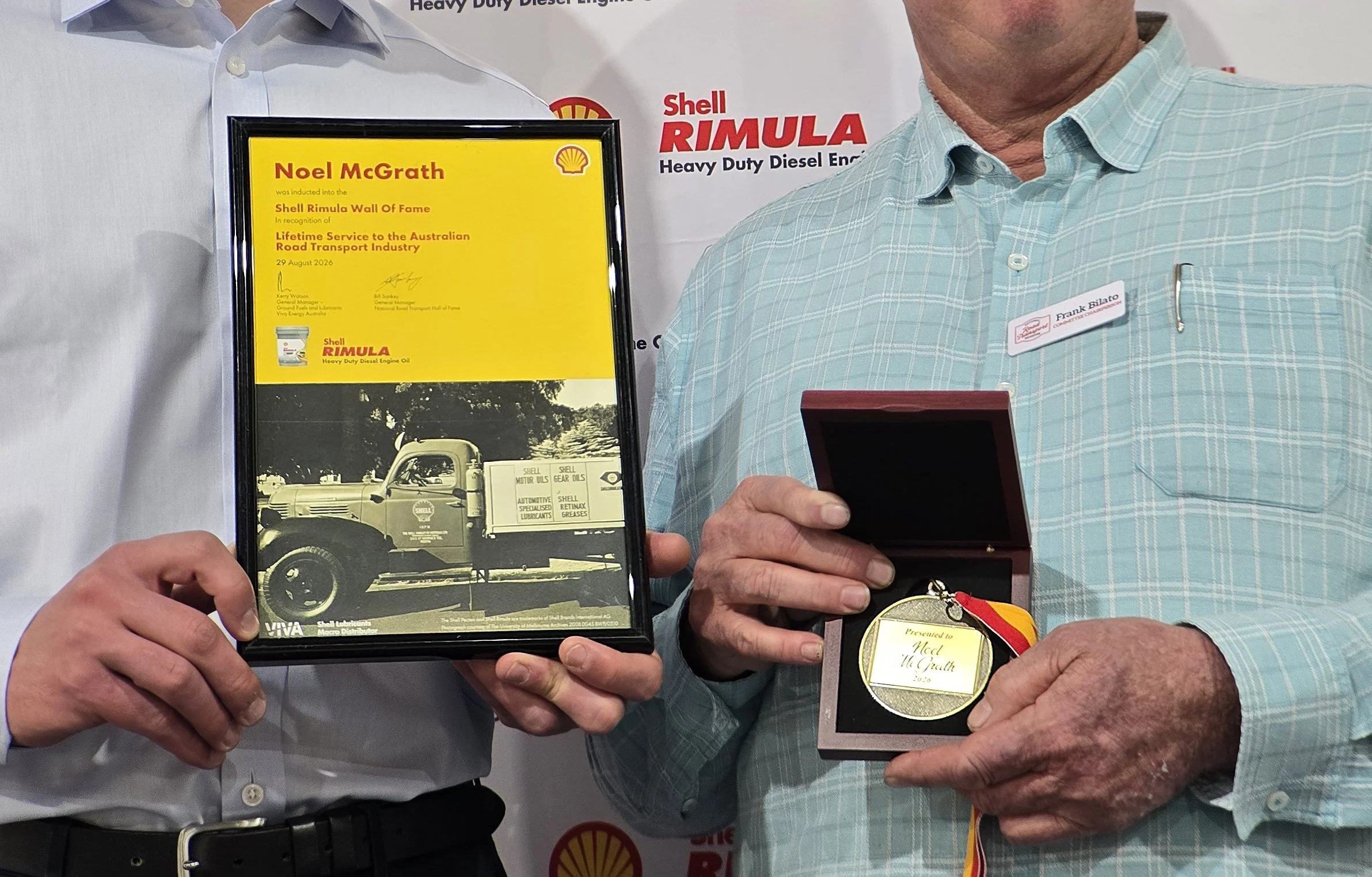
Noel began with Finlay’s Transport in Barham, hauling wool, hay, livestock and general freight throughout the Riverina and northern Victoria. He developed a particular fondness for Dodge trucks and regularly carried oranges to the Melbourne Wholesale Market, returning with general freight.
After marrying Carol in 1967, Noel combined farming with transport, operating his own agricultural enterprise while continuing to undertake livestock cartage and seasonal grain harvest work. Although farming became an important part of his life, his passion for trucking never faded.
In 1986, Noel returned to full-time driving with Swan Hill Energy Service, beginning with an ACCO tray truck before progressing to a Mercedes-Benz and Volvo. He supplied fuel to communities across north-west Victoria, regularly making two runs a day between Bendigo and towns including Kerang and Wycheproof.
When local fuel depots closed, Atlas Fuels approached Noel to establish and operate a new depot at Quambatook. For nine years, he built a reliable fuel distribution service covering approximately 150 kilometres. Illness ended Noel’s full-time driving in 2013, but he returned to seasonal grain cartage before finally retiring in 2020.
Across almost six decades, Noel earned a reputation for hard work, providing an essential service to the farming communities he called home.
33. JOHN McLACHLAN
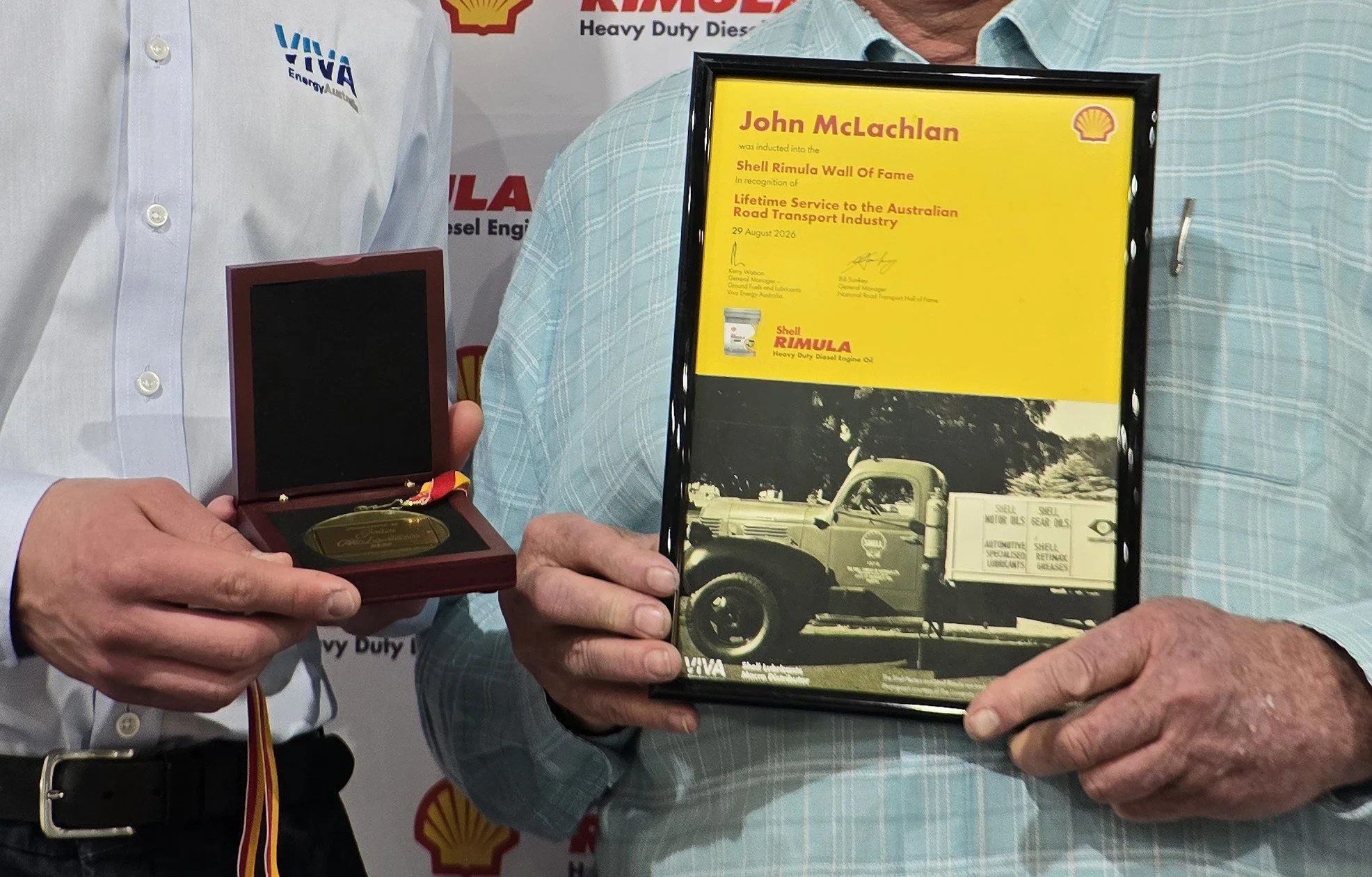
John, or Abe, was born in Longreach and spent more than 50 years behind the wheel travelling almost every major freight route in Australia. He began driving in the 1960s with Gundy Bielenberg at Longreach Transport. It was in Longreach that he met Therese, his wife and lifelong travelling companion.
Abe later drove for Doug and Gloria Wyton at Somerset Transport, hauling mail, wool and livestock across western Queensland in a DCF International. The friendships he formed there remained strong for decades.
After moving to Gympie in 1976, Abe returned to interstate work, driving Volvo N-Series trucks and Kenworth W-models on heavy freight runs to Darwin.
Abe later hauled cattle around central Queensland before beginning one of the longest chapters of his career with Henry and Carol Zielke at Blackwater. For 17 years, he transported coal and oversized mining equipment, regularly operating combinations exceeding 260 tonnes.
Later, Abe joined his brother David’s McLachlan Transport, hauling cement and lime in an International S-Line. Family remained central, with Therese accompanying him on countless trips and sharing life on the road. Following Therese’s passing, Abe gradually stepped away from full-time driving, eventually retiring after years operating the water cart at Yarrabee Coal Mine.
34. ROBERT MILLER
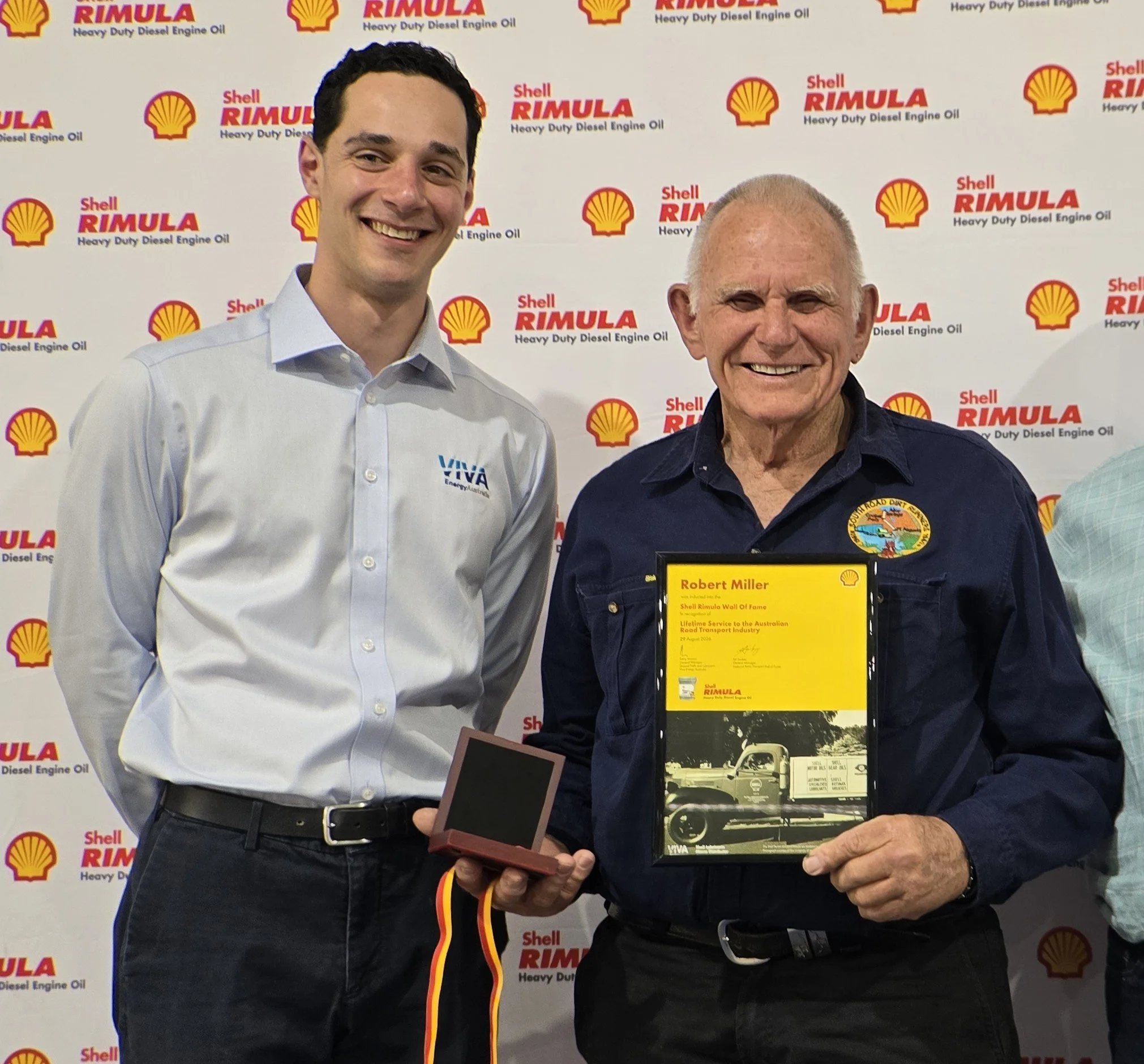
Robert was 5 when he first took the wheel of his father’s ex-World War II Dodge Weapons Carrier while helping patrol the Dog Fence. By 14, Robert was driving Commer Knockers, AECs and Leylands on stock and freight work along the Strzelecki and Birdsville Tracks with Don Calliss. He proudly recalls being the first truck driver to reach the Gidgealpa No. 1 oil well when drilling began in 1961.
His career was interrupted by military service during the Vietnam War where Robert was wounded in action and taken prisoner of war. On returning home, he threw himself back into work, completing Darwin runs in a B-Model Mack with triple trailers. He later recalled the hard work was exactly what he needed.
From there, his career took him through stock transport, heavy equipment operation, mining and earthmoving, working with companies including Silverton Roadways, Radfords, BHP, Brambles and Western Mining. His roles ranged from driver and mechanic to Shift Boss and Production Foreman, and he even obtained his private and commercial pilot licences along the way.
Robert later returned to long-haul transport, driving road trains throughout the Cooper Basin and interstate. One remarkable period saw him complete 40 trips to Darwin in just ten months, hauling gas from Port Bonython.
Retirement never lasted long for Robert, seeing him return to the road with Morgan Whyalla Pipeline Replacement, hauling pipe along the pipeline easement to finish off an extraordinary 67 years in the industry.
35. CHARLIE MORTON (Dec.) Accepted by daughter, Tayla Morton.
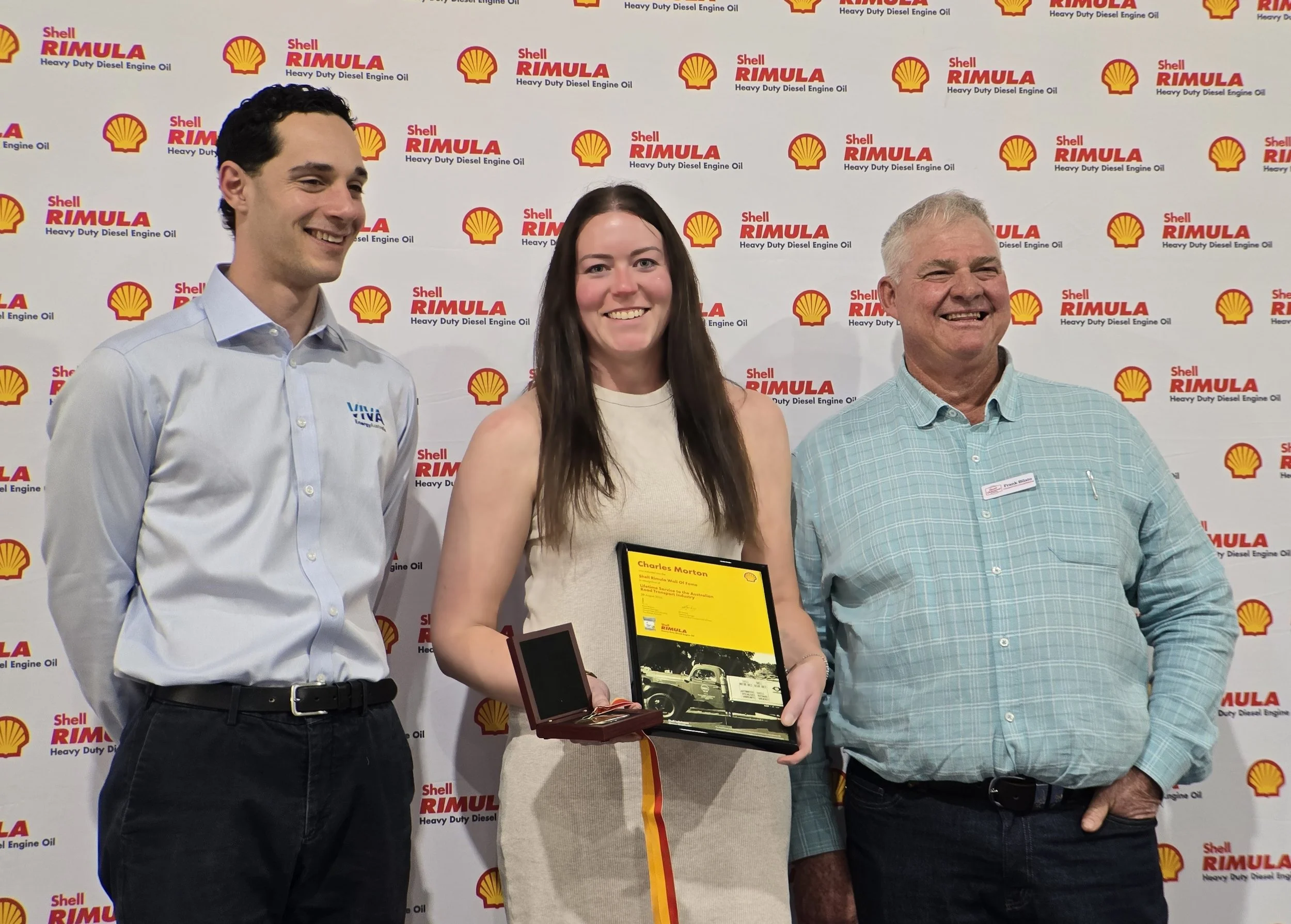
Charles William Morton grew up on a farm near Healesville, Victoria, where the trucks coming and going first sparked his interest in transport. After completing a plumbing apprenticeship, he followed his passion, learning to drive heavy vehicles with local cattle carrier Allan Smallacombe.
He went on to drive truck-and-dog combinations from the Readymix Quarry at Ferntree Gully, developing a particular appreciation for Kenworths and Western Stars.
In 2003, Charlie established his own transport business and purchased his first International Transtar, stretching the chassis and fitting a tipper body and trailer to haul quarry products and firewood. His 1996 International Transtar later became the pride of his fleet, hauling quarry products, grain and bulk materials throughout Victoria. A third Transtar followed in 2006 as a prime mover with a drop-deck trailer, carrying timber, sleepers, machinery, hay and general freight.
During the 2008 drought, Charlie delivered hay and silage to struggling cattle farmers across north-east Victoria, often remembering hungry cattle running alongside his truck as he carried much needed feed. In 2009, Charlie became a single father to his two young children, requiring him to balance the demands of raising a family with running his transport business.
Charlie retired in 2021 after roughly half his life behind the wheel. He passed away in June 2025, but his legacy lives on through his son, whom he taught to drive in the Transtar he loved.
36. ALEXANDER ‘LEX’ MUSTARD
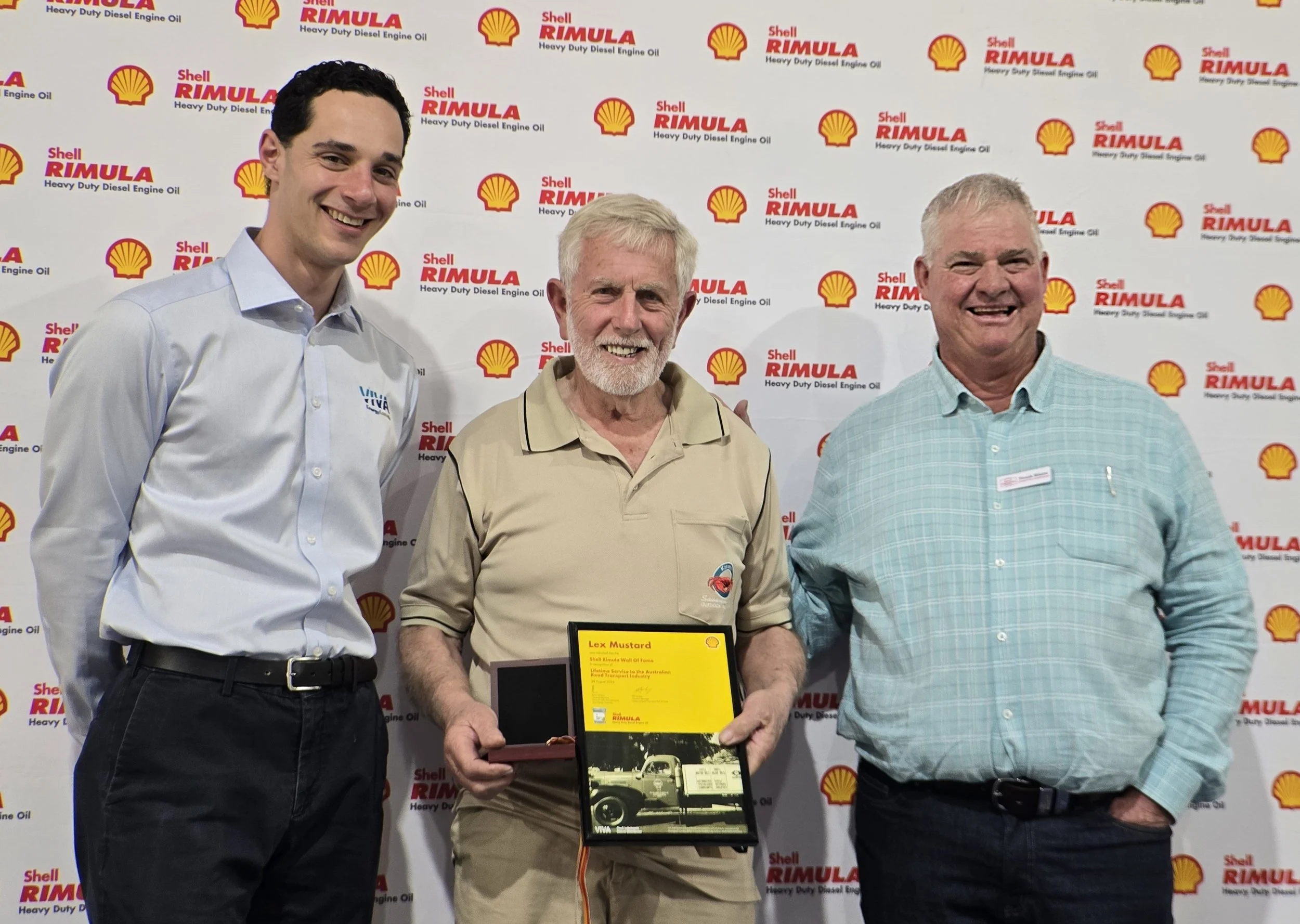
Lex grew up around trucks in South Australia’s Riverland, working alongside his father, Blaxall, who hauled grapes, hay, firewood and fuel. In 1965, Lex began a diesel mechanic apprenticeship with Repco, developing the mechanical skills that would remain a defining part of his career.
After moving to Mount Gambier, Lex drove log trucks before joining Joe Nagel at Peterborough Transport, hauling livestock, wool, general freight and regular loads into the developing Moomba gas fields.
In 1975, Lex bought his first truck, a Leyland Mastiff. He later progressed through a Bedford XT5 and Volvo G89, expanding into interstate work.
In 1979, Lex and his brother Vaughan established Mustard Bros Transport. Lex bought Vaughan’s share in 1986 and continued building the business, which today operates Kenworths, Volvos, Freightliners and Iveco’s. Lex remains Company Director and still enjoys getting his hands dirty maintaining the fleet. Over the years, the company has hauled a diverse range of freight including livestock, grain, wool, general freight and specialised loads to remote areas.
His career is filled with stories. When a driver demolished the Port Augusta weighbridge in dense fog, Lex personally travelled to the scene, recovered the damaged vehicles, supervised the hand-restacking of a load of brick pavers and ensured the load reached Coober Pedy on schedule.
37. SUZETTE O'REILLY
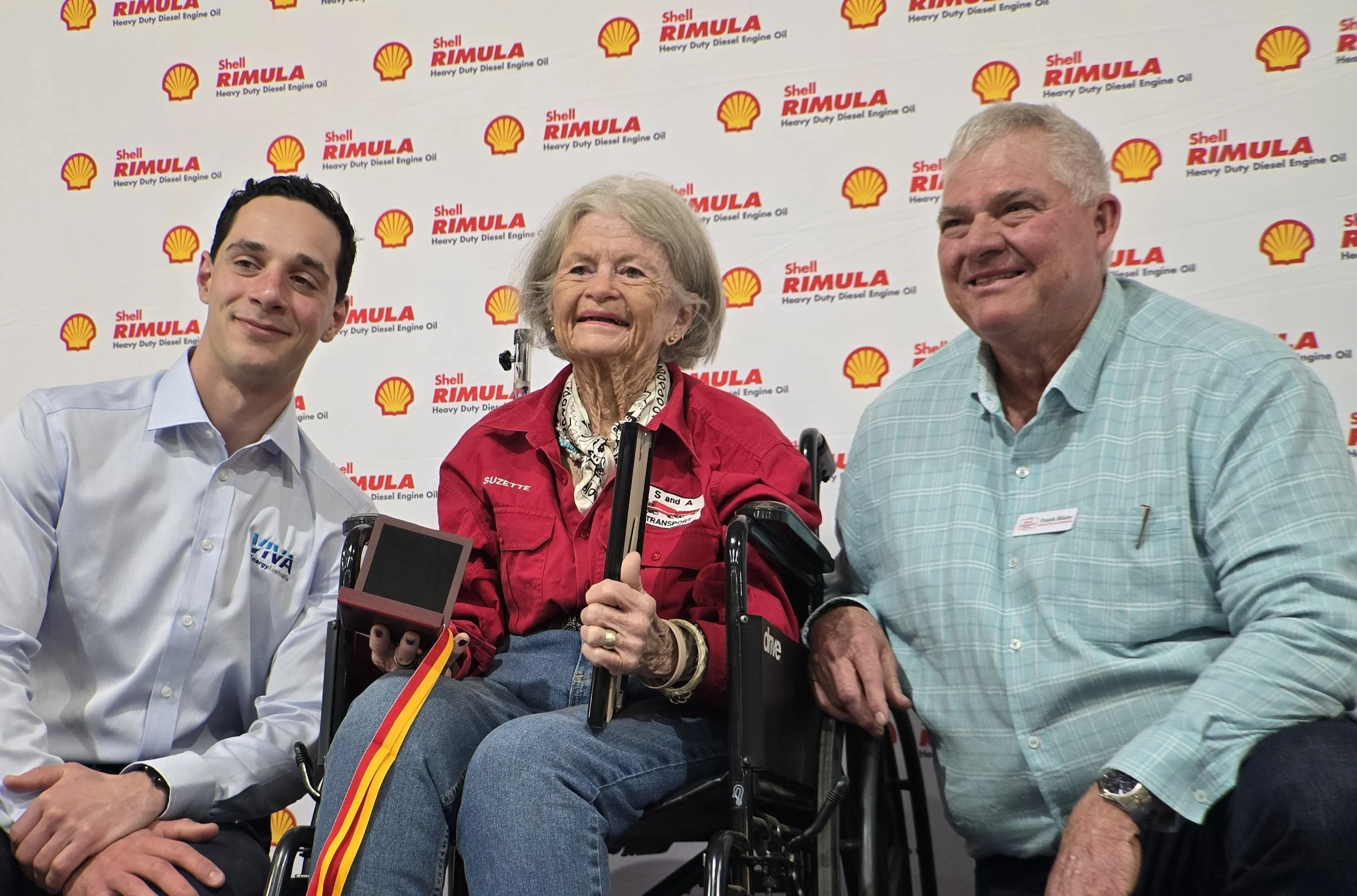
Suzette O’Reilly has spent six decades behind the wheel, earning her place as one of Australia’s last surviving pioneer female truck drivers. Unlike many lifelong drivers, she did not grow up dreaming of trucks. Her introduction came in 1965, when at 18 she married truck driver Hank Statham in Roma. Together they travelled in an ageing Volvo G88 over rough bush roads, hauling frozen kangaroo carcasses in conditions far removed from modern refrigerated transport. Suzette still remembers the smell, flies and maggots that accompanied the loads.
By 1969, at just 22 years of age, Suzette officially obtained her heavy vehicle licence. Standing barely five feet tall, Suzette learned to handle trucks never designed with women in mind. Heavy non-synchromesh gearboxes demanded strength and precision, while steering systems without power assistance required considerable physical effort.
Despite the challenges, Suzette never lost her pride or femininity. She jokes that she could “comfortably live between two sheets of iron and a wardrobe, as long as I had my lipstick on and a clean shirt to wear.”
She represents a generation of women who entered an industry that neither expected nor welcomed them, yet persevered through resilience, courage and sheer determination.
38. ROBERT ALLEN PACK
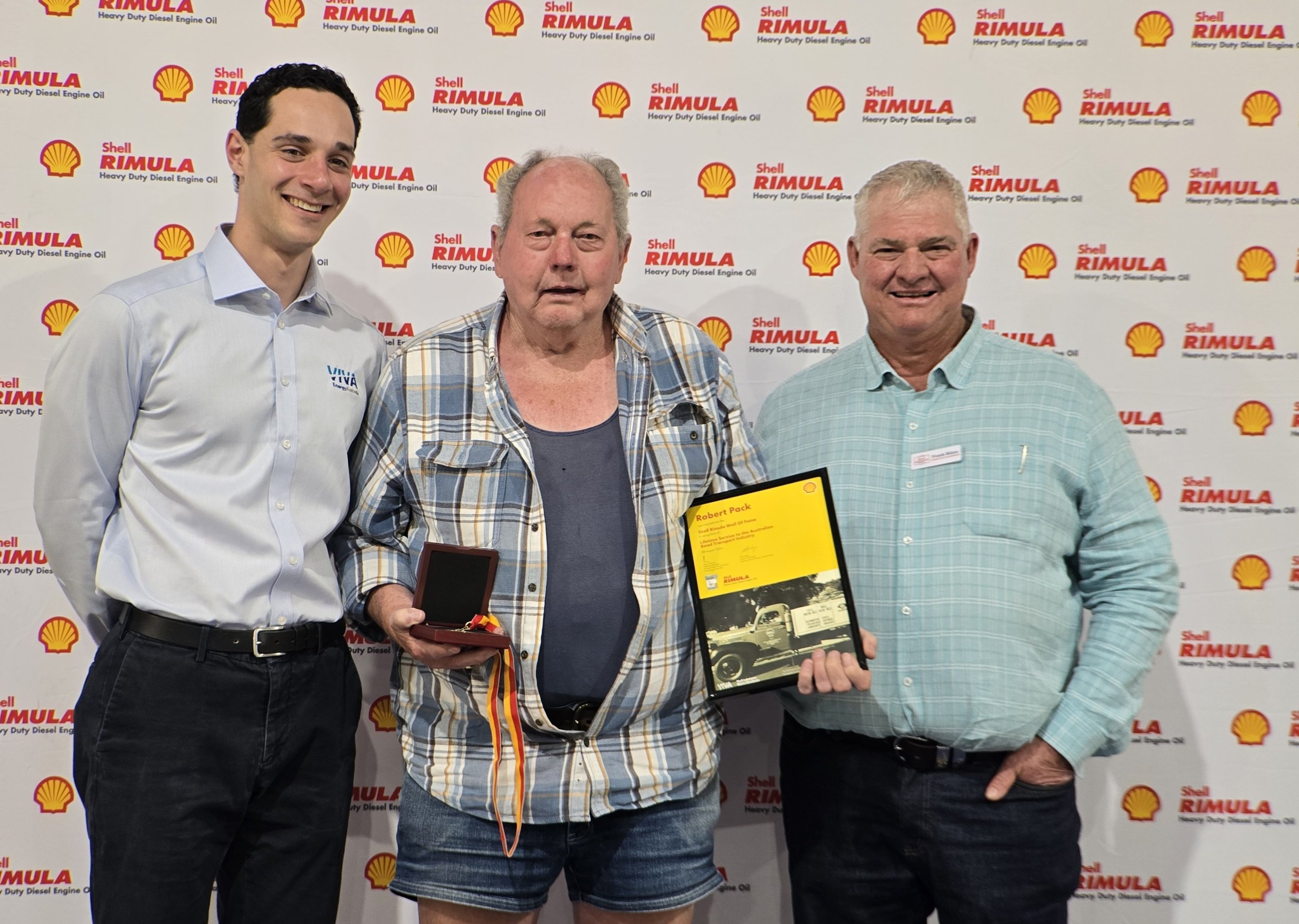
At 16, when Packy went to sit his heavy vehicle licence, the local police constable recognised him, saying, “You’ve already got your licence. I keep seeing you driving over the ferry.” Without missing a beat, Packy replied, “That was my twin brother.” He passed his test and officially began his driving career with Mannum Transport.
Packy then went to work for Bruce McDonald of Freezer Van Transport, gaining valuable interstate experience in a cab-over Kenworth. He briefly returned to work with his father before joining Scotts Transport, hauling crude oil between Port Adelaide and Port Stanvac. But Packy couldn’t resist helping his old mate Bruce on the side, secretly doing runs for him on weekends. Scotts eventually discovered what he was up to and Packy found himself out of a job. Bruce, however, welcomed him straight back.
After working for Screenings, Packy achieved his ambition of owning a truck, purchasing the first S-model Kenworth imported into Australia, a Kenworth 65 he painstakingly restored over a year.
His next project was a Kenworth K100E, nicknamed “Little Tige”, which he again rebuilt from the ground up.
Packy finished his driving career with Downer, hauling bitumen throughout Adelaide, concluding a career built on hard work, pride, mateship and an unwavering commitment to doing the job properly.
39. NICK PETTIFOR
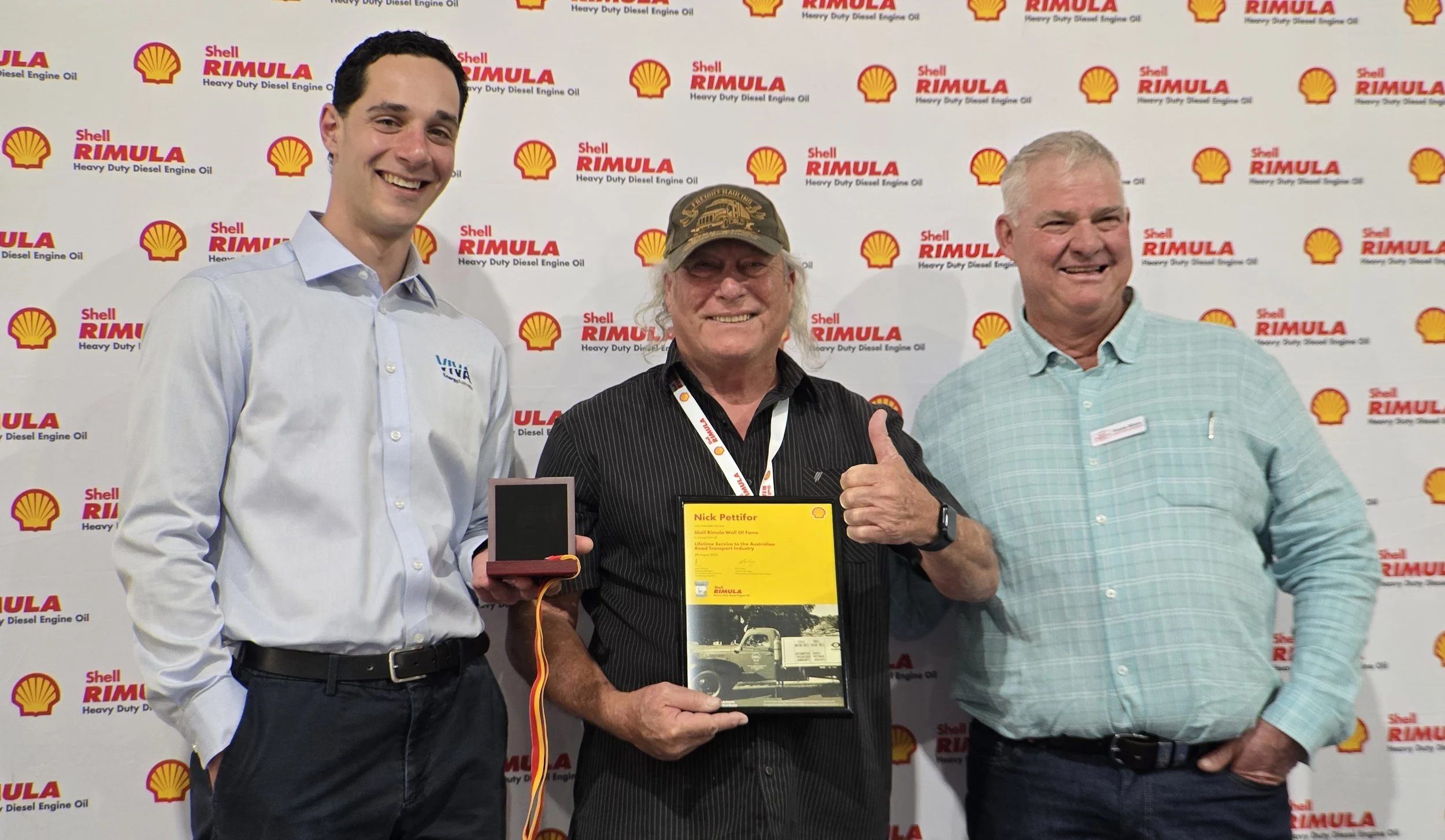
Nick Pettifor’s transport career began on a dairy farm, where as a teenager he first climbed behind the wheel of an ageing Austin petrol truck with a stock crate. A trip west in a split-window Volkswagen Kombi introduced him to Vince from Burnett Transport, and Nick soon found himself helping haul accommodation huts for the developing Mount Newman mining project.
From there, Nick became hooked on long-distance trucking. He drove everything from an F700 Mack and Dodge D-Series to a White 4000 with a 335 Cummins, a Ford Louisville L9000 and International Road Commander, travelling the major routes between Adelaide, Melbourne, Sydney, Brisbane and Perth.
Nick eventually discovered a particular love for tipper work and, determined to become an owner-driver, purchased an International ACCO ‘Butter box’, followed by another ACCO and his first Kenworth. Subcontracting to Barry Ladd’s newly established Perth Freightlines, he returned to the Nullarbor in his own truck.
The 1980s and early 1990s were among Nick’s favourite years on the road. He travelled alongside many of the era’s best-known operators, including Mack Munchers, Strates Haulage, Whiteline, Donaldson Bros, Kerswell, J & A Transport, Doherty’s, Gardiner’s and Bowhaul. It was an era of UHF banter, roadside friendships and genuine mateship, where everyone knew the runners and looked out for each other.
Eventually, with a young family, Nick traded the long haul for local work, operating a semi-tipper on South Australian road construction projects.
40. ADRIAN POULTON
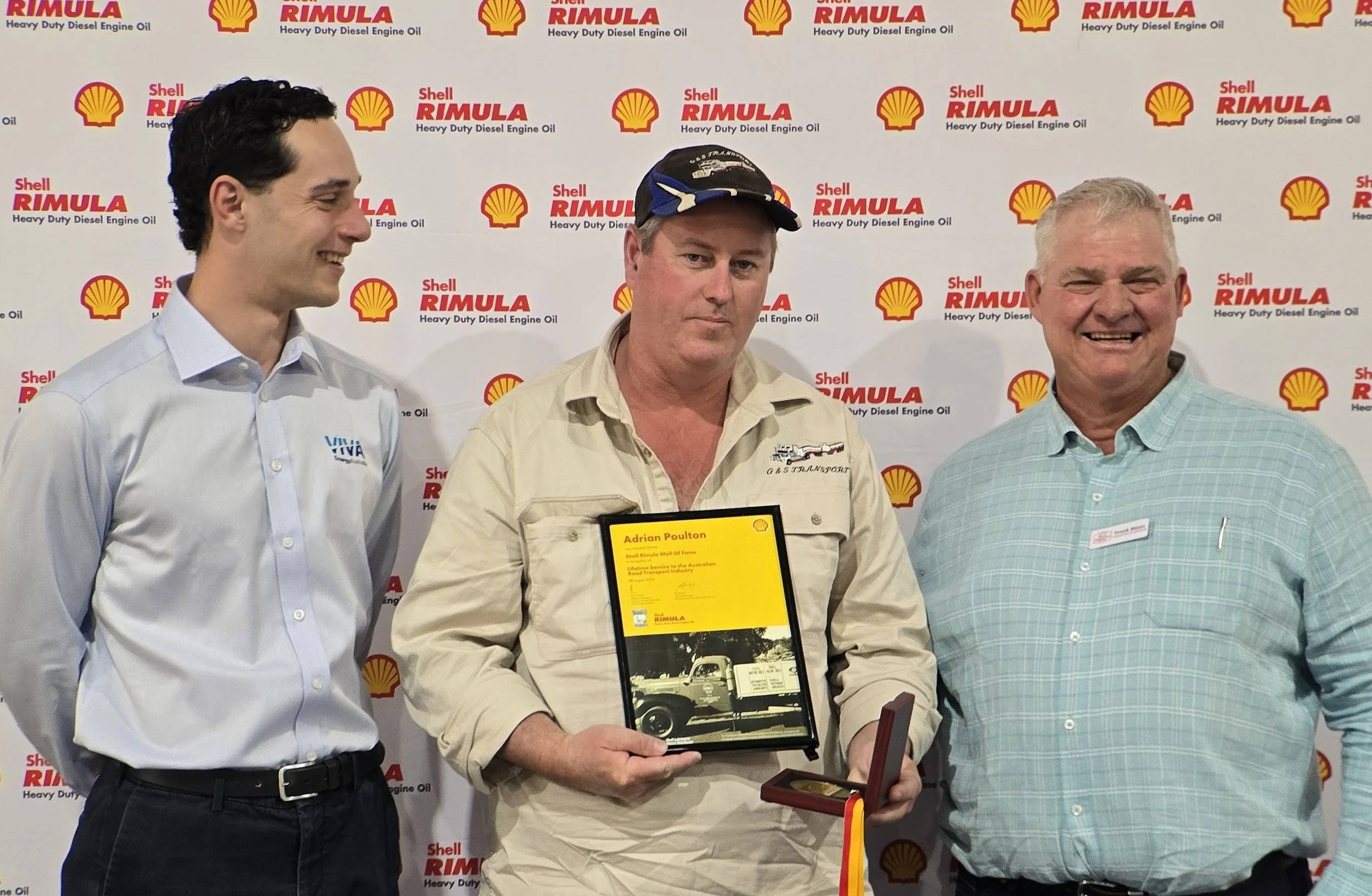
Adrian grew up around trucks, riding beside his father, mechanic and transport operator Andy Poulton, and learning the trade from an early age. After leaving school, he worked in forestry with Cuxson Transport before gaining experience across earthmoving, waste and mining.
Alongside this work, Adrian helped build the family business, Blackwood Valley Transport, hauling hardwood and blue gum.
In 2001, Adrian’s life changed dramatically. While subcontracting at Greenbushes, a failed rope sent a length of 110 mm poly pipe under extreme tension into him, causing a catastrophic head injury and leaving him on life support. Doctors said he would never work again.
Adrian proved them wrong. After years of rehabilitation, he returned to the road in 2005.
In 2010, Adrian expanded into side-tipper operations, commencing FIFO work with AK Evans Earthmoving. Adrian later joined G & S Transport, working from Big Rock Quarry in Newman, where he spent five years driving a Kenworth C501. Even while working FIFO, Adrian maintained his own transport business during rostered breaks, operating a Louisville with a Tristar side tipper before purchasing a Western Star, which remained in steady work for the next decade.
41. TROY ANTHONY RANKIN
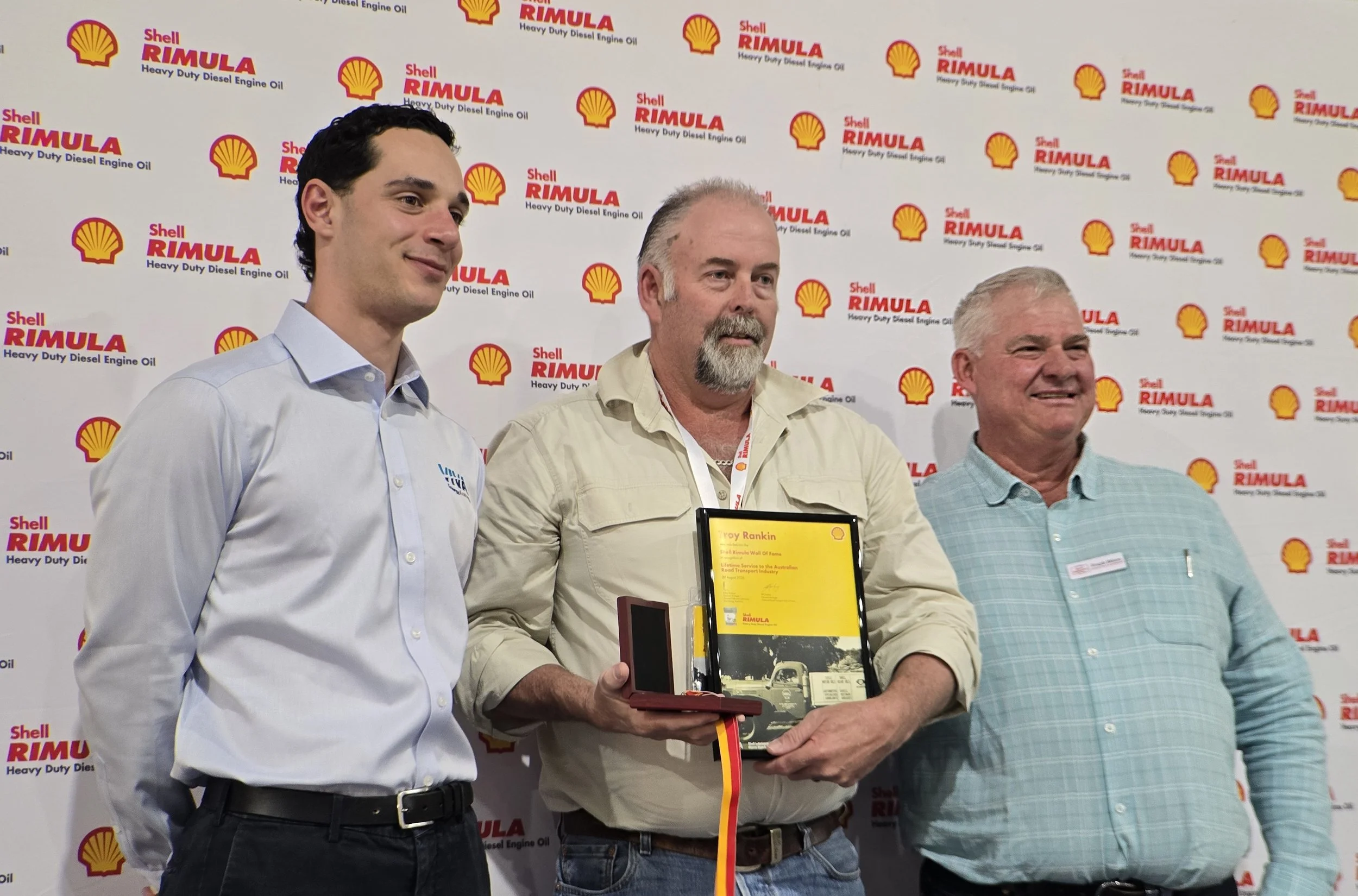
At just seven years old, after seeing a Kenworth truck for the first time, Troy declared that one day he would become a truck driver and he would spend the rest of his life fulfilling that promise.
After working as a dairy farmer and tyre fitter, Troy began with suburban deliveries before joining Finemore, hauling refrigerated meat from Queanbeyan throughout NSW. He later moved to Wagga Wagga, where he progressed to weekly Wagga to Perth return trips, carrying Australia’s interstate mail in a two-driver operation. The long cross-country run was a demanding one, covering thousands of kilometres each week.
Through the 1990s, Troy drove interstate for O’Connor’s Haulage and Hitchcock’s Haulage. After settling in the Bega Valley, he found his long-term calling in timber transport, hauling logs throughout southern NSW and into Victoria
Today, Troy lives near Merimbula with his wife, Rachel, and continues working in the timber industry with Rodwell Logging. For many years, he drove the Kenworth 909 ‘Diesel and Dreams’, a truck so important it even featured at his wedding.
Now he drives the first and only Kenworth K220 A-double combination operating in the Bombala district. Named ‘Torque of the Town’, the truck hauls timber to the Tumut mills and has become a local celebrity, regularly attracting attention from passing motorists.
42. JIM ROOCKE (Dec.) Accepted by his son, Kym Roocke
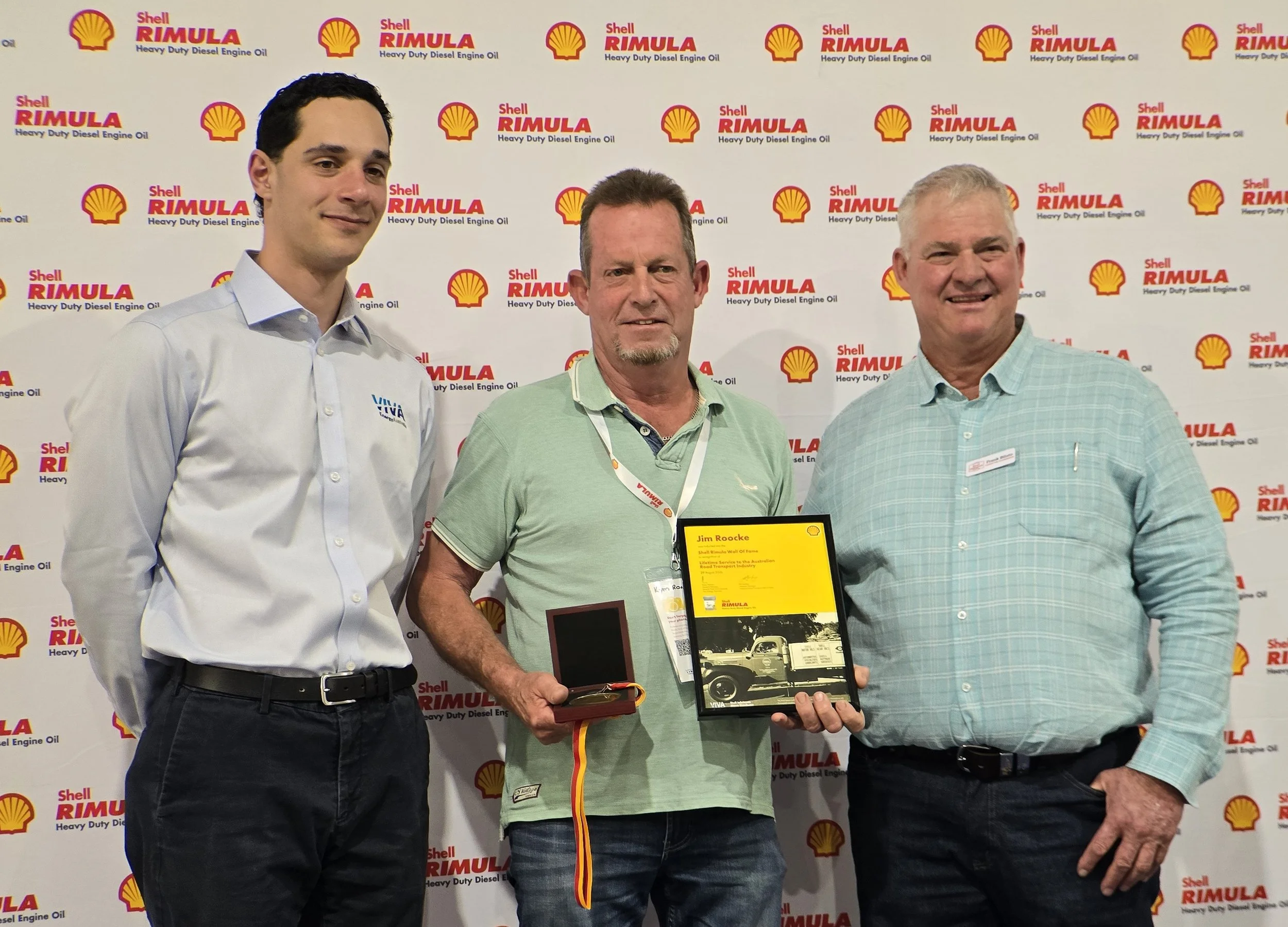
A hardworking owner-driver, businessman and family man, Jim became the first generation of the Roocke family to build a career in trucking, laying the foundations for a transport business that would continue through future generations. At just 14 years of age, he left school to work for Barossa Valley market gardener Clem Hoffman, helping transport carrots from the Barossa to Adelaide's famous East End Market.
From 1949 until 1976, Jim remained with Clem Hoffman, becoming a familiar figure on the regular runs between Nuriootpa and Adelaide. The work was demanding and relied on long hours, early starts and physical labour.
Jim purchased his own Ford D-Series truck and taking over the long-established carrot run. This became the foundation of Nuriootpa Traders, established with his wife Denise and eldest son Kym. As the business grew, children Nigel and Teresa, along with Teresa’s husband Michael, joined the operation.
By the time of Jim's passing in September 2000, Nuriootpa Traders had grown from that single Ford truck into a fleet of fourteen vehicles, servicing customers throughout South Australia.
43. KYM ROOCKE
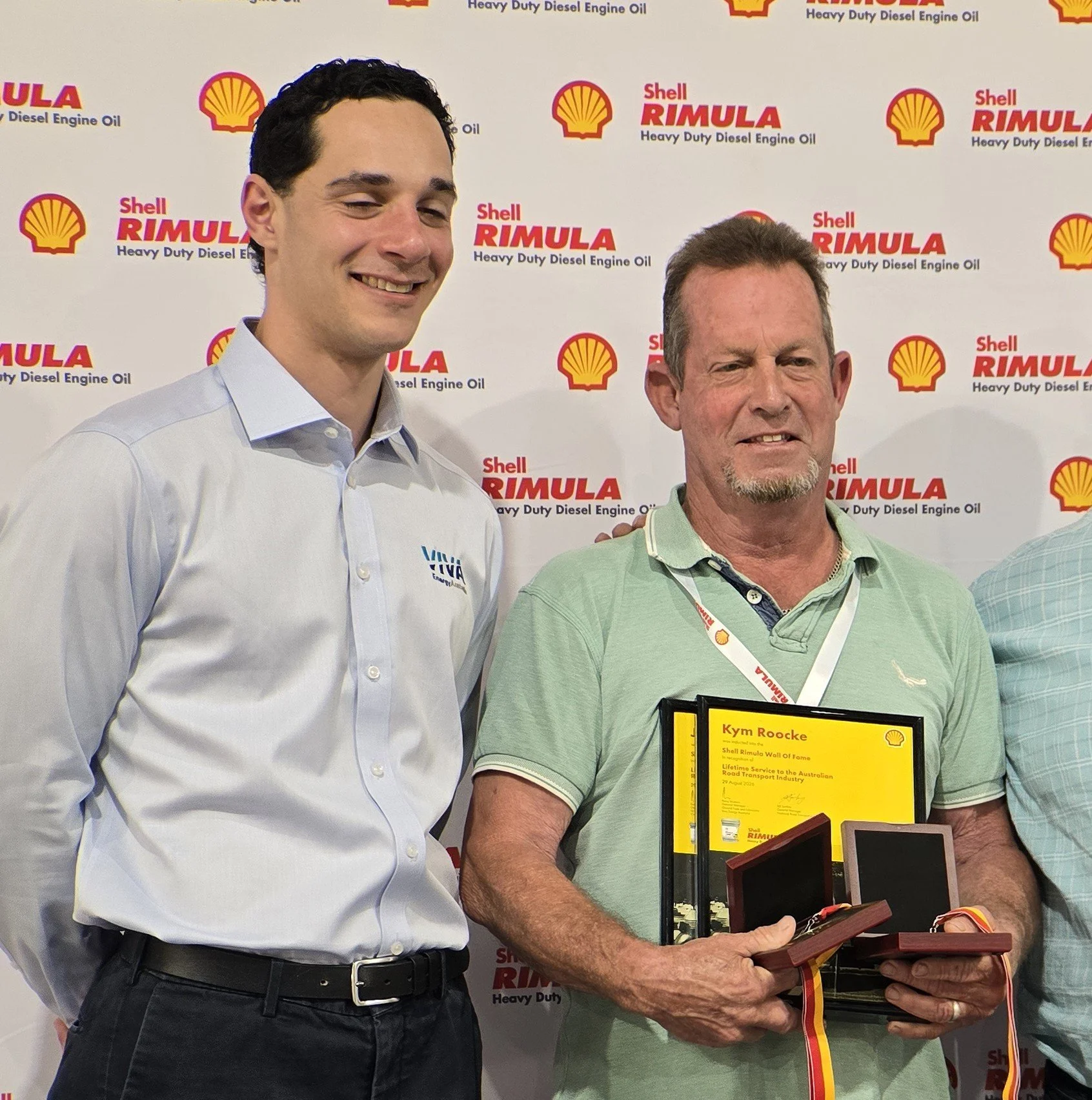
At 16, Kym left school and followed his father, Jim, into transport, obtaining his semi-trailer licence through LJ Tankers before briefly working for Junkens and then returning to the family business. He hauled fruit and vegetables, parcel freight, wine, pallets, grape bins and general freight throughout SA. A major turning point came when Nuriootpa Traders secured grocery freight previously carried by rail.
Kym’s career was defined by the trucks he drove, including a Leyland Boxer, Ford Louisville, Kenworth SAR and later Aerodyne Kenworth B-doubles. His favourite, however, was a Kenworth Slimline powered by an 8V71 Detroit Diesel, formerly one of the famous “Silver Ghost” overnight freight trucks. Kym helped lead Nuriootpa Traders into the B- double era during South Australia’s wine boom. At its peak, the business moved up to 30 B-double loads of wine into Adelaide each day.
Kim’s wife, Carolyn, regularly accompanied him on overnight runs, helping keep him awake during the long drives. Later, as their family grew, their three daughters competed for the opportunity to accompany Dad on the early morning 3:30 am run to Outer Harbour before school.
After decades of hard work, the Roocke family successfully sold Nuriootpa Traders in 2018. The business they had built continues to operate today.
44. DARREN ROSS
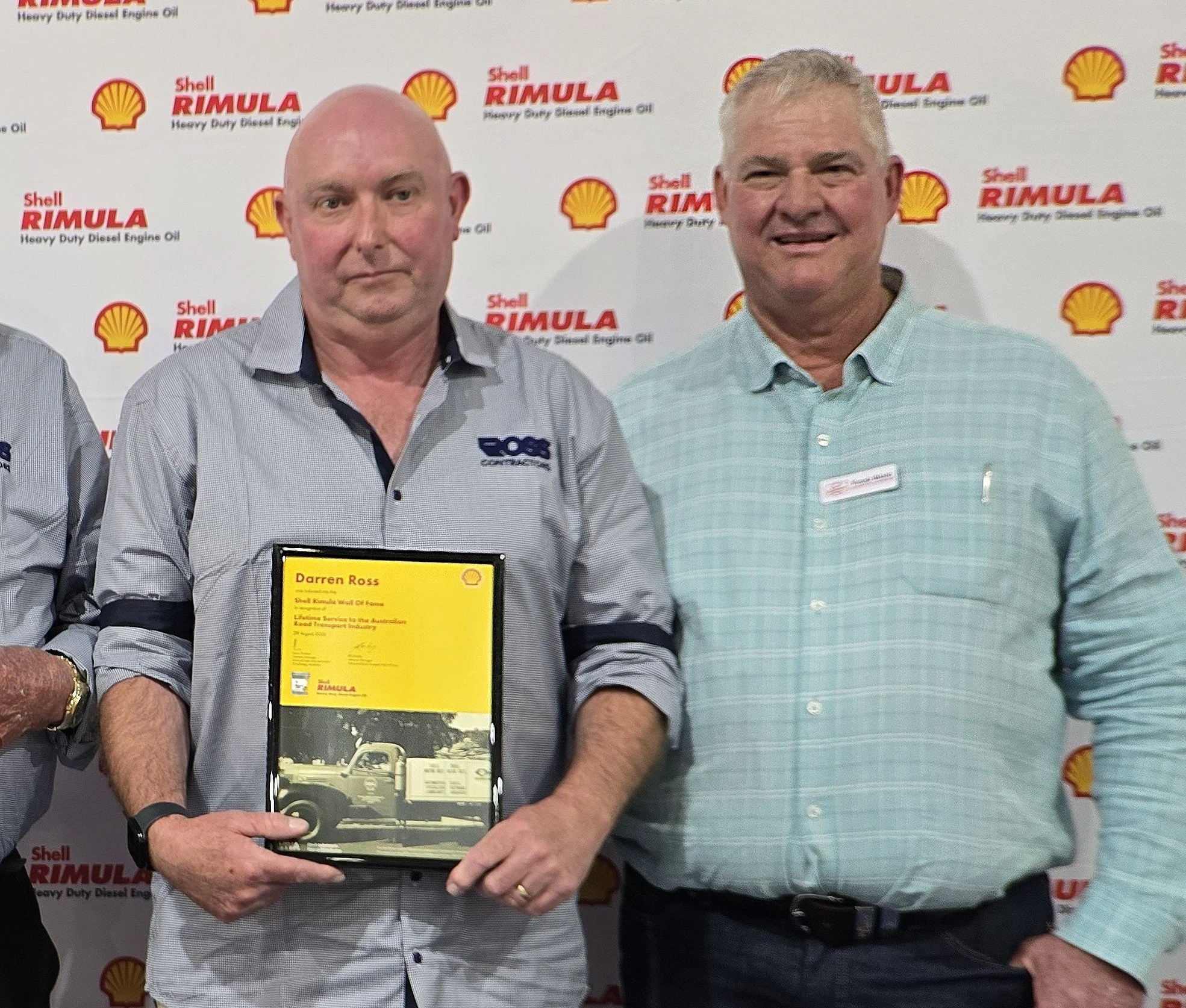
As the second generation of E.W. & M.D. Ross, or Ross Contractors, Darren has devoted his life to expanding the respected family-owned transport business, founded in 1974 by his parents, Eric and Maureen.
School held little appeal for Darren. Every opportunity outside the classroom was spent helping his father maintain trucks, service equipment and learn every aspect of the business. At 16, he joined the family business full-time.
Only a year later, the future of the business hung in the balance. Eric and Maureen were seriously considering closing Ross Contractors. Darren, however, refused to let that happen.
In 1991, Ross Contractors purchased its first Mack. A significant milestone followed in 1996 when the company secured the Weston Milling grain contract, establishing permanent involvement in grain transport.
The fleet continued to grow, with its first Kenworth arriving in 2001, followed by a 19-metre B-double, a 26-metre B-double and eventually road trains and A-double triples.
For many years, Darren drove trucks while also managing the growing business, balancing long hours behind the wheel with organising freight, maintaining equipment and coordinating operations. By 2010, Darren stepped out of the driver’s seat to concentrate on leading the business full-time.
Through hard work and an unwavering commitment to quality, Darren has built upon his parents’ legacy and secured his own place within Australia’s transport heritage.
45. ERIC ROSS
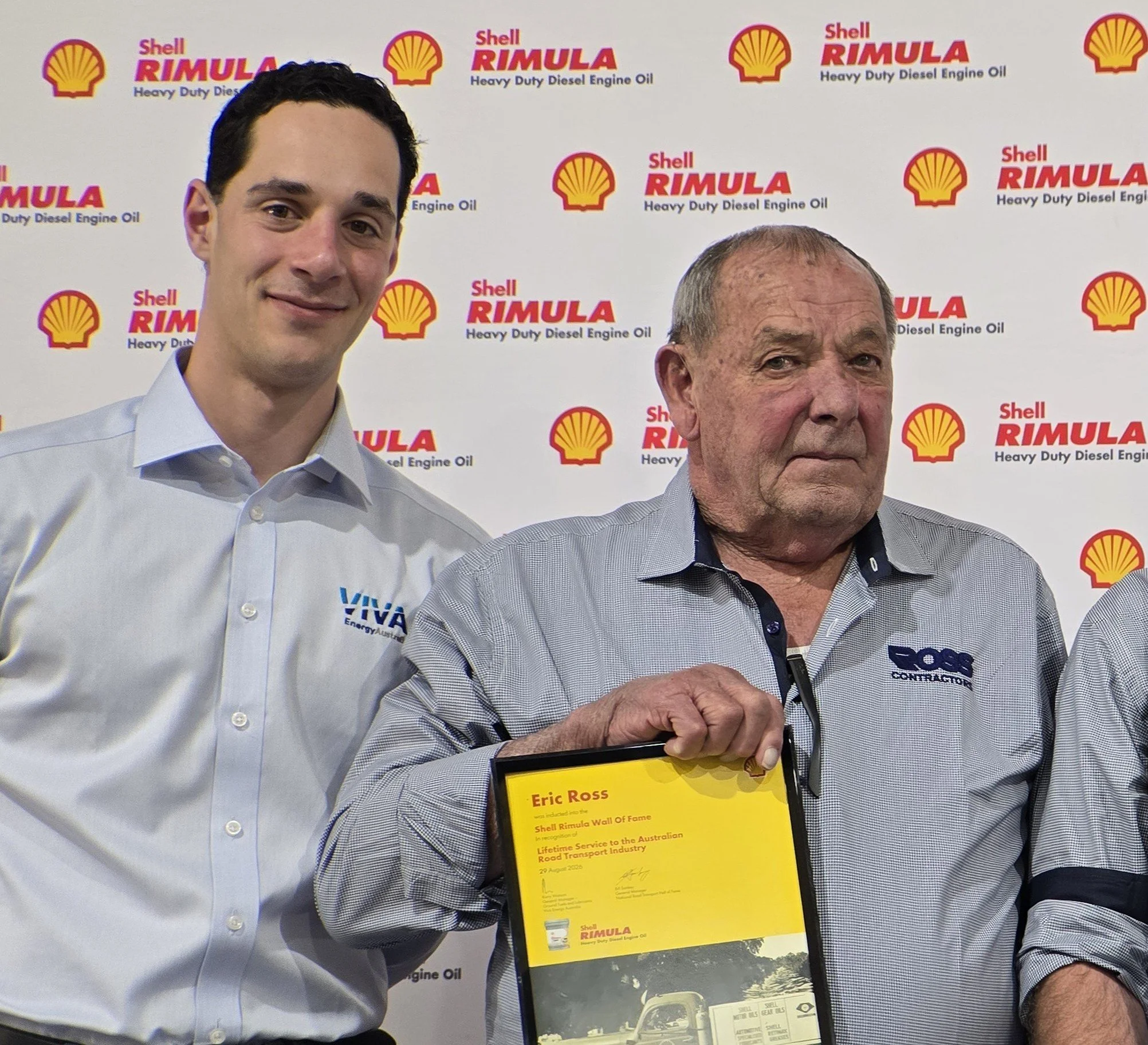
Eric’s working life began at just 11, following the passing of his father. He left school to work in a local sand pit, while also milking cows and carting hay on the family farm.
Eric met Maureen at a local dance and married in 1965. From the beginning, they were true partners in both life and business, each bringing their own strengths to the venture. In 1974, Eric and Maureen purchased their first truck, an International ACCO C1800, and established Ross Contractors. The business initially transported clay to a nearby brickworks, with Eric driving while Maureen managed the administration from home.
The business steadily expanded, with a Volvo F86 arriving in 1976, a Volvo F7 in 1983 and their first employee soon after. A significant milestone came in 1991 with the purchase of the company’s first Mack Valueliner, beginning a decade of Mack trucks before the first Kenworth T404 arrived in 2001.
That purchase marked the beginning of a long relationship with Kenworth and CMV Adelaide. Since then, Ross Contractors has acquired more than 50 new Kenworth trucks.
Throughout his career, Eric has remained hands-on, never asking an employee to undertake a task he would not do himself. He remains active in the family business, operating excavators in the family’s clay and sand mine while keeping a close eye on the transport fleet.
46. GARY JOHN SHARP
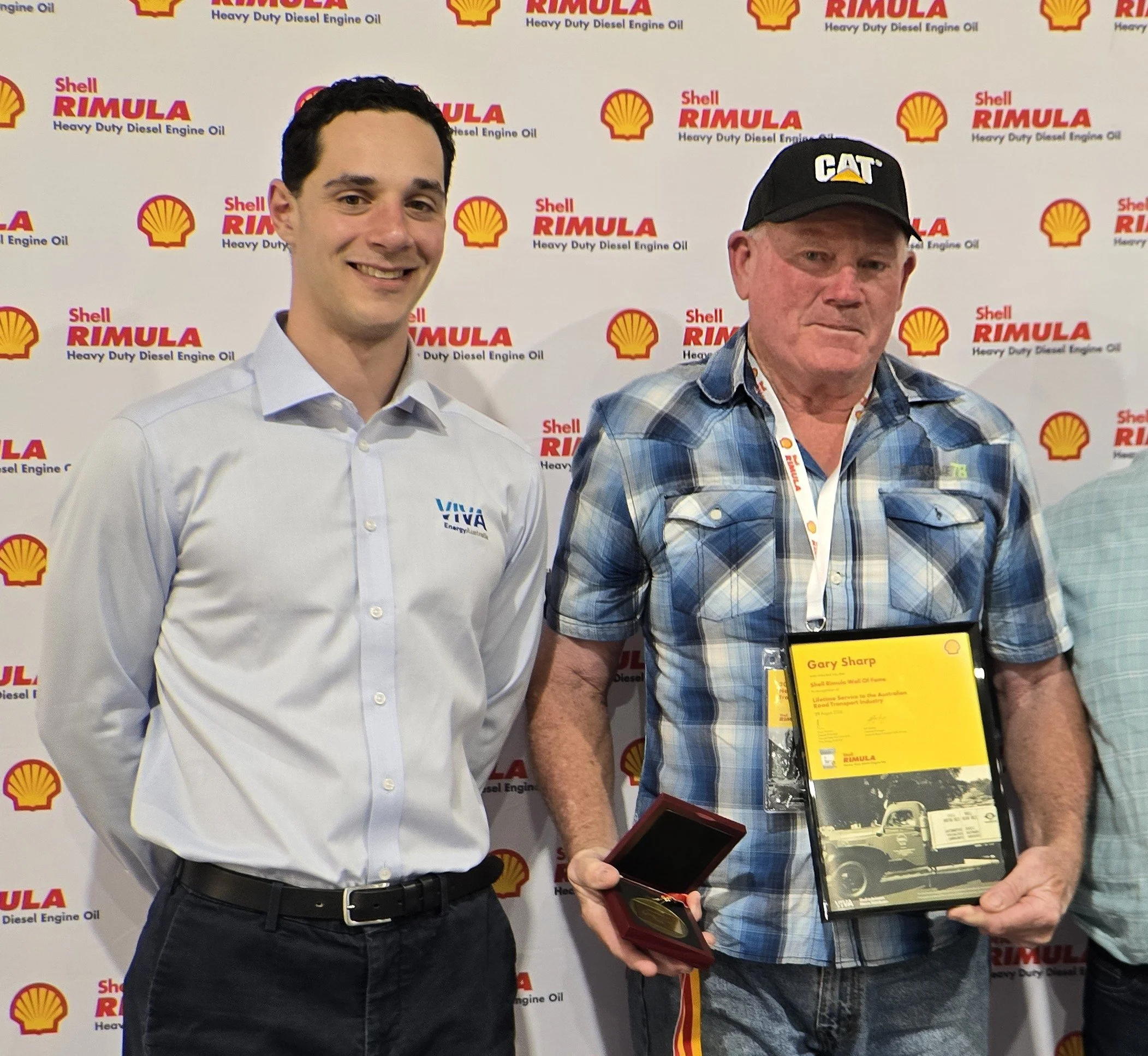
Gary grew up on his parents’ farm near Warragul, helping with cattle and working in his father’s timber mill. After several years in the mining industry in Tasmania and Paraburdoo, Western Australia, the pull of Gippsland and timber eventually brought him home.
Gary purchased his first Mack tipper and hauled material during construction of the Thomson Dam before moving into log transport.
Following the Ash Wednesday bushfires, Gary and fellow Gippsland log hauler Dennis Smith travelled to Mount Gambier to recover burnt plantation timber. In 1987 Gary and good mate, Hutchy each purchased a Kenworth C500, which quickly became Gary’s favourite bush truck. On one occasion, Gary ran dangerously low on fuel deep in the bush. With only a hard hat available to transfer diesel, the pair improvised enough fuel to get him home.
In 1992, Gary sold his Victorian operation and moved his family to Coffs Harbour, purchasing a logging business from Ozzie Hall. Initially, Les Witchard hauled Gary’s logs, but Gary soon returned to driving, purchasing a Kenworth W Model and later a second as the business grew.
As native forest logging declined, Gary diversified into earthmoving and private timber haulage. By 2020, he had scaled back to one Kenworth T950 hauling long poles for L.J. Williams Timber.
Gary retired in 2022 and now spends much of his time tending cattle but still owns a Western Star tipper and Hutchy’s famous C500.
47. MAXWELL SHEGOG
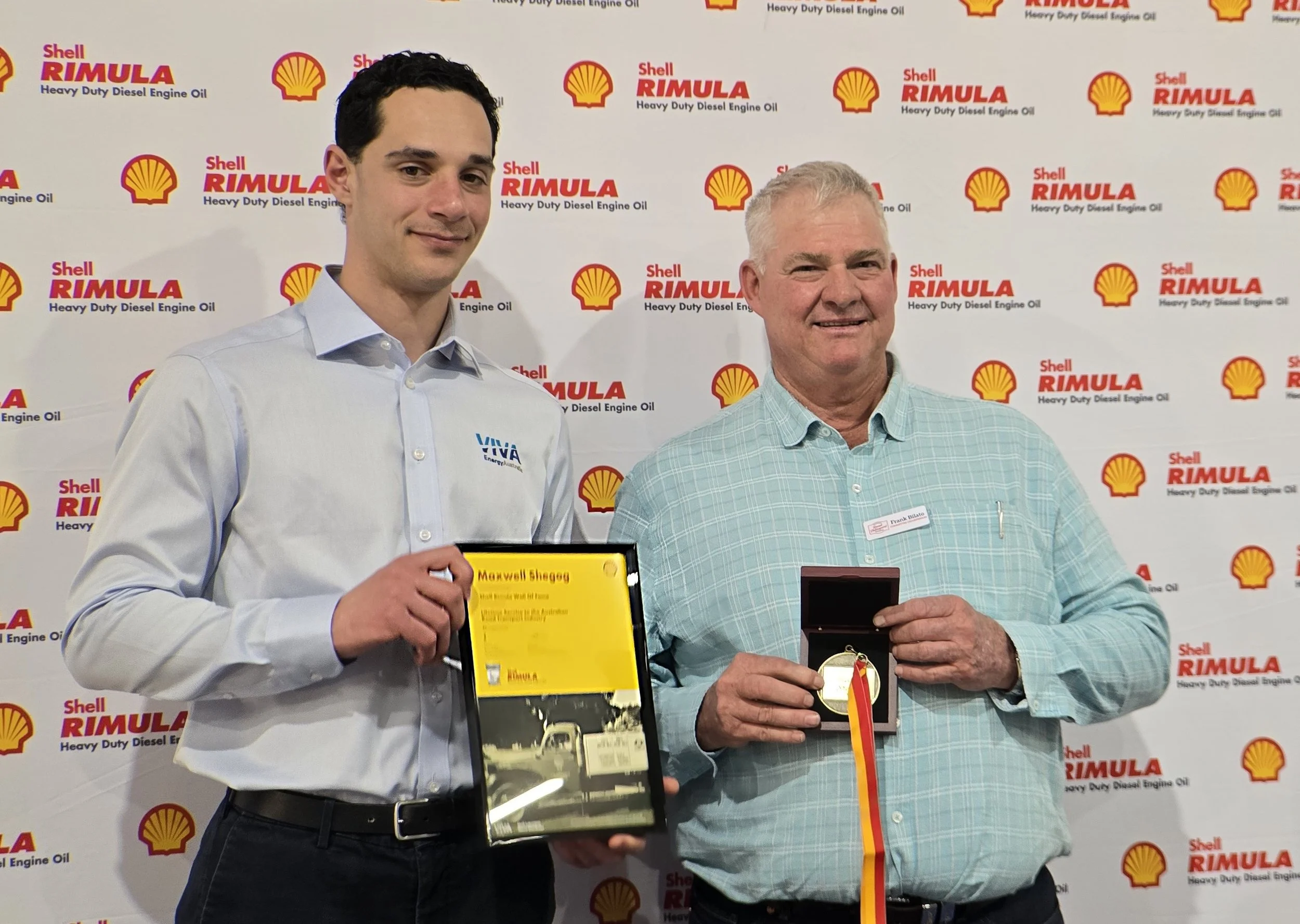
At sixteen, Max commenced a Diesel and Steam Apprenticeship with Tasmanian Railways, but his ambition was always to drive semi-trailers. As soon as he was eligible, he obtained his heavy vehicle licence and began his career with Ray Hughes, carting general freight in a REO before moving into Tasmania’s timber industry with Joe Hurst and, later, Neil Hayes.
In 1962, Max married Pat. While Max spent countless hours on the road, Pat managed the demands behind the scenes and supported the family through the sacrifices of transport life. Together they raised five children, building a family legacy that now includes ten grandchildren and six great-grandchildren.
During the 1960s and 1970s, Max broadened his experience, including relocating his young family to Papua New Guinea to work as a Transport Supervisor in the timber logging industry.
Returning to Australia, Max became an owner-driver based in Melbourne, travelling interstate between Tasmania and every mainland state. He regularly crossed the Nullarbor when parts of the Eyre Highway were still gravel.
Max later joined Brambles, driving Volvo G89 and N12s, before managing trucks and vans for Edgell.
Although health eventually ended his driving career, Max remains closely connected to transport, with lifelong friendships and an enduring passion for trucks and the people behind them.
48. DENNIS SIOSTROM - accepted by Murray Fox
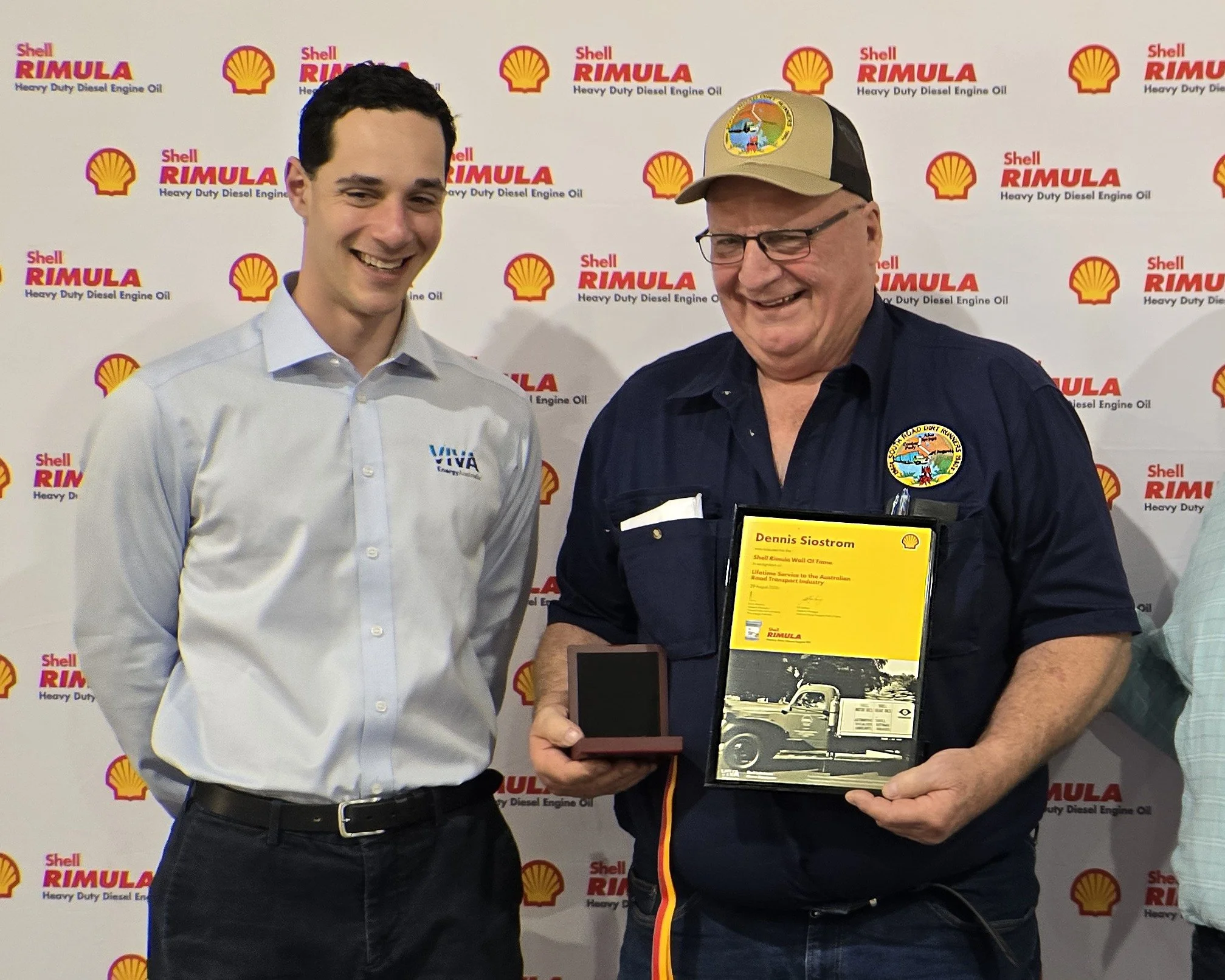
Dennis left school at fifteen and began with local carrier Ron Sanders, loading bags of wheat, barley and grain. After time working on a cattle station in far northern South Australia, he returned to Gawler and began driving with Adelaide Transport Company, driving a Leyland Hippo on the Adelaide–Darwin run around 1969.
He went on to Kennelly’s Transport, hauling freight to Paraburdoo, Tom Price and Townsville, before joining Ray Singleton and driving the renowned Flintstone Mack to Melbourne. By 1976, he was with Miners Transport, running an R Model Mack between Adelaide and Coober Pedy.
The Territory soon called again. Dennis joined Morry McMillan in 1978, driving White 4000s and cab-over Atkinson’s on the Adelaide–Darwin route, before moving to Bill Atkins and servicing Moomba, Tennant Creek and Darwin. With Two Wells Transport, he expanded into interstate work between Adelaide, Sydney and Perth in a Kenworth T950. However, Dennis always preferred the dirt.
In 1992, Dennis became an owner-driver, hauling steel from Whyalla to Sydney in a Ford Louisville, before returning to employed driving when owner-driving become unviable.
His final decades included heavy haulage with Neil Mansell and twenty years with Australian Portable Camps, operating road trains and oversized combinations across Australia. It was a fitting conclusion to a career built on versatility, professionalism and an unwavering willingness to go wherever the job required.
49. GEORGE SITA (Dec.)
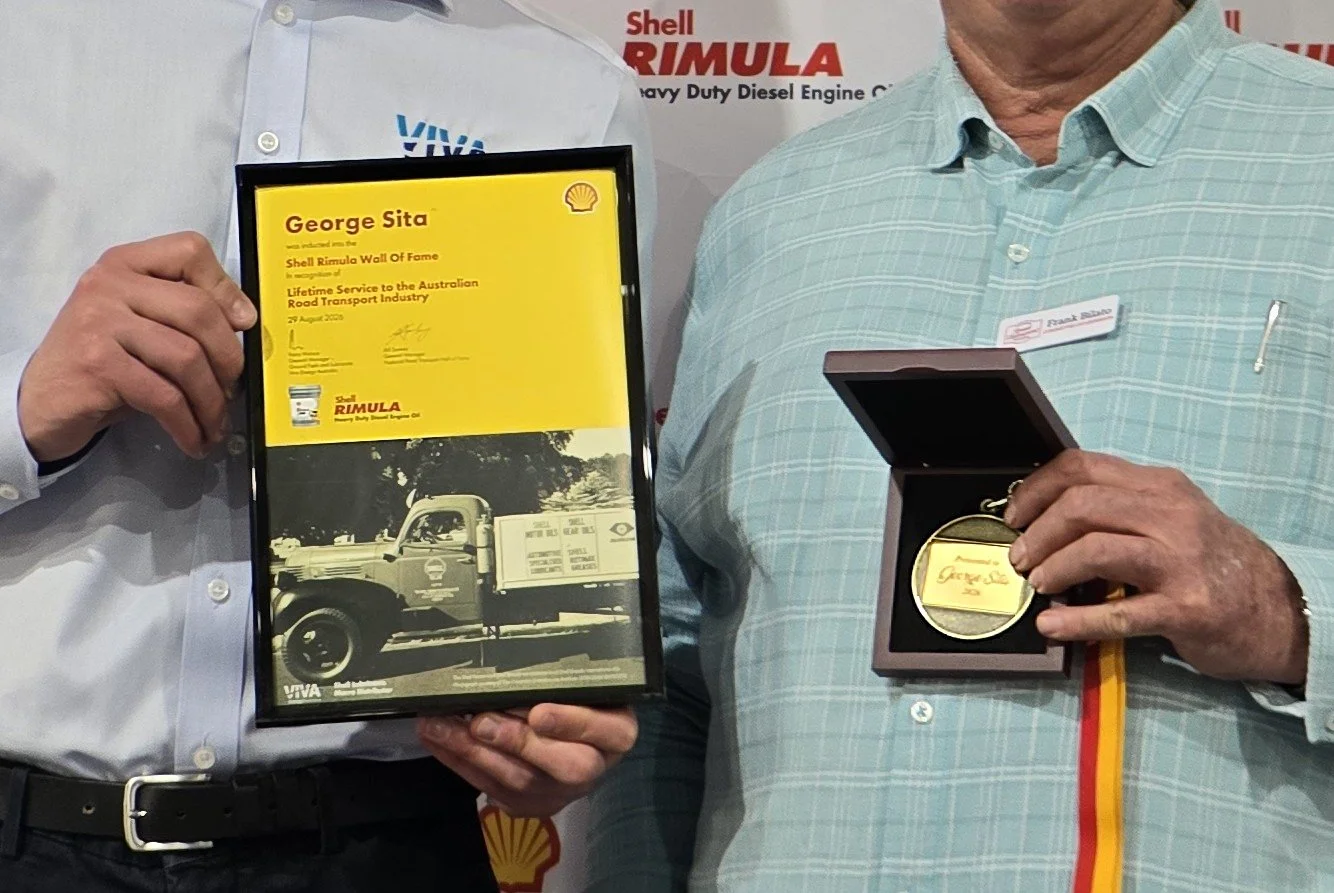
George entered the transport industry in 1959, beginning as a bus driver for George Reynolds before later joining Doug Barnes. While he enjoyed driving, George recognised the potential of the growing bus industry and, in 1960, registered the name Sita Bus Lines. Around this time, George formed a partnership with Frank Bono, and together they purchased the Avondale Heights to Footscray bus service.
Over the following decades, Sita Bus Lines expanded steadily and the business diversified into route services, charter operations, interstate touring and inbound tourism, while operating numerous metropolitan bus routes throughout Melbourne's western suburbs under government contract.
Among the company's many achievements was its significant role in providing transport and logistics services for the 2006 Melbourne Commonwealth Games.
By the time of his passing in 2015, Sita Bus Lines continued to operate a substantial fleet of approximately 160 vehicles. His influence continues to be felt throughout Australia's passenger transport industry.
50. NEIL SMITH
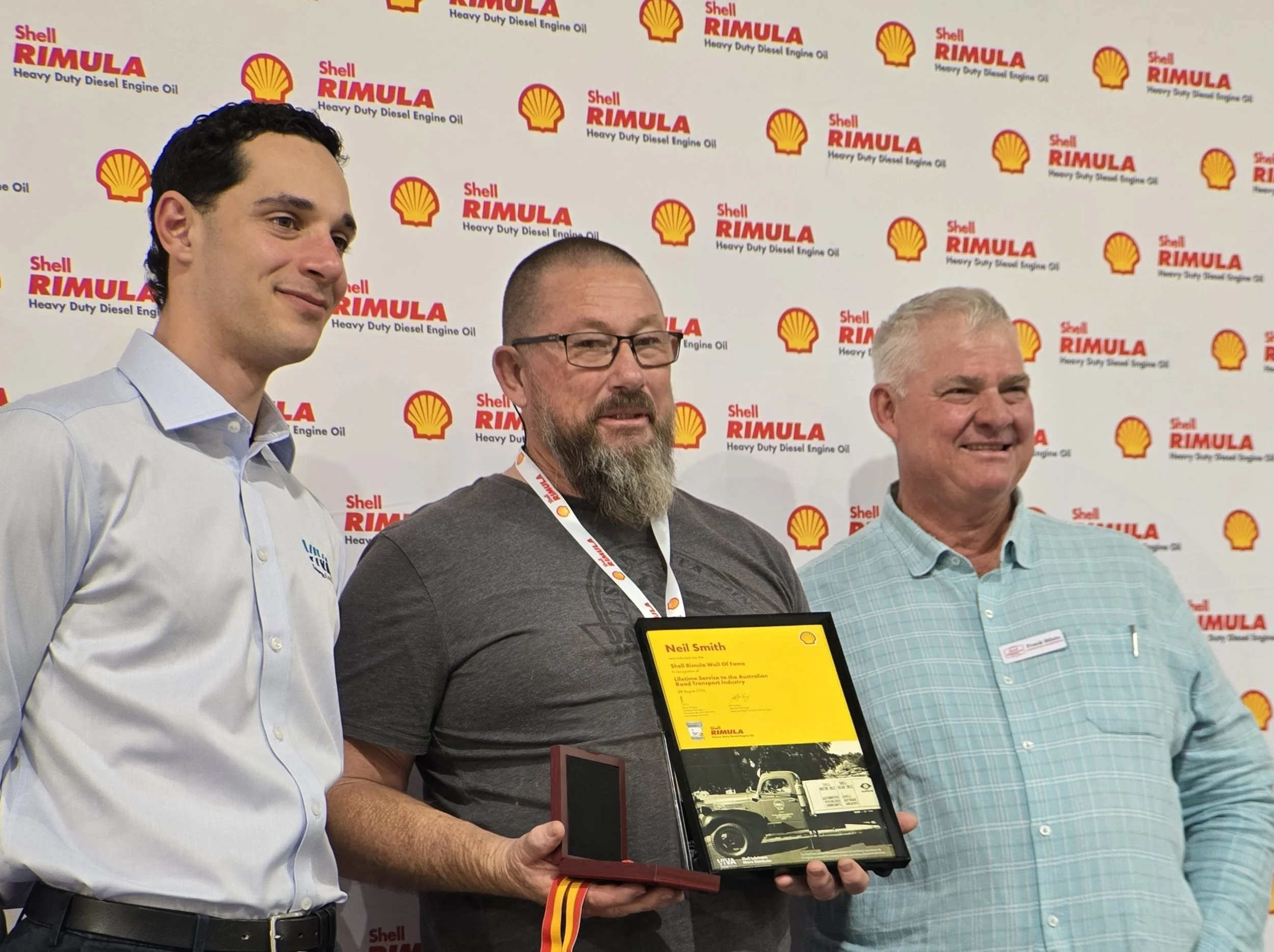
When he was old enough, Neil naturally followed in the footsteps of his father and grandfather before him and climbed behind the wheel.
Throughout his over 40 years behind the wheel, Neil carted just about everything Australia had to offer. Wide loads, livestock and general freight all featured during his years on the road, while the last twenty-five years of his career were spent specialising in vehicle transport. Cars, trucks, machinery and almost anything that could be loaded onto a trailer passed through his hands.
The greatest rewards of trucking, according to Neil, were never just the kilometres travelled or the freight delivered. They were the friendships built over thousands of kilometres, the satisfaction of getting the job done and the freedom that only life on the road can offer. There are few types of freight Neil hasn't hauled and few highways he hasn't travelled.
Now recently retired, Neil hasn't drifted far from the transport industry. Instead, he plans to restore a classic truck and spend his time attending truck shows, catching up with old mates and remaining part of the trucking community that has been such a significant part of his life.
51. RODNEY SOPEER - accepted by Murray Fox.
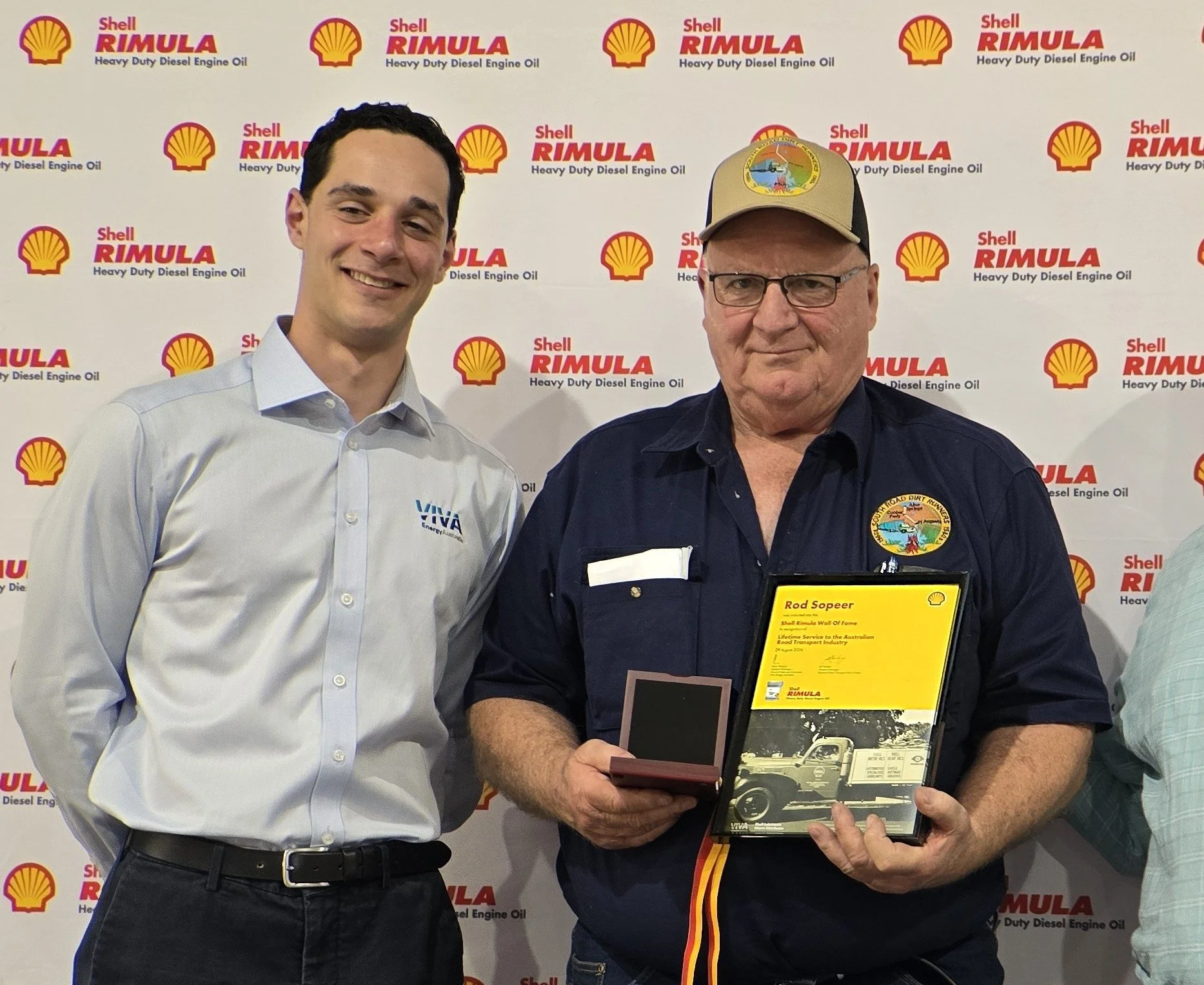
Rod’s love of driving began remarkably young. He would secretly drive an old Buick Buckboard the two miles from the family farm to the road beside his school, parking it among the trees before walking into class, then driving it home again at the end of the day. He later swapped the Buick for an ex-army Jeep and continued the routine until the family left the farm.
At 17, Rod finally obtained his licence and began driving commercially, initially transporting rabbits, then general freight, livestock and wool throughout the outback. His experience led to long-distance work with Silverton Road Transport and later Paramount Transport and Jack O’Day.
It was on the Old South Road that Rod established himself as a true outback driver. Driving a Mercedes-Benz 2624 on weekly trips to Alice Springs, he battled mud, corrugations and some of the toughest road conditions of the era. Following Cyclone Tracy, he completed six weeks of weekly trips carrying hanging lambs to Darwin.
Rod later spent more than 17 years with Brambles and Cleanaway before returning to the road, completing a further decade of weekly Coober Pedy runs. He retired in 2012 after 51 years in transport, but his connection to the Old South Road continued through the South Road Dirt Runners reunions he helped to establish and organise for many years.
52. STEVE STACPOOLE
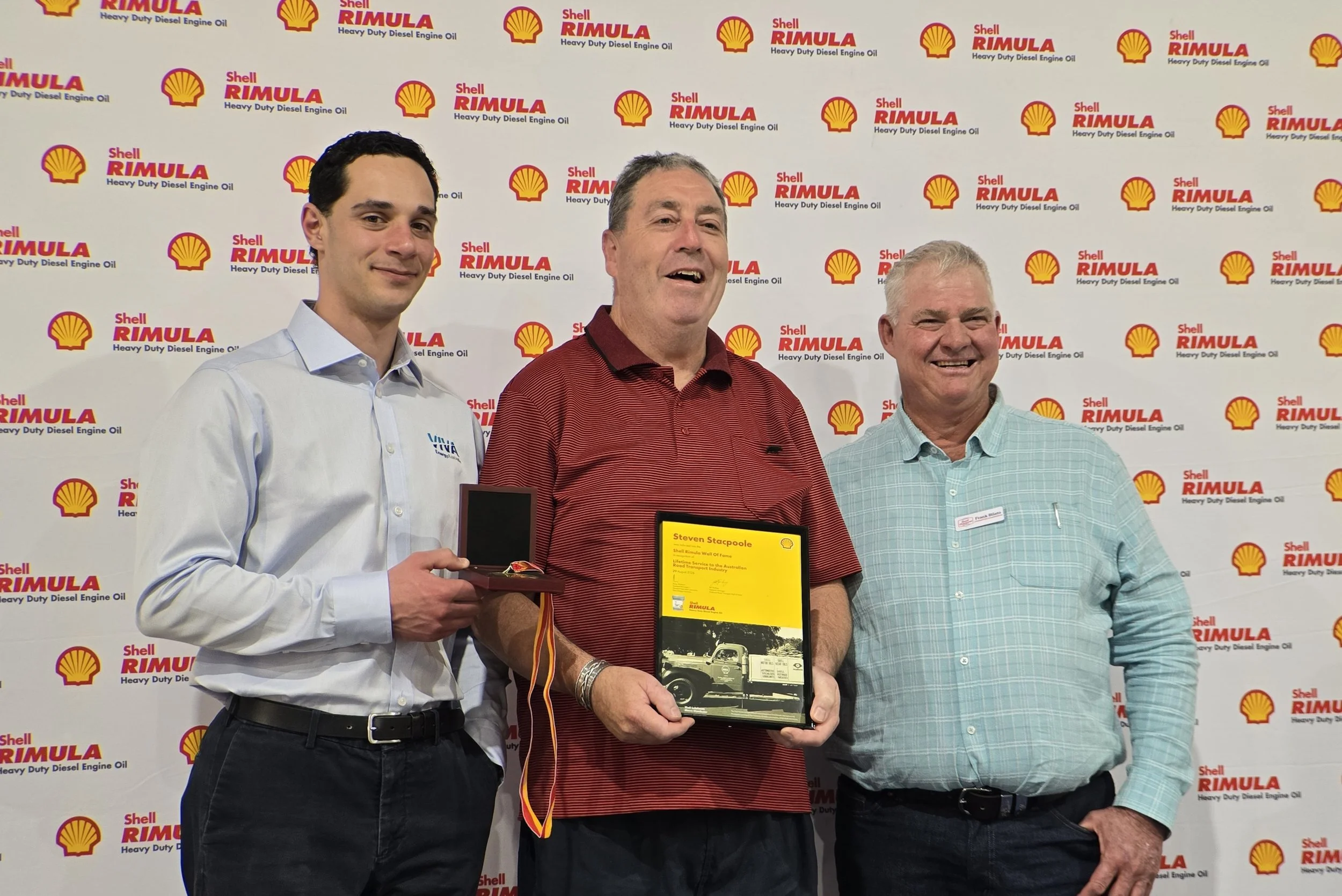
From an early age, Steve could be found beside his father, helping assemble farming implements at the family’s International Harvester dealership. Before long, he progressed to rebuilding engines and gearboxes and maintaining the family’s crane trucks.
While still at high school, Steve became one of the first students to undertake a school-based apprenticeship, completing his trade qualification before finishing Year 12. He, his father John and brother Peter regularly collected new trucks from the International factory at Dandenong, fitting trays and customising them for customers. Steve also spent plenty of time behind the wheel, carting power poles to Ararat.
Growing up around heavy equipment also made Steve an expert at getting trucks out of trouble. He developed his towing and recovery skills using the family’s recovery trucks and 4x4 Blitz, while also driving wreckers for local operators and maintaining trucks for transport companies across western Victoria.
In the mid-1990s, Steve returned to Ararat and started SAS Truck Service with little more than a panel van, tools and spare parts. He built it into one of the region’s best-known heavy vehicle repair businesses, employing a team of mechanics and operating a fleet of breakdown vehicles.
In 2015, Steve handed the business to his son Josh before retiring in 2025. Today, he enjoys a slower pace with his family and dog Doza, quietly relocating tools around the workshop. Just repaying the favour, he reckons.
53. BARRY TROY
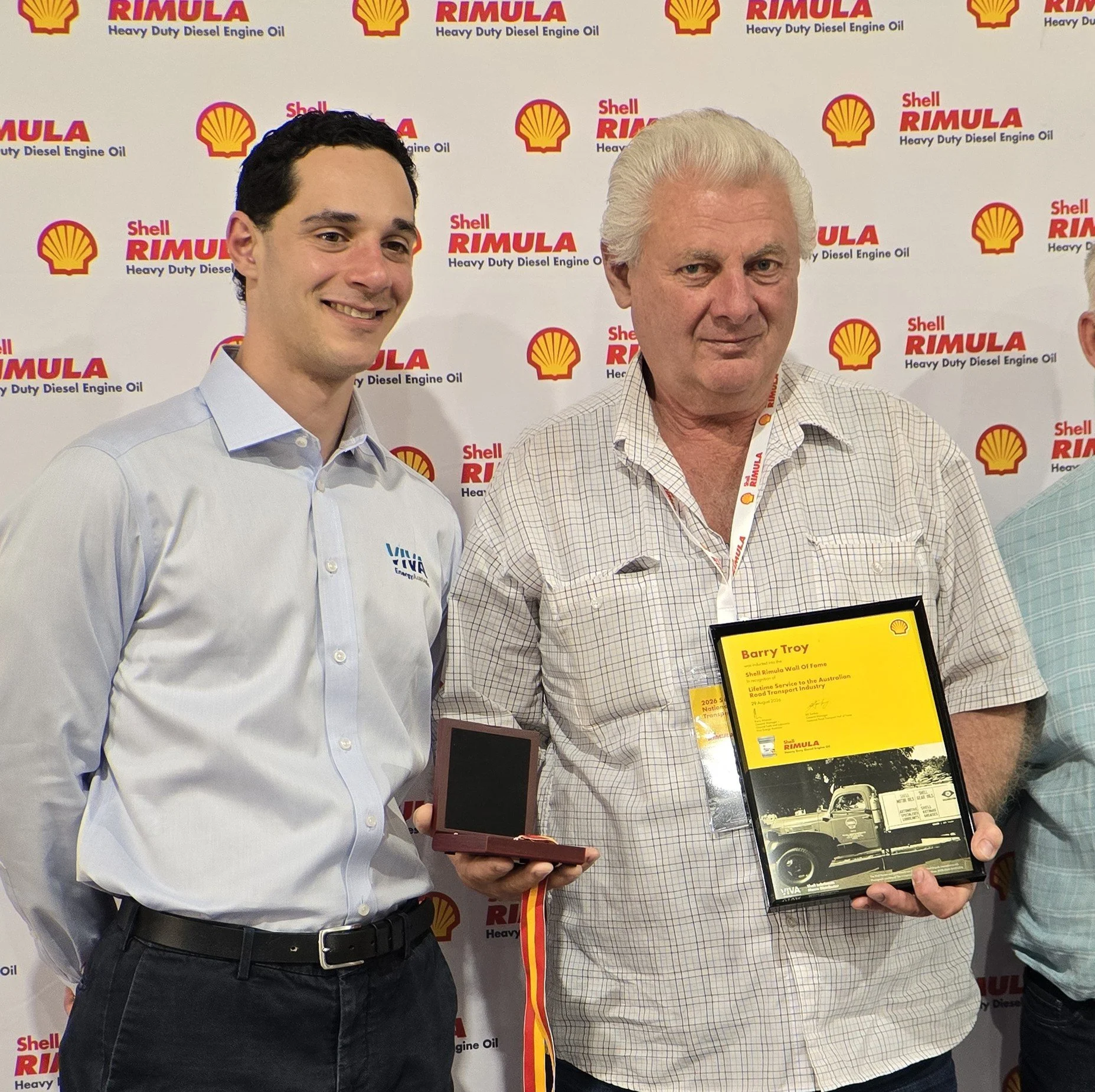
Starting as a diesel mechanic apprentice, Barry learnt that understanding a truck was just as important as driving one. His experience soon took him from the workshop into the driver’s seat, progressing through truck-and-dog work before becoming the company’s main float operator following his father’s retirement.
Although Barry briefly stepped away from transport to establish a successful heavy vehicle driver training business, the lure of the road proved impossible to ignore. In 1990, he purchased an ex-Army Diamond Reo tipper and float powered by a 335 Cummins and founded Troy Heavy Haulage.
As the business grew, the old Diamond Reo gave way to a succession of Western Stars and Kenworths. Barry’s strong mechanical background allowed him to diversify into a wide range of transport operations, building Troy Heavy Haulage into a respected company operating more than eighty pieces of equipment, including specialised float combinations, B-double curtain-siders and refrigerated trailers.
Kenworth K104s and K200s became the backbone of the commercial fleet. Then, in 2025, Barry fulfilled a personal ambition when he purchased his dream truck, a Kenworth T904.
Barry has successfully built a business that reflects the values passed down from his father: hard work, reliability and respect. Those same values are now carried forward by the fourth and fifth generations of the Troy family.
54. JOHN WANT
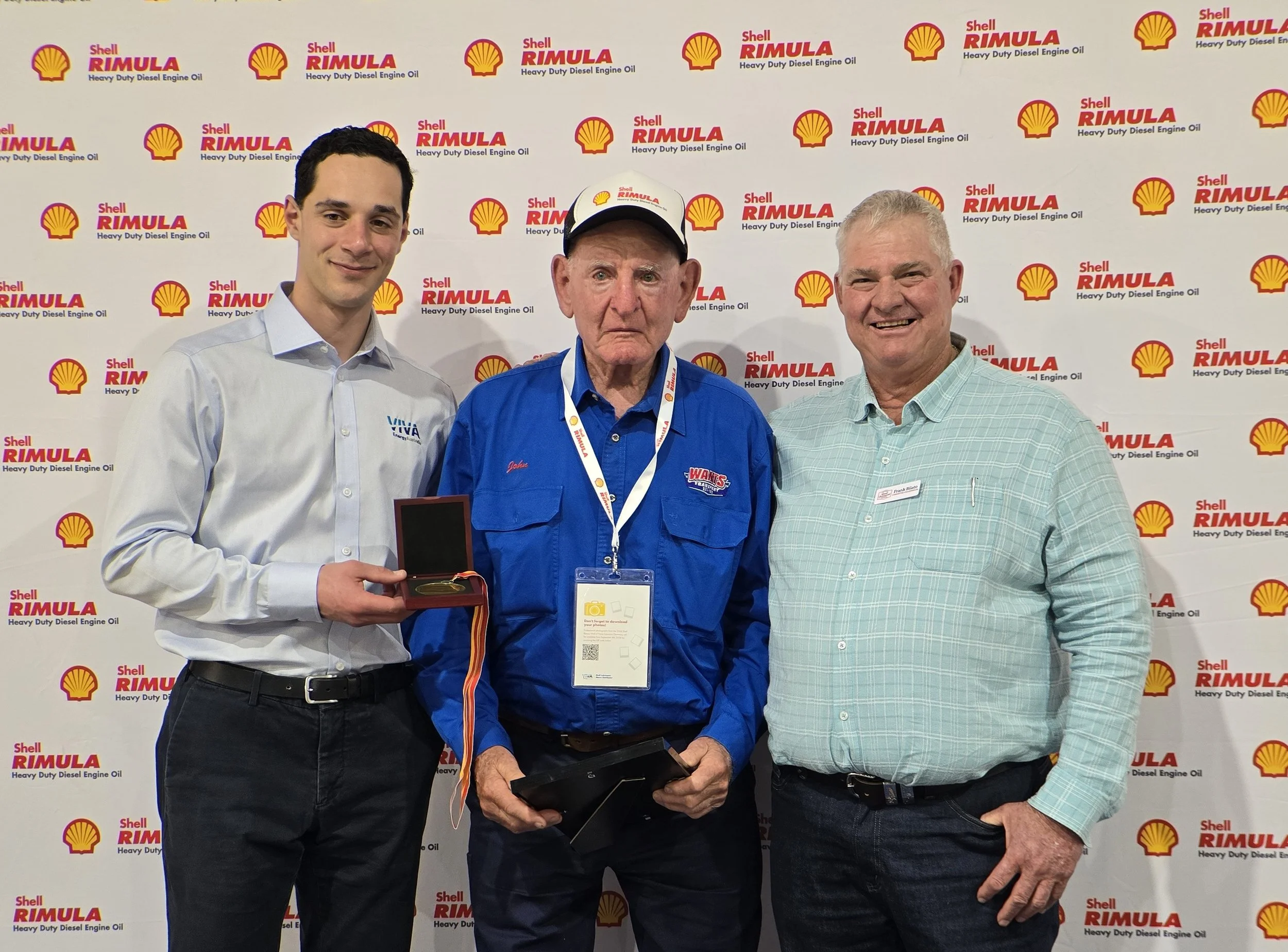
John Want began his driving career at Ulmarra, collecting cream cans from dairy farms in a four-ton Ford known as “Peggy Sue.” He soon progressed to a seven-ton Ford Sputnik, hauling general freight throughout the Grafton district.
After gaining his semi-trailer licence, John joined Notaras Brothers, transporting timber north to Brisbane and returning with heavy loads of roof tiles. Every tile was unloaded by hand, and on one memorable occasion his wife Jan rolled up her sleeves and helped unload the entire trailer, an example of the family effort that would become a hallmark of John’s career.
After fifteen years away from transport pursuing farming ventures, John returned to trucking in 1979, purchasing a UD tipper and subcontracting to Norco, carting grain from western New South Wales to coastal farming districts. This marked the beginning of Wants Transport.
As the business grew, John operated trucks including an International 3070, International T-Line and his favourite, a brand-new Ford LTL 9000 powered by a 350 Caterpillar. His son Matthew regularly rode along, sometimes skipping school and learning to drive between Casino and Tenterfield.
In 1993, Matthew’s decision to become a truck driver brought the family back into transport, establishing Wants Transport with an International Transtar and grain tipper. The business grew to fifteen prime movers, and today Matthew manages operations while Amanda oversees administration.
Now in his mid-eighties, John remains involved, keeping a close eye on the yard.
55. CHARLIE WHELAN
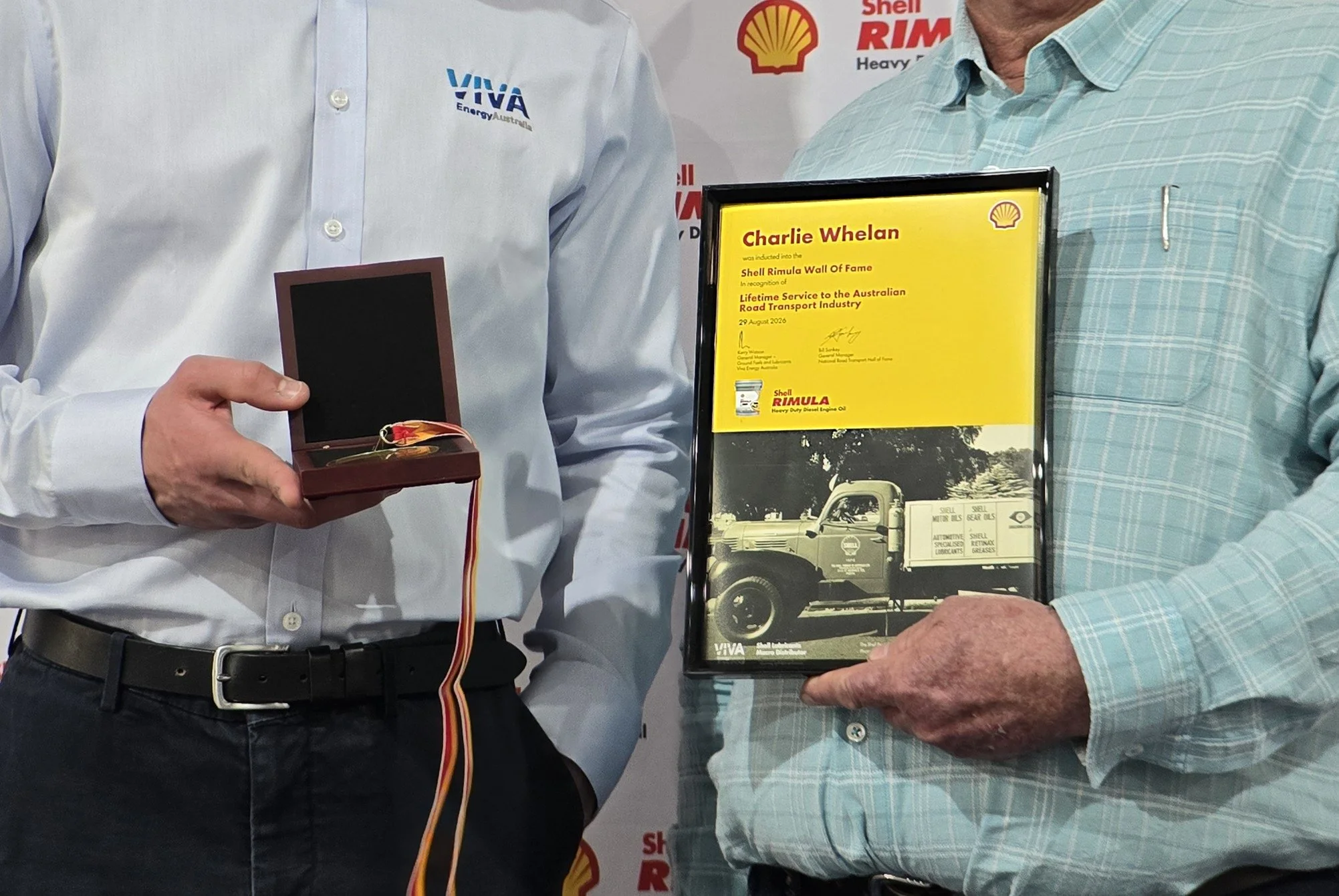
From an early age, Charlie developed a passion for big machinery and working on the land, naturally leading him into civil construction and heavy haulage. In 1975, he established Whelans Swan Reach Pty Ltd, initially operating from the family farm alongside his brothers Terry and Don.
In 2013, Charlie and his wife Lynne began the next chapter independently, growing the operation into what is now the Whelans Group, incorporating heavy haulage, earthmoving, quarries and traffic management. Under Charlie’s leadership, the business has become one of regional Victoria’s leading civil construction and transport operations, earning widespread industry recognition. In 2025, Whelans received the Civil Contractors Federation Victoria Earth Award in the $75–150 million category for its work on the Bogong High Plains Road Landslip Project, which Charlie considers a career highlight.
Charlie has always been hands-on, taking pride in hauling quarry products, operating dozers, excavators and graders, and shifting heavy equipment between worksites. He has also placed a strong emphasis on safety.
Seeking to reduce the risks associated with tipping, Charlie played a key role in developing the innovative ‘EjeKTa’ trailer, using a conveyor belt discharge system to eliminate rollover and tip-over hazards. The design received WorkSafe Victoria’s Health and Safety Invention of the Year Award in 2015.
Today, Charlie remains involved in business development and operations, fostering industry relationships and mentoring the next generation.
56. KEN WILKIE
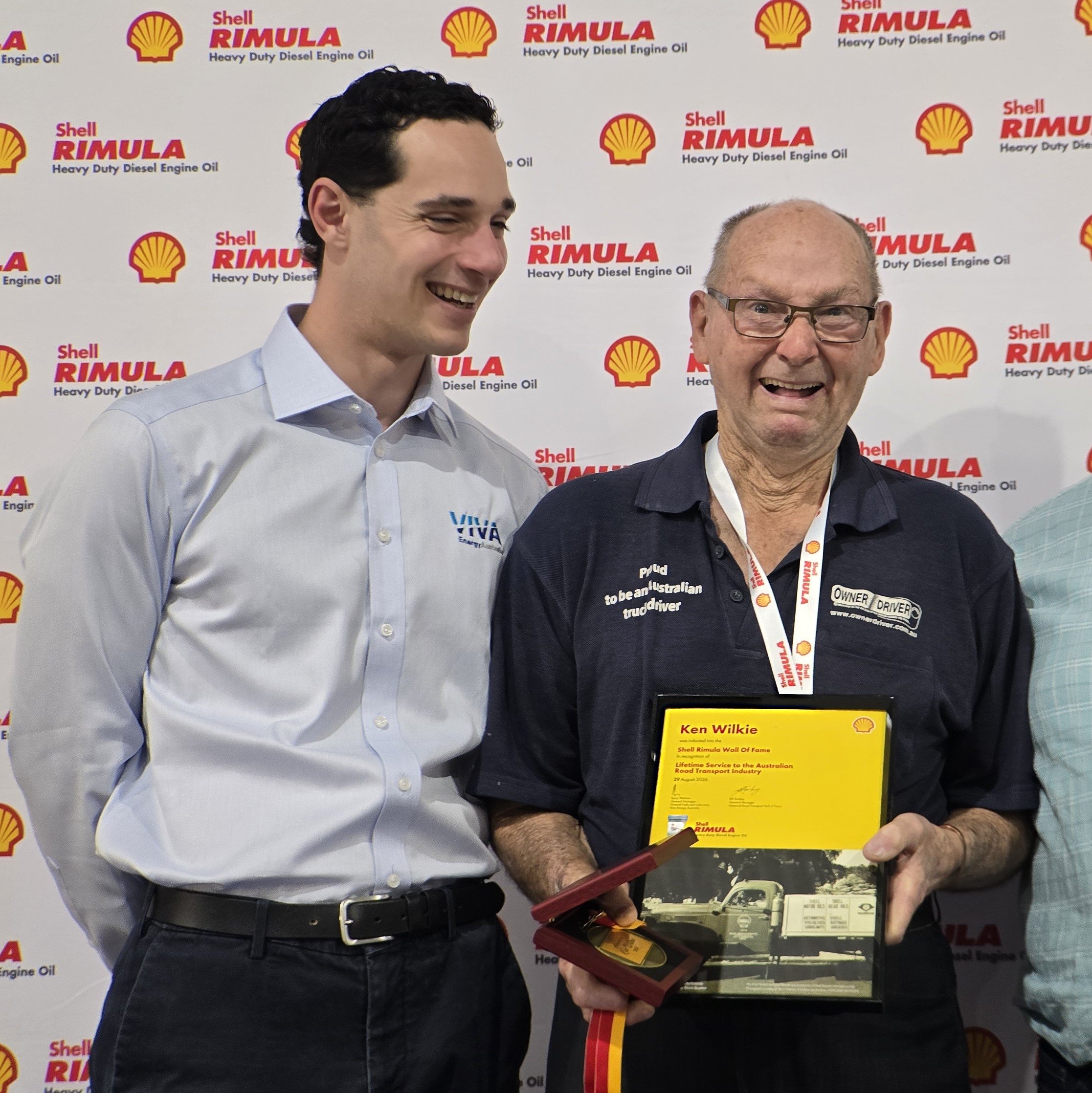
Ken and his wife Dot commenced operating as owner-drivers in 1974, starting with general freight and produce. As their business developed, Ken specialised in dangerous goods bulk tanker transport, spending almost twenty years hauling some of Australia's most hazardous chemical products.
One of his regular interstate runs began at Narangba in Queensland, carrying 25 tonnes of pure arsenic acid more than 2,100 kilometres to Mount Gambier in South Australia. The return trip involved back-loading CCA timber preservative through Victoria and New South Wales before returning to Queensland. Ken regularly covered around 250,000 kilometres a year, transporting dangerous goods safely and without incident.
When health challenges eventually made the long interstate runs more difficult, Ken turned his attention to transporting relocatable buildings throughout Queensland.
During his countless hours behind the wheel, Ken began putting his thoughts onto paper. What started as observations about declining driver standards, excessive regulation and government interference developed into ‘Willkie’s Watch’, a regular column in OwnerDriver Magazine that has been published for more than twenty years. Known for his forthright opinions, Ken has consistently advocated for higher licensing standards, better driver training and practical safety improvements.
After more than five decades as an owner-driver, dangerous goods operator, industry advocate, mentor and safety campaigner, Ken remains committed to the road, saying that as long as he can hold a licence, he has no intention of leaving the driver’s seat.
57. RONALD ‘SHANE’ WILSON
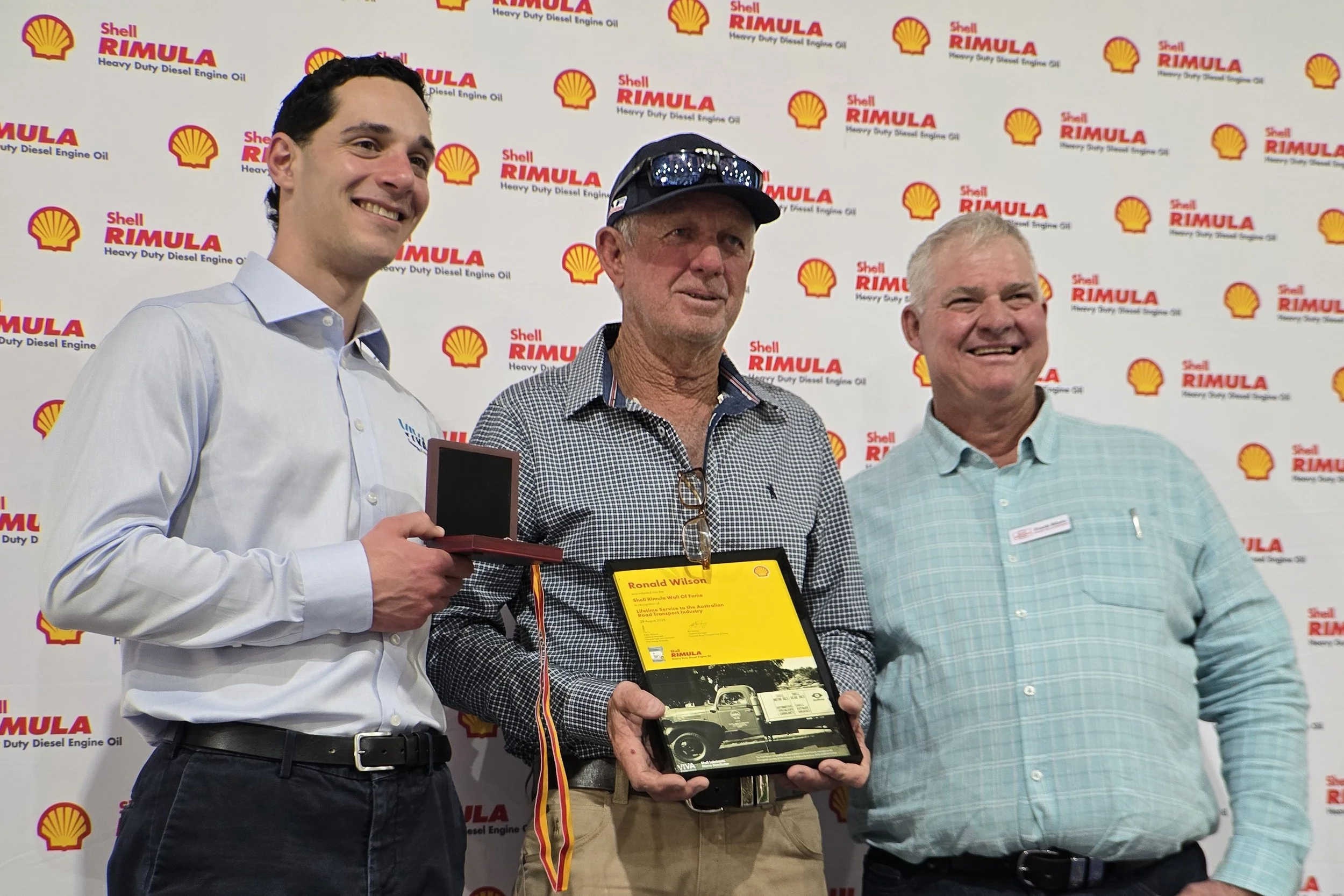
While Shane wasn’t born into a transport family, those who know him would struggle to imagine him doing anything else. He built one of Queensland’s most respected bitumen haulage businesses, learning the industry from the ground up through hard work and experience.
Shane established Willows Bitumen Haulage, initially operating a single second-hand Ford Louisville. Working with high-temperature products like bitumen requires precision, patience and an uncompromising commitment to safety. Over decades in the industry, Shane built a reputation for delivering exactly that. Customers knew that when Willows accepted a job, it would be completed safely, efficiently and to a high standard.
From one truck, Willows Bitumen Haulage grew into one of Queensland’s respected specialist transport companies, operating a modern fleet and servicing projects throughout the state. Despite the growth, Shane remained hands-on, driving trucks, assisting in the workshop, mentoring drivers and maintaining close relationships with customers.
Those who worked with Shane speak as highly of the man as the operator. He believes success is measured not simply by the size of a fleet, but by the people around you. He has mentored younger drivers, shared his knowledge and remained approachable to those seeking advice.
Behind the business has always been a supportive family, sharing the early mornings, late nights and weekends that come with transport. Shane credits their support as an important part of the success he built.
58. BOB YOUNGSON
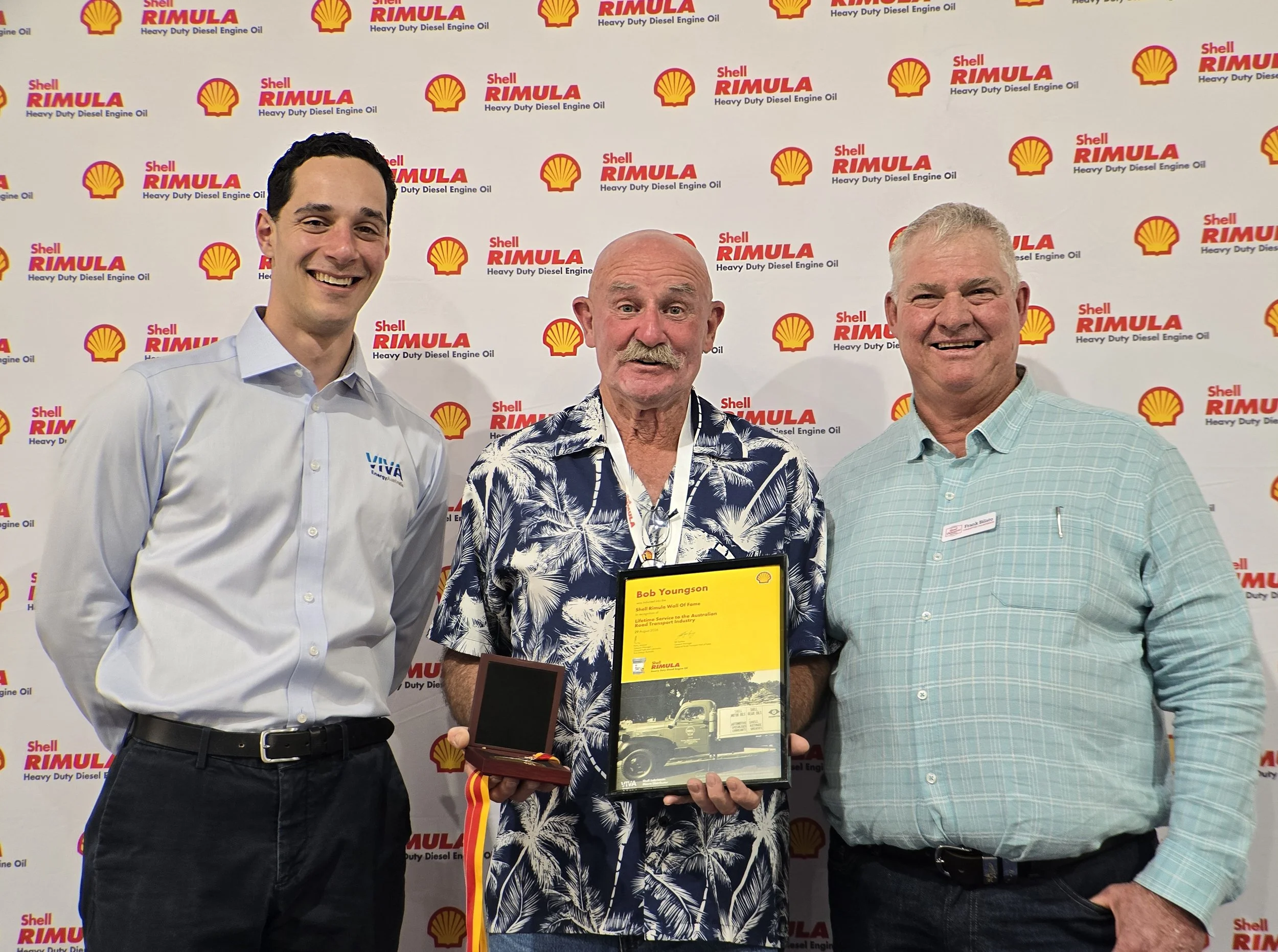
Bob’s driving career began with R.L. White & Sons in Bairnsdale, driving an International R180. His first trip carried bricks from Bairnsdale to Melbourne, an intimidating introduction that cemented his passion for life on the road.
He soon progressed into livestock and timber cartage, running throughout Gippsland and along the east coast. With Dyers in Sale, Bob drove a BMC van and trailer carrying cream to Melbourne. In an era when regulations restricted general freight by road, drivers became masters of improvisation. Furniture was loaded at the rear of the van while general freight was carefully hidden at the front, ensuring it remained out of sight should the police decide to inspect the load.
Interstate work followed, taking Bob through a succession of operators and trucks, including Internationals, an Atkinson and a Detroit-powered Kenworth with twin-stick gearboxes.
Bob spent thirteen years with Mayne Nickless, driving everything from Flintstone Macks with quad gearboxes to Kenworths, cab-over Macks and Atkinsons.
He later joined Intercentre Transport, the transport division of Arnott’s Biscuits, where he was proudly allocated Truck Number 1. Bob helped introduce B-double operations, carrying biscuits between Sydney and Melbourne before backloading IPEC freight to Brisbane.
Bob finished his career with Simon’s National Carriers, retiring after more than fifty years behind the wheel.
THE 2026 ICON AWARD
FRANK & GEORGIE MARLEY
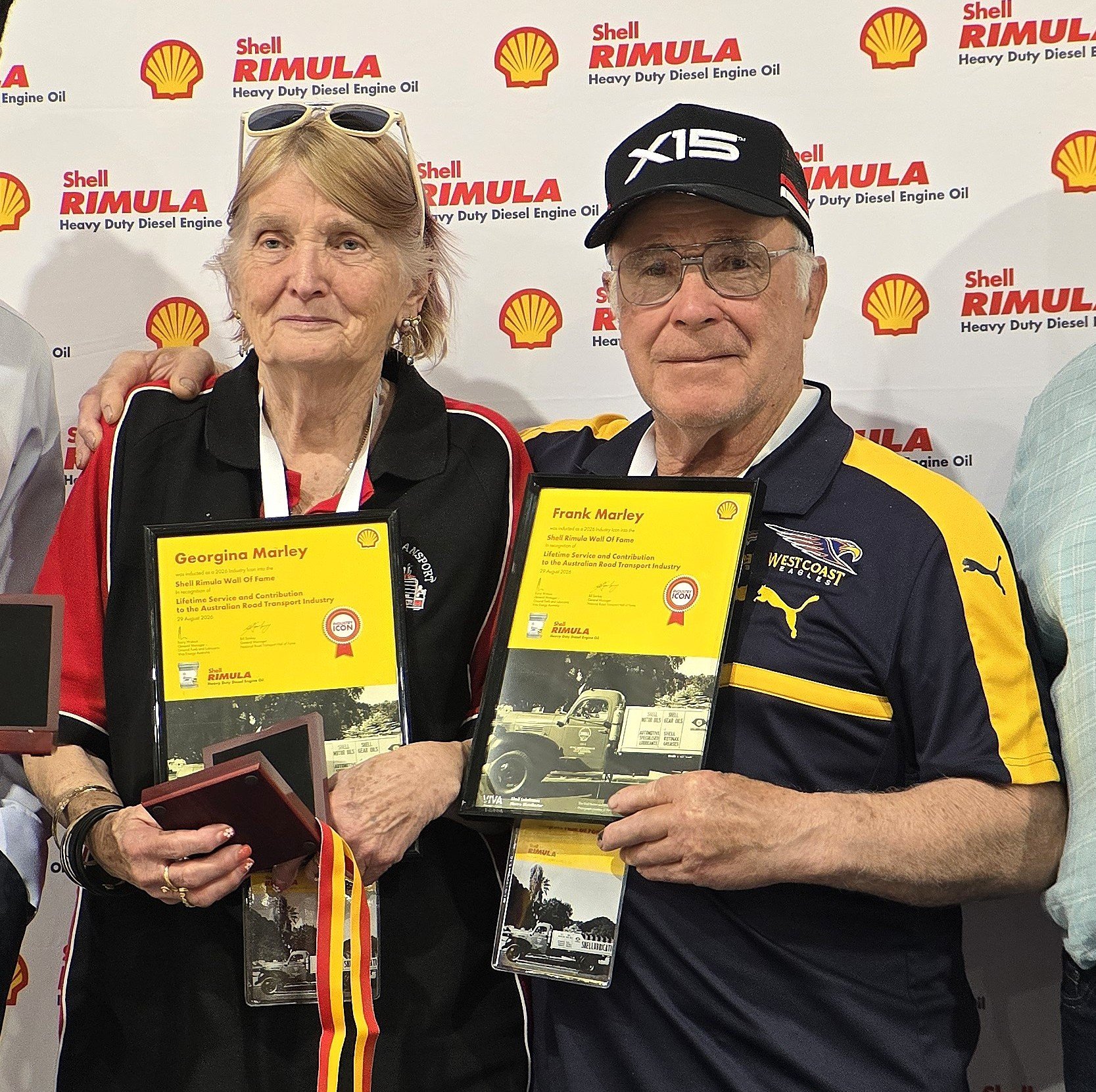
The ICON Award recognises those who have helped make the industry better, not just for themselves, but for the people who have travelled alongside them, worked with them and followed in their footsteps. It’s about the people whose hard work, generosity, character and contribution have left a lasting mark on the industry and the people within it. This year the prestigious award was presented to Frank and Georgie Marley.
Over more than 50 years, Frank and Georgie have built a transport company that has earned the respect of customers, competitors and the wider industry alike. Together they have weathered changing markets, raised a family immersed in transport, embraced innovation and helped bring about reforms that reshaped the Western Australian road transport industry.
The success of Marley’s Transport has always been the result of a genuine partnership. Frank and Georgie have approached every challenge together, each bringing different strengths but always sharing the same vision, work ethic and commitment to the business.
In 1968, at just eighteen, Frank bought his first truck, a Commer with a 120-horsepower Perkins engine. He was too young to legally drive it, so Frank’s dad, Tom, drove while Frank worked on local farms. At the same time, Frank was building a house on land in Nangeenan that had cost him $120. Georgie was making regular trips from Perth to visit Frank. They married in 1969 in Cottesloe before returning to Nangeenan to begin married life together. The house Frank had built soon became the centre of everything.
A year later, Frank and Georgie were married, and the house Frank had built in Nangeenan became the heart of both their family and their growing business.
Georgie ran the local telephone exchange from their home, answered the business phone, scheduled loads, cooked for drivers and washed their clothes. Frank drove, repaired trucks and found the next load. Their home was also the depot, and their drivers became part of the extended Marley family.
Their four sons grew up in that environment, travelling in trucks and learning the transport industry from the inside. The business grew from sheep, bricks and grain into fertiliser, livestock, wool, salt, blue metal and general freight. Frank was always prepared to try something different, and Marley's became known for innovation, including being among the first operators in Western Australia to use four-deck stock crates and 10-axle rigid trucks for grain carting.
But perhaps Frank and Georgie's greatest contribution came from something much bigger than their own business. During the 1970s, Western Australia's road transport industry was heavily restricted by regulations designed to protect rail freight. Frank believed those rules were unfair to transport operators and the farming communities they served.
He continued carrying freight he believed needed to move by road, despite the fines that followed. Georgie became his lookout, travelling ahead in a ute to watch for transport inspectors and racing back to warn Frank if they were spotted.
In 1979, Frank handed himself in over unpaid fines and spent time in Fremantle Prison. His imprisonment captured the attention of rural Western Australia, and farmers rallied behind him because they understood that he was fighting for more than his own business.
That stand eventually helped spark a much wider conversation about the future of road transport. Frank, Georgie and Transport Minister Cyril Rushton even found themselves sitting around the Marley family dining table, working towards reform. It took almost a decade, but deregulation ultimately created a fairer operating environment for transport operators across Western Australia.
Frank's commitment to the wider industry continued through his leadership roles with the Livestock Transporters Association of Western Australia, the Australian Livestock and Rural Transporters Association and the Western Australian Road Transport Association.
Georgie was there through all of it, carrying the business and family, supporting Frank and playing an integral role in everything they achieved together.
The business continued to evolve, expanding into feed delivery and eventually moving from Nangeenan to a purpose-built depot at Hope Valley. The family's commitment to innovation and quality equipment continued, culminating in the delivery of their 100th Kenworth in 2025. Marley’s Transport was also recognised as a 2019 Kenworth Legend. But perhaps the greatest part of their legacy is what they have given back.
Frank was involved in the early discussions that led to the National Road Transport Museum and was one of its inaugural Shell Rimula Wall of Fame inductees in 1999. Georgie's contribution was recognised in her own right when she was inducted in 2023.
They have supported the Museum financially, but also with their time, knowledge, contacts and encouragement. Frank has helped source historic vehicles and shared the stories behind the people and trucks that form our industry's history.
Frank and Georgie have not simply made a living from transport. They have helped build it, challenge it, modernise it and preserve its history.
Their greatest achievement isn't measured by the number of trucks they've owned or the size of their business. It is the lasting impact they have had on the people and industry around them. They fought for a fairer industry, embraced change, created opportunity and gave back to the industry that gave them so much. For their extraordinary contribution to road transport, their commitment to innovation, and their lifelong dedication to making the industry better for others, Frank and Georgie Marley are truly deserving recipients of the National Road Transport Museum’s Icon Award.
HISTORY MAKERS AWARD
THE SOUTH ROAD DIRT RUNNERS
Represented by MURRAY FOX & STEVE LOVEGROVE
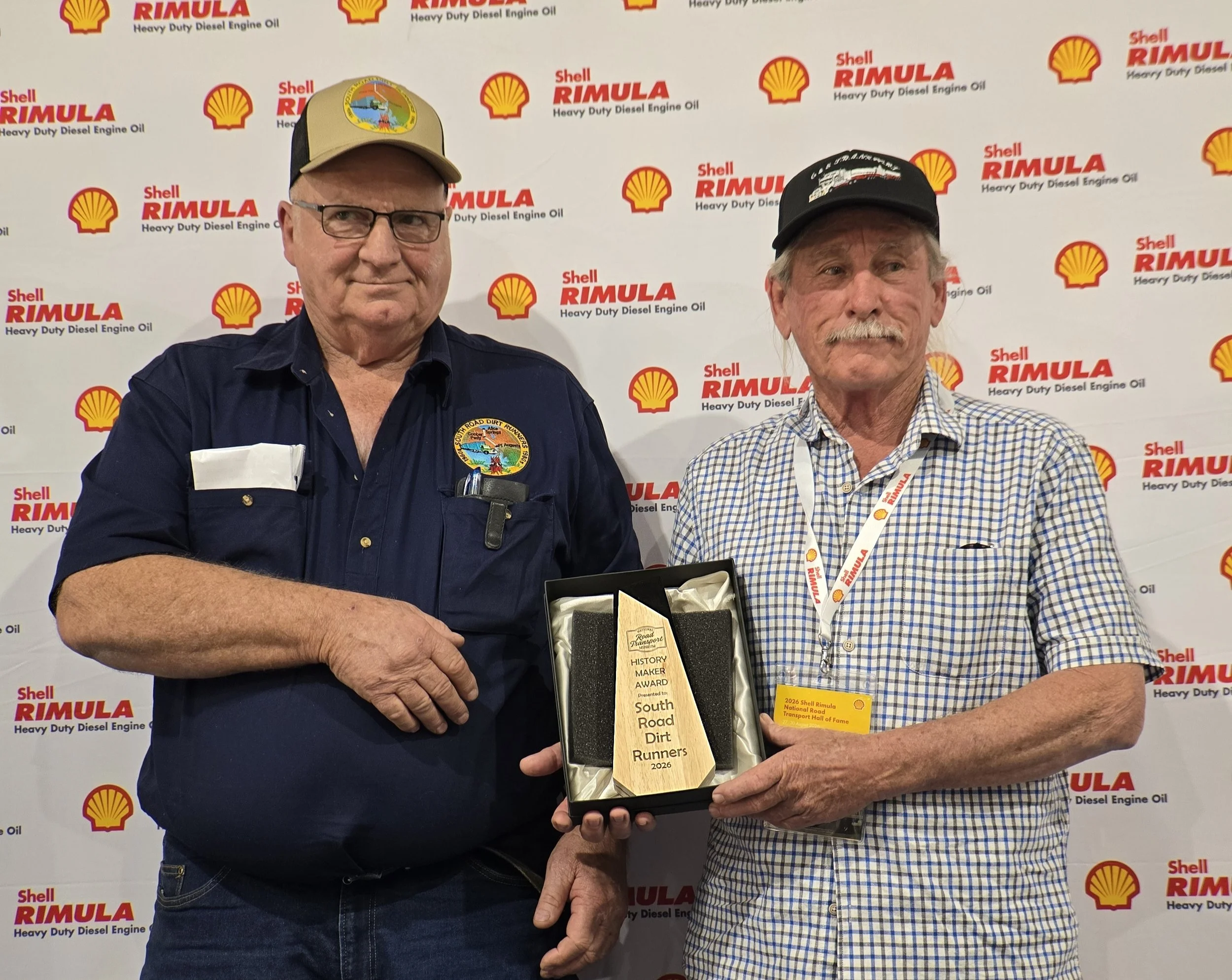
The National Road Transport Museum’s History Makers Award recognises those individuals, groups or moments that have changed the course of our industry through courage, innovation, determination or simply by having the vision to do things differently.
Their stories have shaped the way we operate, opened doors for those who followed and become part of the history that this Museum exists to preserve.
This year another chapter in that history was unveiled. 2026’s History Makers are a group whose contribution deserves to be remembered for generations to come: The South Road Dirt Runners.
Before the Stuart Highway became the sealed road linking Adelaide with Darwin, it was known simply as the South Road.
For hundreds of kilometres north of Port Augusta, corrugations stretched to the horizon, creek crossings changed with the weather, and dust found its way into every crack of the truck. Every journey north tested not only the machinery, but the men behind the wheel.
From the late 1950s through to the early 1980s, a remarkable generation of drivers carried almost everything the north depended upon. Polar Expressways, Cold Storage, Bulls, Brambles, Buntines, Ansett and dozens of smaller family operators hauled machinery, fuel, livestock, food and building materials along the route including the supplies and equipment needed to rebuild Darwin after Cyclone Tracy.
There was little romance in driving the South Road. It was hard, dirty work.
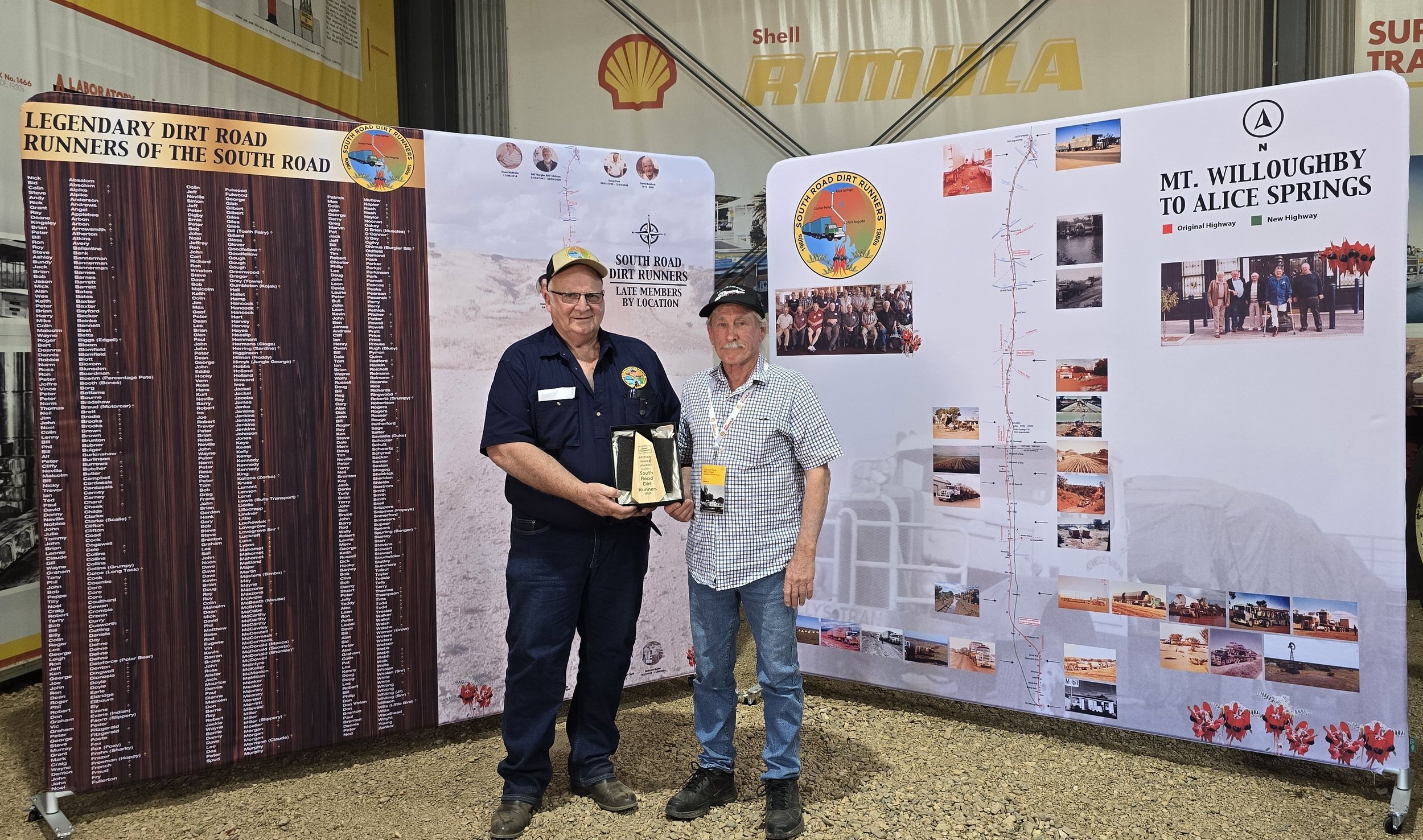
Murray Fox & Steve Lovegrove in front of the South Road Dirt Runners Exhibition
In summer, drivers battled relentless heat without air conditioning. In winter, particularly around Kulgera, they faced freezing mornings and reluctant engines. Dust wore away brakes, corrugations shook trucks apart and tyres were constantly failing.
Rain could transform the road overnight. Dry creek crossings became flooded, firm ground became deep clay and trucks could sit bogged for days. One delay at the Finke River lasted a week, with drivers sharing supplies and waiting for the road to dry enough to move.
The road also taught its drivers to become mechanics and engineers. Repairs were often made with whatever was available.
But perhaps the greatest thing about the South Road wasn't the trucks or even the challenges. It was the people.
Places like Kingoonya became meeting points where drivers shared meals, drinks and stories. Friendships could form within hours. Jeff Gilbert once met an interstate driver at Kingoonya who, after a few beers, asked Jeff to become godfather to his daughter. The next morning, Jeff travelled to Coober Pedy for the christening — and, as the story goes, never saw the man again.
There were characters too. Spud Murphy became famous for putting up fake "Road Closed" signs, sending unsuspecting drivers into Pimba for an unexpected night of beers and company.
And then there was Albert "Nobby" Clarke, the transport inspector, whose presence could send a convoy of drivers looking for alternative routes through station tracks. It became a good-natured game of cat and mouse.
By the early 1980s, the bitumen was steadily replacing the dirt. Trucks became more reliable and communications improved. The hardships began to disappear but so did some of the camaraderie.
Looking back, the Dirt Runners are modest. To them, they were simply doing a job. But what they did was extraordinary.
They opened and maintained a vital link to the north, endured conditions few would willingly face today, and built friendships and a sense of community that have lasted a lifetime. They truly were a special breed.
And while the dust has long since settled beneath the bitumen, their stories remain an important part of Australian road transport history.

More Blog Posts You Will Love
More From the News
Got something to say? Say it here!
truckinwithkermie.com is for YOU and about YOU. We’d love to hear your stories. There are a number of ways to get in touch with us:
kermie@truckinwithkermie.com
(+61) 0418 139 415
More From The Blog